
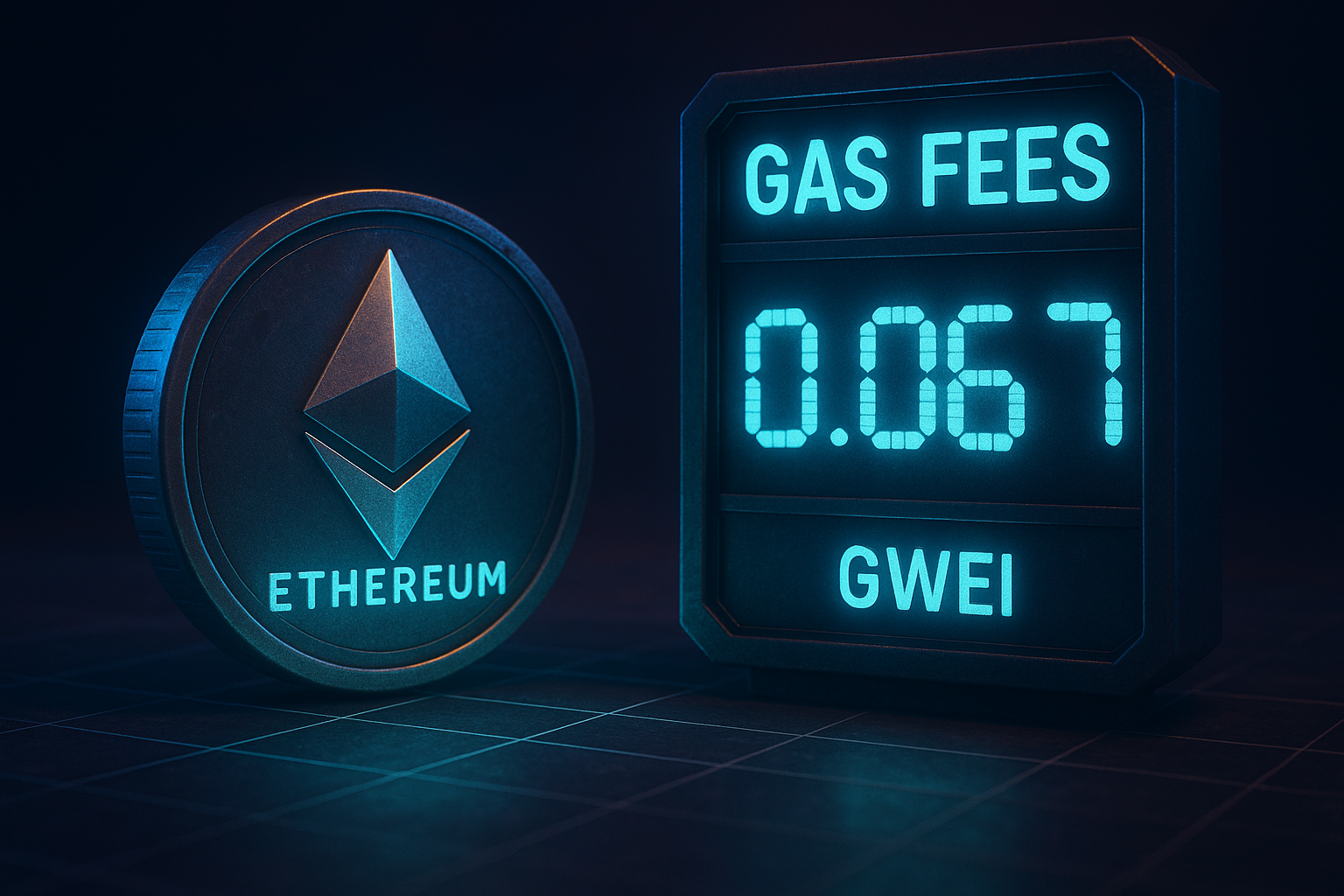
Record-low fees highlight slowdown in activity and raise questions about Ethereum’s long-term revenue model
Transaction costs on the Ethereum mainnet have fallen to their lowest levels in years, with average gas prices dropping to just 0.067 Gwei over the weekend. The sharp decline comes amid a broader cooldown in the crypto market following October’s historic crash.
At current rates, executing an onchain swap costs roughly $0.11, while NFT sales carry an average fee of $0.19. Bridging assets to another blockchain costs just $0.04, and borrowing from decentralized finance (DeFi) platforms costs under $0.10, according to Etherscan data.

Ethereum gas fees had spiked to 15.9 Gwei on October 10 — the day of the market-wide flash crash that wiped out over 90% of value in some altcoins within hours. But by mid-October, fees dropped below 1 Gwei and have stayed near record lows throughout November.
Low fees: blessing or warning sign?
While traders and developers may welcome cheaper transactions, industry analysts warn the trend exposes deeper structural challenges for Ethereum. “Extremely low gas prices suggest declining onchain activity and reduced network revenue — a potential long-term vulnerability,” one blockchain researcher noted.
During the 2021 bull cycle, executing a single Ethereum transaction could cost upwards of $150 during periods of congestion. However, since the Dencun upgrade in March 2024, which optimized data storage and reduced costs for layer-2 rollups, Ethereum’s base-layer revenues have reportedly dropped over 99%, according to Token Terminal data.

Scaling success with side effects
Ethereum’s reliance on layer-2 scaling solutions — such as Arbitrum, Optimism, and Base — has helped the network remain competitive against newer high-throughput chains. Yet, analysts at Binance Research note that these very networks are cannibalizing Ethereum’s own revenue, diverting user activity away from the main chain.
With gas fees near zero, Ethereum faces a paradox: efficient scalability at the cost of sustainability. If demand remains weak, the world’s largest smart contract network may need to reassess how it balances growth, security, and profitability in the years ahead.
Disclaimer
This content is for informational purposes only and does not constitute financial, investment, or legal advice. Cryptocurrency trading involves risk and may result in financial loss.