

Ethereum’s long anticipated account abstraction is finally approaching deployment, according to co-founder Vitalik Buterin. After nearly a decade of research and incremental improvements, the feature is expected to ship within a year as part of the upcoming Hegota network upgrade.
Account abstraction, often referred to as “smart accounts,” aims to fundamentally change how Ethereum wallets function. Instead of relying on externally owned accounts controlled by a single private key, the new framework allows accounts to operate more like smart contracts. A key component of the proposal, EIP-8141, consolidates remaining technical elements needed to make the system fully functional.
How Smart Accounts Improve Ethereum Usability
Under the new model, transactions are divided into structured “frames.” These frames can reference one another, separating validation from execution. For example, one frame verifies a signature while another carries out the transaction itself.
This design enables multi-signature wallets, accounts with rotating keys, and even quantum-resistant cryptography. It also introduces transaction sponsorship, allowing users to pay gas fees in tokens other than ETH through paymaster contracts or decentralized liquidity mechanisms.
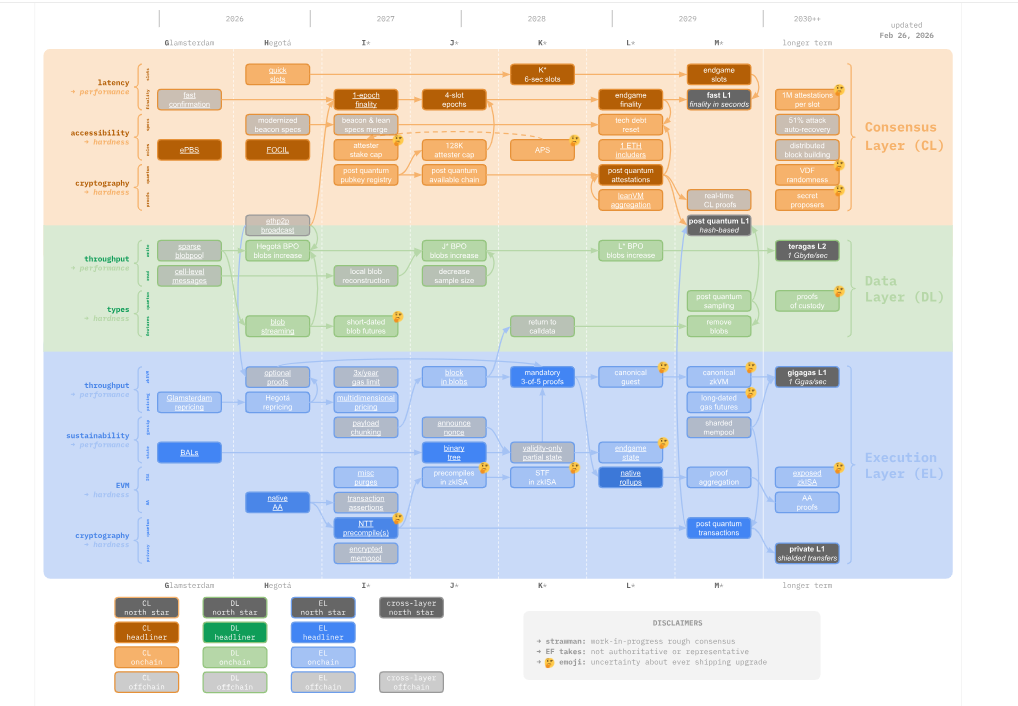
Quantum Resistance and Long-Term Scaling Roadmap
Beyond usability improvements, Ethereum developers are also preparing for potential quantum computing risks. Proposed safeguards address validator signatures, account security, stored data integrity, and zero-knowledge proof systems.
Buterin has also indicated that future roadmap phases will aim to reduce block slot times and finality delays, strengthening network efficiency. If delivered as planned, smart accounts could mark one of Ethereum’s most significant architectural upgrades since its transition to proof of stake.
Disclaimer
This content is for informational purposes only and does not constitute financial, investment, or legal advice. Cryptocurrency trading involves risk and may result in financial loss.