
Trump’s Fed pick revives rarely cited statutory goal of moderating long-term rates
A rarely discussed statutory requirement in the Federal Reserve Act of 1913 — often called the Fed’s “third mandate” — is back in focus. President Donald Trump’s latest pick for Fed governor, Stephen Miran, has cited this clause as a justification for policies that could suppress long-term interest rates. Analysts warn the move may weaken the U.S. dollar, while potentially fueling demand for Bitcoin as a hedge.
The Forgotten Mandate
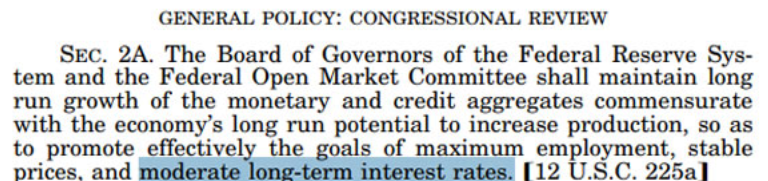
The Federal Reserve is widely known to operate under a dual mandate: ensuring price stability and maximum employment. However, the law also specifies a third objective — “moderate long-term interest rates.”
This mandate has long been considered secondary, assumed to follow naturally from the first two. Trump officials, however, appear ready to use it as legal cover for aggressive monetary intervention, including yield curve control and expanded quantitative easing.
Lower Rates, Higher Debt Pressure
The push comes at a time when U.S. national debt has hit $37.5 trillion. Suppressing long-term borrowing costs would ease pressure on government financing and also stimulate housing markets by reducing mortgage rates.
Trump has long criticized the Fed for being “too slow” to cut rates, and his administration is now exploring tools such as Treasury bill issuance, bond buybacks, and direct yield curve control to force borrowing costs lower.
Impact on Bitcoin and Crypto
Experts say these measures could carry unintended consequences. Christian Pusateri, founder of encryption protocol Mind Network, described the “third mandate” as “financial repression by another name,” warning it represents a deeper politicization of monetary policy.
Outspoken BitMEX founder Arthur Hayes echoed this sentiment, suggesting yield curve control could ultimately drive Bitcoin toward $1 million, as investors seek alternatives to a devaluing dollar.
“The price of money is coming under tighter control because the age-old balance between capital and labor, between debt and GDP, has become unstable,” he said. “Bitcoin stands to absorb massive capital as the preferred hedge against the global financial system.”
With the Fed’s upcoming meetings expected to discuss rate guidance, markets are watching closely to see whether Trump’s team formalizes the “third mandate” as policy. For now, the move highlights a growing divide between traditional fiscal policy and the rising influence of crypto as a hedge against monetary expansion.
Disclaimer
This content is for informational purposes only and does not constitute financial, investment, or legal advice. Cryptocurrency trading involves risk and may result in financial loss.