
Middle East Conflict Escalates With Israel-Iran Tensions
Markets are facing renewed volatility after Israel launched a military strike against Iran, raising concerns of a wider conflict in the already unstable Middle East. This geopolitical shock has intensified risk sentiment globally, with energy prices spiking and defense-sector stocks gaining short-term momentum.
Heightened conflict in the Middle East introduces uncertainty in oil supply, energy costs, and global trade dynamics.
Despite the headlines, market fundamentals remain largely intact, and investors are advised to differentiate fear-driven volatility from lasting structural shifts.
U.S.–China Trade Talks Deteriorate Amid Tariff Pressure
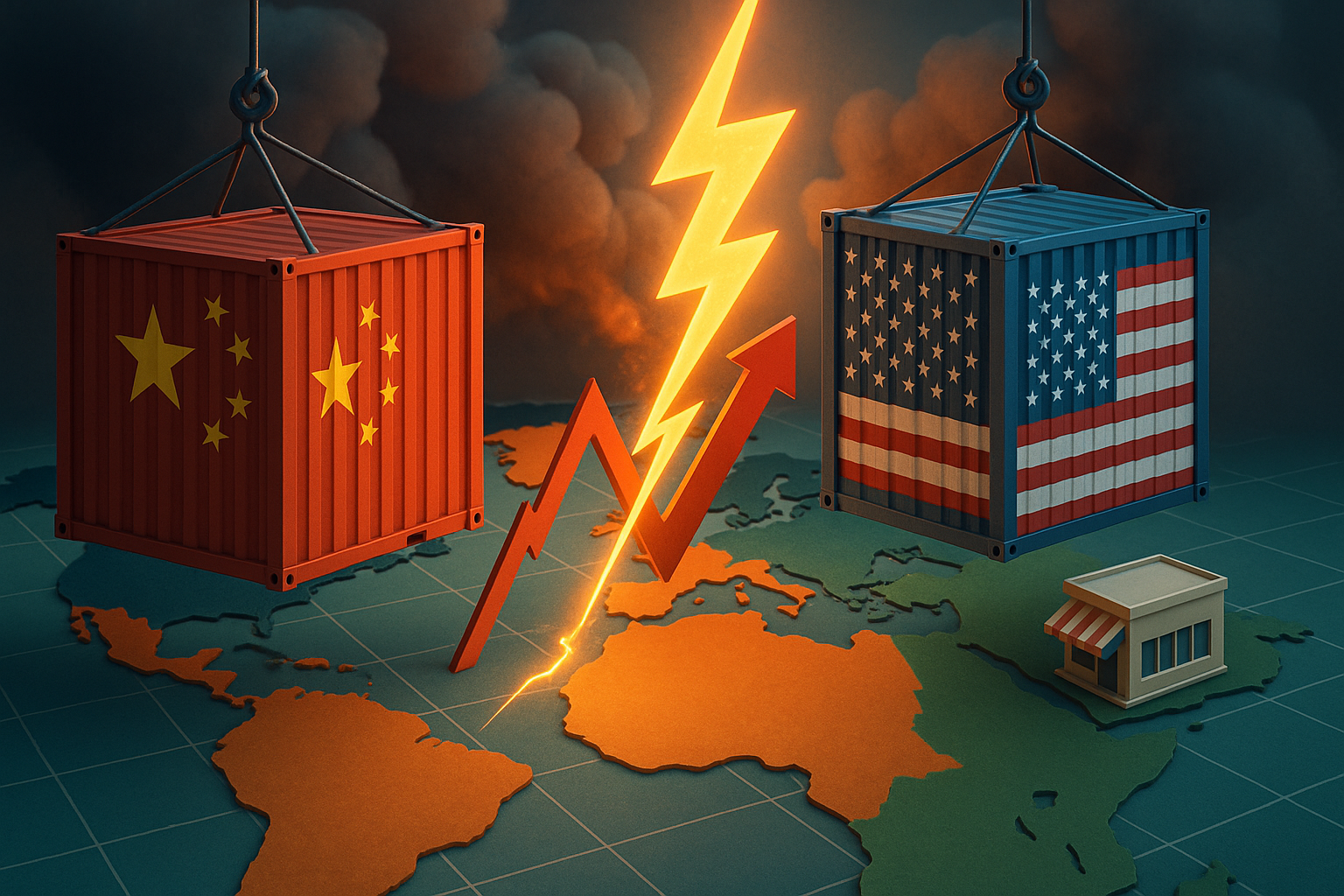
In parallel, tensions between the United States and China have deepened. The White House has proposed raising tariffs on Chinese goods to 55%, a move that has rattled global markets and stirred concerns about renewed trade wars.
This aggressive tariff stance is viewed as part of an election-year strategy, but it may risk derailing fragile economic recovery efforts.
China has responded with strong language, vowing to protect its interests. The escalation in trade rhetoric comes at a time when both nations are already experiencing slower growth, adding to investor anxiety.
Market Reaction Driven by Fear, Not Fundamentals
The combined effect of geopolitical unrest and tariff tension has triggered a sharp pullback in global equity markets, but analysts emphasize that this is a reaction to uncertainty, not a collapse in underlying business performance.
Corporate earnings remain stable, inflation is moderating, and central banks are signaling patience.
This suggests that while short-term volatility may persist, there is no immediate need to adjust long-term investment strategies.
Staying the Course Amid Uncertainty
In periods of heightened fear, it’s crucial to avoid reactive decisions. Our analysis shows that overhauling positions during emotionally charged environments can often lock in unnecessary losses.
We continue to hold our current portfolio allocations, confident in the long-term outlook and resilience of diversified assets.
While risks remain, so do opportunities—particularly in sectors like defense, energy, and commodities that may benefit from the current environment.
Conclusion
Geopolitical instability and trade tensions have returned to the forefront, shaking investor confidence. But by staying focused on fundamentals rather than fear, long-term investors can navigate this turbulence with discipline and perspective.