
The International Monetary Fund (IMF) has warned that tokenization could reshape financial markets while introducing new risks that regulators are not fully prepared to handle. Tokenization, which represents real-world assets such as money, bonds, and funds on blockchain networks, enables instant settlement and removes traditional intermediaries, reducing delays in financial transactions.
Automated Markets May Increase Volatility
In its latest report, the IMF highlighted that tokenization enables “atomic settlement,” allowing transactions to settle instantly and reducing counterparty risk. However, this speed may also create new challenges. Stress events could unfold faster, leaving less time for intervention. Automated markets and smart contracts that trigger margin calls or liquidations could accelerate selloffs and amplify volatility during downturns.
Stablecoins were identified as a key link between crypto systems and traditional finance, but their reliability depends on reserves and redemption systems, leaving them vulnerable to sudden runs under pressure.
Need for Global Regulation and Coordination
The IMF also warned that tokenized assets moving instantly across jurisdictions could complicate oversight, increasing risks of capital flight and currency substitution in emerging markets. The organization called for clearer legal frameworks and stronger global coordination.
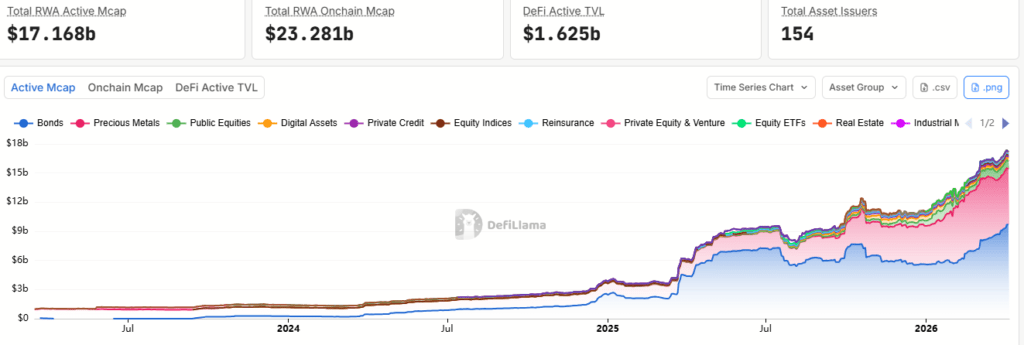
Tokenization adoption is growing rapidly, with real-world assets on blockchain networks surpassing $23.2 billion, largely driven by tokenized gold and money market funds.
Disclaimer
This content is for informational purposes only and does not constitute financial, investment, or legal advice. Cryptocurrency trading involves risk and may result in financial loss.