
Traditional finance takes center stage as banks and governments push the industry toward regulated adoption
The crypto market’s narrative is undergoing a fundamental shift, with institutional players increasingly driving trends once dominated by grassroots decentralization advocates. Analysts say the current cycle has been marked by large-scale investments from funds, exchange-traded products, and major financial entities, setting the tone for what may be a new era in digital assets.
Arthur Azizov, founder of fintech investment group B2 Ventures, noted that this transition is no coincidence. “Banks have a substantial user base. They already have loyal clients. For them, implementing crypto into their operations will be relatively easy once regulations are clear,” he said. According to him, it could take just months for leading banks to launch stablecoins once legal frameworks are finalized.
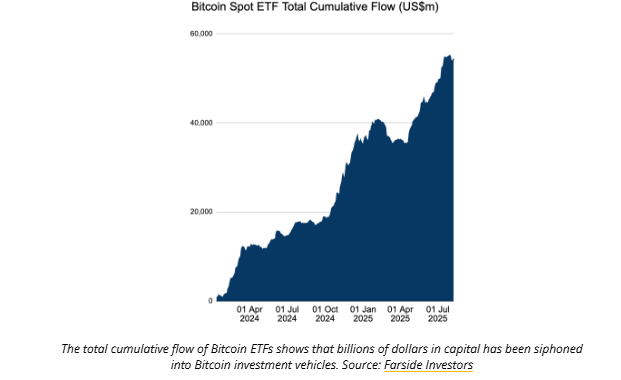
Billions of dollars have already flowed into Bitcoin investment vehicles, signaling growing confidence from traditional markets. Observers believe this capital migration will accelerate as regulatory clarity emerges, particularly in the United States and Europe. However, some caution that this rapid institutional integration could squeeze smaller startups out of the ecosystem.
Governments, too, are pushing for stricter compliance through anti-money laundering (AML) and know-your-customer (KYC) measures. While such policies may help protect consumers and attract tech investment, they also challenge the core ethos of decentralized finance, which promises permissionless and censorship-resistant systems.
Azizov emphasized that the drive for regulation is also about competitiveness. “The goal is to attract technology companies, young talent, and fintech innovation,” he explained, adding that regions like the Asia-Pacific and Europe already enforce strict compliance for retail crypto services — a model likely to spread globally.
The increasing presence of banks, regulated funds, and government oversight marks a decisive turn for the sector. For some, this is a sign of maturity and long-term stability. For others, it’s a warning that the original vision of a fully decentralized financial world may be fading into the background.
Disclaimer
This content is for informational purposes only and does not constitute financial, investment, or legal advice. Cryptocurrency trading involves risk and may result in financial loss.