

Market observers caution that institutional investors may not propel Bitcoin to new highs in 2026 without a significant market-moving event. While institutional demand remains strong, macroeconomic factors and potential shocks could limit their impact on price surges.
Macro researcher and FFTT founder Luke Gromen highlighted that expecting institutions to drive Bitcoin from around $89,880 to $150,000 a 67% rise—may be unrealistic without a major catalyst. He emphasized that institutional behavior tends to be cautious: they often wait for clear signals before committing large funds, making rapid price jumps unlikely in their absence.
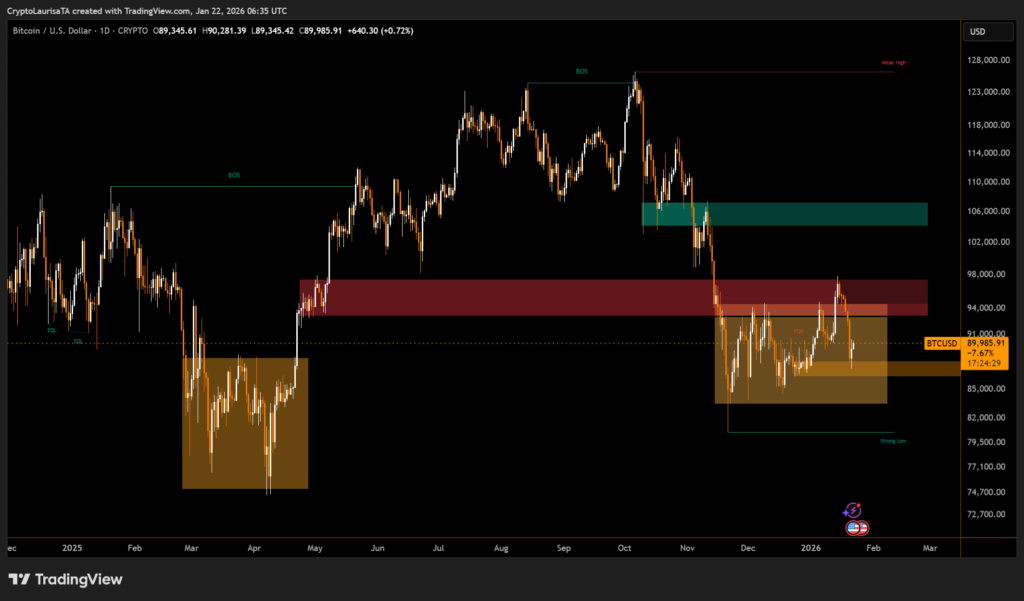
Potential catalysts under watch include US regulatory changes like the CLARITY Act and future Federal Reserve rate cuts or quantitative easing measures. Conversely, risks such as trade conflicts, economic isolation, or recession could pressure institutions to sell, potentially driving Bitcoin lower.
Despite caution, institutional interest persists. Over the past year, institutional funds have acquired 577,000 Bitcoin, worth roughly $53 billion, according to market data. Major treasury holders, including Michael Saylor with 709,715 BTC, and other public companies collectively holding 1.13 million BTC, illustrate continued strategic accumulation.
Gromen also noted Bitcoin could potentially decline to $60,000 if forced selling occurs, highlighting the delicate balance between institutional buying, macro risks, and market catalysts.
Disclaimer
This content is for informational purposes only and does not constitute financial, investment, or legal advice. Cryptocurrency trading involves risk and may result in financial loss.