

Iran’s Bitcoin hashrate has dropped significantly over the past quarter, falling about 77% as conflict involving the United States and Israel intensified. According to data from the Hashrate Index, the country lost roughly 7 exahashes per second quarter-over-quarter, leaving its total hashrate at around 2 EH/s. Ian Philpot, marketing director at Luxor Technology, said the decline showed a clear regional impact, though the disruption remained largely limited to Iran. Neighboring countries such as the United Arab Emirates and Oman showed no measurable decline in mining capacity.
Iran is estimated to operate approximately 427,000 active Bitcoin mining rigs. Although tensions escalated in February following strikes and retaliatory actions, the global Bitcoin network remained stable at close to 1,000 EH/s. Philpot explained that regional disruptions typically redistribute mining power rather than eliminate it, reducing the risk of widespread network instability.
Global Hashrate Weakness Linked to Falling Bitcoin Prices
The global 30 day simple moving average hashrate declined from 1,066 EH/s in the first quarter to about 1,004 EH/s in the second quarter, representing a 5.8% quarter-over-quarter drop. Philpot attributed this trend primarily to declining Bitcoin prices rather than conflict or regulatory pressure. Bitcoin has fallen more than 45% from its all-time high of $126,000 recorded in October, reducing mining profitability across the sector.
He noted that older-generation mining machines operating at efficiencies above 25 J/TH are now running at negative gross margins, forcing shutdowns. Estimates suggest around 252 EH/s of marginal capacity is currently offline as legacy hardware is retired and replaced with more efficient systems.
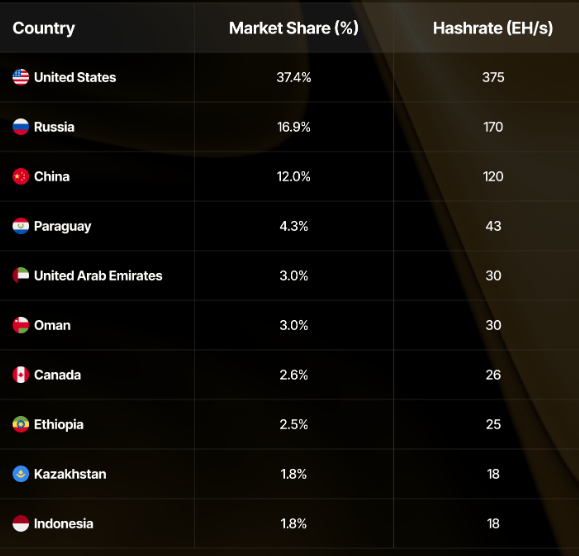
Leading Countries Continue to Dominate Global Hashrate Distribution
The United States holds the largest share of global hashrate at over 37%, followed by Russia at about 17% and China at roughly 12%, together accounting for 65.6% of the total network. Philpot added that while overall capacity among major regions remains stable, the internal mix of hardware continues to evolve, with modern equipment gradually replacing outdated machines.
Disclaimer
This content is for informational purposes only and does not constitute financial, investment, or legal advice. Cryptocurrency trading involves risk and may result in financial loss.