
Bitcoin advocate Jimmy Song has reignited a heated debate in the community, accusing Bitcoin Core developers of adopting a “fiat” mentality in their handling of the OP_Return upgrade.
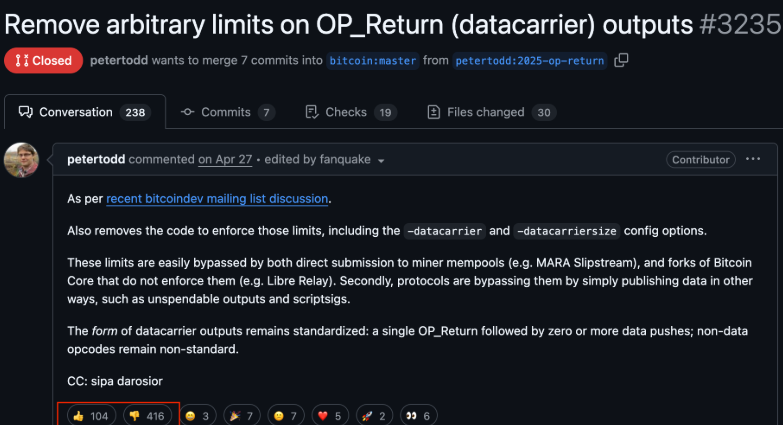
The upcoming Bitcoin Core 30 release removes the 80-byte OP_Return data limit, a change that allows unrestricted amounts of non-monetary data—such as inscriptions and metadata—to be stored on the Bitcoin blockchain.
While supporters see this as expanding Bitcoin’s use cases, critics, including Jimmy Song, argue it introduces spam risk, higher storage burdens, and centralization pressures.
Song’s Criticism
Song accused developers of ignoring community concerns and using evasive arguments to justify the change.
“The idea that spam is difficult to define, and because of this ambiguity, we shouldn’t be making any distinctions at all in the software, is a time-wasting argument from fiat politics,” Song said.
He labeled non-monetary Bitcoin usage as “spam” and warned that avoiding the real debate about long-term costs could undermine Bitcoin’s decentralization.
The OP_Return debate mirrors the block size wars of 2015–2017, which ultimately led to the Bitcoin Cash (BCH) hard fork. Many in the community now speculate whether OP_Return wars could lead to a similar chain split.
Node Exodus: Rise of Bitcoin Knots
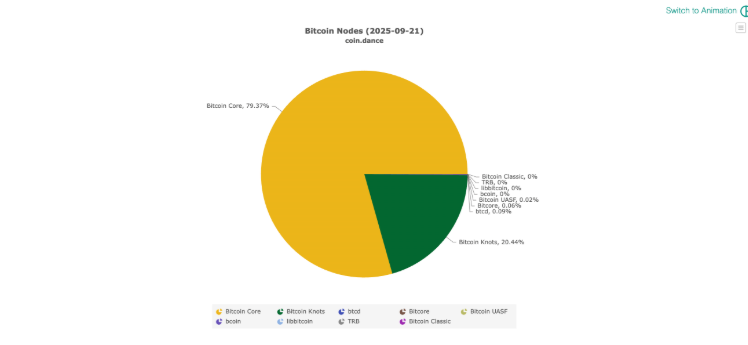
The backlash has triggered a historic migration of node operators to Bitcoin Knots, an alternative implementation of Bitcoin node software.
- Bitcoin Knots now powers ~20% of nodes, a staggering rise from just 1% in 2024.
- Knots enforces strict data size limits, appealing to those concerned about preserving Bitcoin’s lean architecture.
This marks one of the most significant shifts in node distribution since Bitcoin’s inception.
Why Decentralization Matters
Bitcoin has maintained around 680 GB of ledger data since 2009, a modest footprint that allows users to run nodes on affordable $300 retail hardware.
By contrast, high-throughput blockchains like Ethereum or Solana require specialized, expensive servers costing tens of thousands of dollars, leading to centralization risks where only wealthy entities control consensus.
Song and other critics warn that removing strict data limits risks pushing Bitcoin in the same direction—undermining its unique advantage of low-cost decentralization.
The OP_Return dispute raises fundamental questions about Bitcoin’s identity:
- Should Bitcoin remain purely monetary, prioritizing decentralization and censorship resistance?
- Or should it expand into a multi-purpose blockchain, at the cost of higher storage and potential centralization?
As history shows with the block size wars, this debate could shape Bitcoin’s trajectory for years to come.
Disclaimer
This content is for informational purposes only and does not constitute financial, investment, or legal advice. Cryptocurrency trading involves risk and may result in financial loss.