
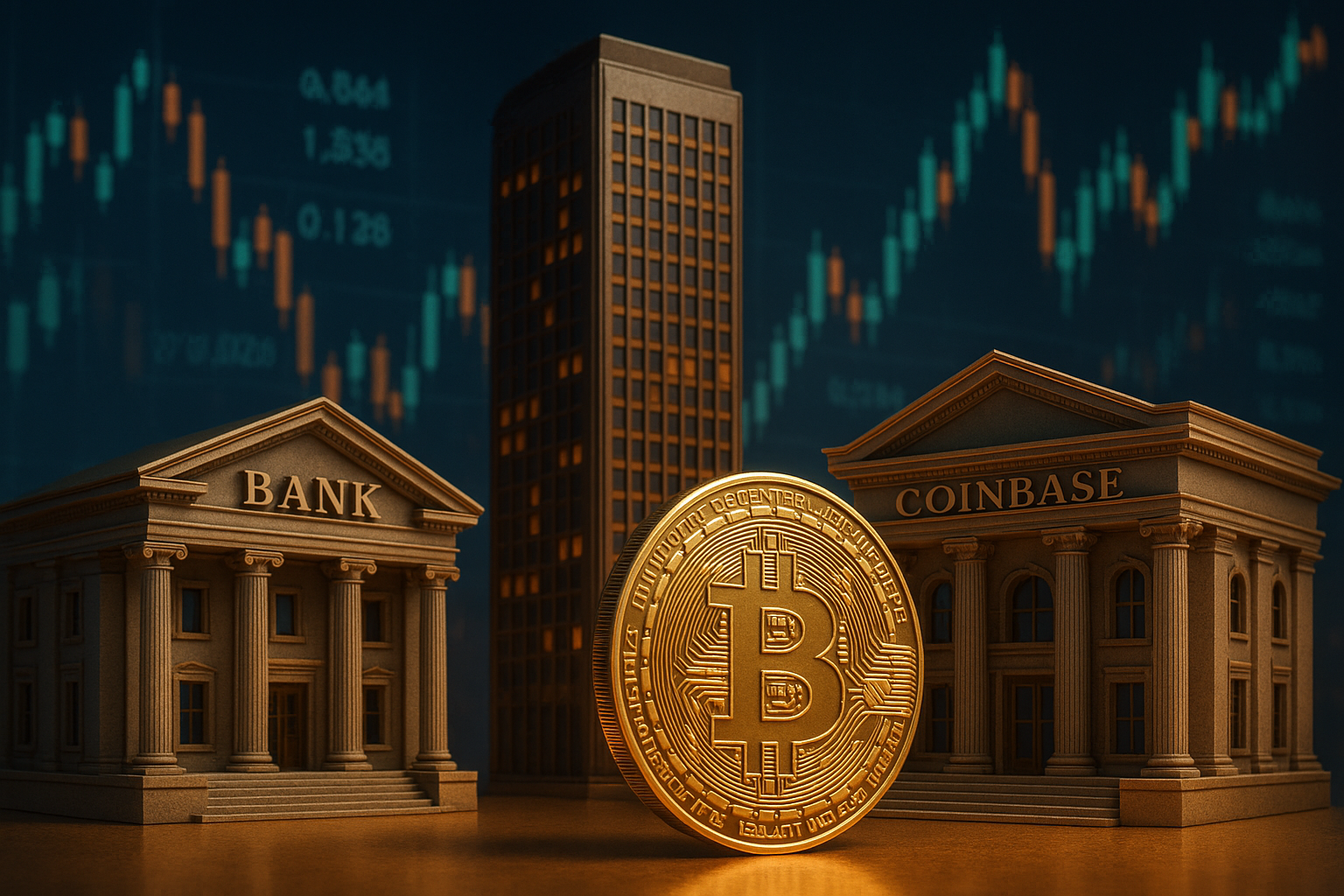
Pilots highlight shifting attitudes toward digital assets as Wall Street accelerates blockchain adoption
Major U.S. banks have begun testing stablecoin payments, crypto custody and digital-asset trading through pilot programs with Coinbase, according to comments from CEO Brian Armstrong at the DealBook Summit. His remarks — delivered alongside BlackRock chief Larry Fink — signal a turning point in how traditional finance is approaching blockchain technology.
Armstrong did not reveal which institutions are participating but emphasized that banks unwilling to experiment with digital assets “are going to get left behind.”
During the session, Larry Fink echoed a growing acceptance of Bitcoin, saying there is now a real use case for the asset, even as he warned that markets remain influenced by leveraged traders. BlackRock’s spot Bitcoin fund, IBIT, has grown into the largest of its kind, with more than $72 billion in market capitalization — a sign of accelerating institutional demand.
Tokenized Treasuries Expand Institutional On-Chain Activity
BlackRock also operates the largest tokenized U.S. Treasury fund, now holding about $2.3 billion. One digital-asset researcher described tokenized government debt as “the entry point for banks seeking safe, regulated exposure to on-chain settlement.”
Despite the pilots, the relationship between Coinbase and the banking sector has been tense. The Banking Policy Institute recently argued that stablecoins could weaken the credit system by shifting deposits away from banks. Policy analysts note that concerns center on a regulatory gap allowing third parties — including Coinbase — to offer yield even though stablecoin issuers cannot.

Banks have also pushed to block Coinbase’s regulatory expansion, urging the OCC to reject the exchange’s application for a national trust charter. Responding to the criticism, Coinbase’s legal team framed the pushback as “protectionism masquerading as consumer protection.”
The combination of quiet bank pilots and very public regulatory battles shows a financial system in transition. As institutions experiment with stablecoins and tokenized assets, the divide between traditional banking and digital-asset platforms may narrow — even as competition intensifies.
Disclaimer
This content is for informational purposes only and does not constitute financial, investment, or legal advice. Cryptocurrency trading involves risk and may result in financial loss.