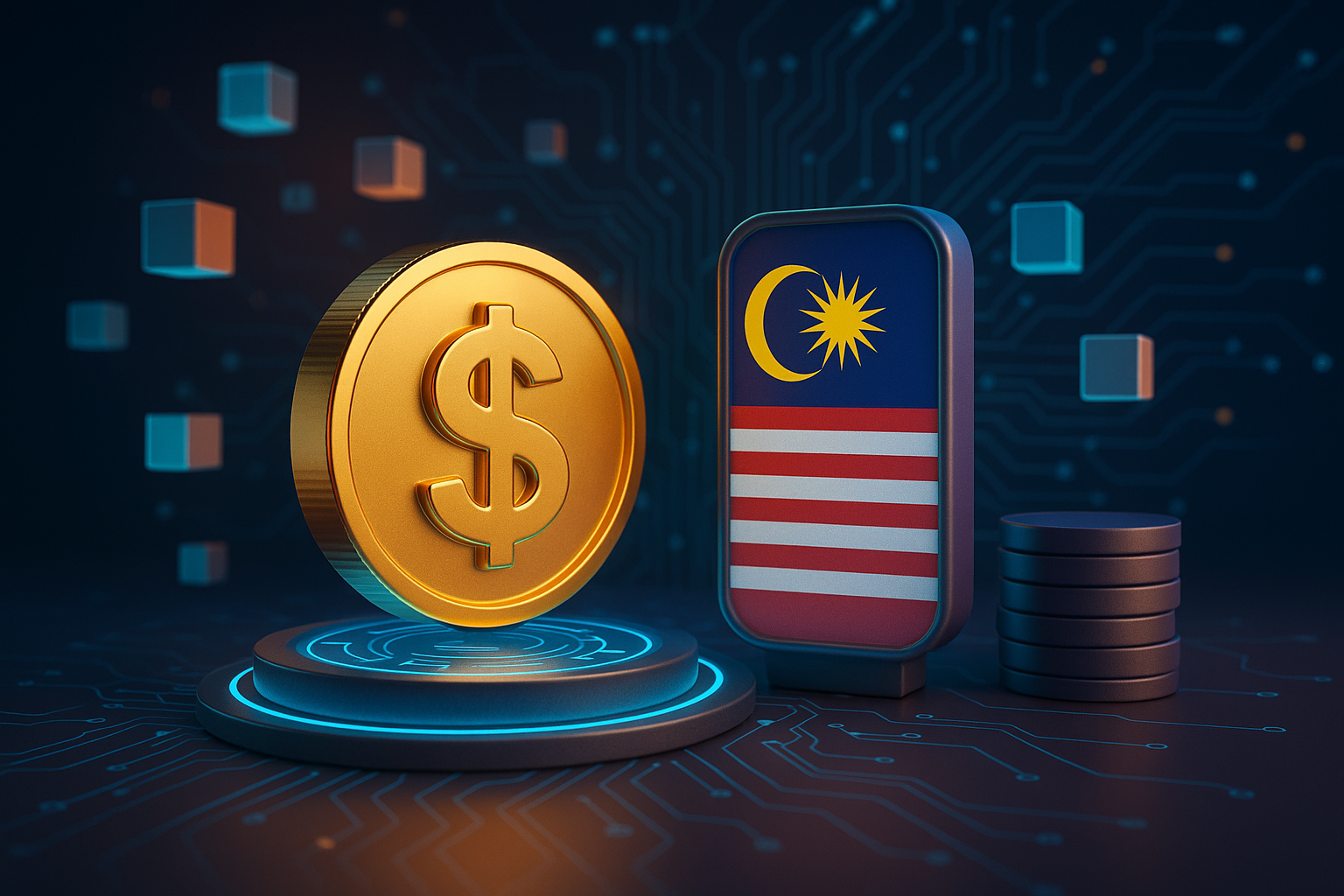
Malaysia has launched its Digital Asset Innovation Hub, a major step toward establishing itself as a regional fintech leader. Announced by Prime Minister Anwar Ibrahim at the Sasana Symposium 2025, the hub will operate as a regulatory sandbox designed to test programmable payments, ringgit-backed stablecoins, and other blockchain-based financial technologies under controlled conditions.
A Controlled Space for Fintech Experimentation
The new sandbox allows fintech and digital asset firms to trial emerging technologies with the oversight of Bank Negara Malaysia, the country’s central bank. The initiative enables projects like:
- Programmable payments
- Ringgit-backed stablecoins
- Blockchain-based supply chain financing
Prime Minister Ibrahim called the launch the “beginning of a new chapter” for Malaysia’s digital economy, noting that the goal is to align infrastructure, policy, and talent across the public and private sectors for a future-ready Malaysia.
Malaysia Aims to Lead the Regional Fintech Race
Bank Negara Malaysia Governor Abdul Rasheed Ghaffour emphasized that the country must modernize its financial systems to remain competitive. Key ongoing efforts include:
- Modernizing the Rentas payment system
- Improving cross-border payment connectivity
- Exploring tokenized asset solutions
These advancements are seen as essential to achieving long-term financial resilience in a rapidly evolving global digital ecosystem.
Strategic Industry Engagement
In April, Prime Minister Anwar met with Binance founder Changpeng Zhao, signaling Malaysia’s willingness to engage global crypto leaders. Binance has since taken a minority stake in MX Global, a locally regulated platform, showing how regulatory compliance and innovation can co-exist in Malaysia’s evolving fintech landscape.
Contrast With Singapore’s Restrictive Approach
While Malaysia is opening up to digital asset experimentation, neighboring Singapore is tightening regulations. The Monetary Authority of Singapore (MAS) has mandated that all local firms offering digital token services overseas must obtain licensing under the Financial Services and Markets Act 2022 by June 30.
Entities failing to comply face penalties up to S$250,000 and three years of imprisonment, demonstrating a stark contrast in regulatory strategy within Southeast Asia.
Disclaimer
This content is for informational purposes only and does not constitute financial, investment, or legal advice. Cryptocurrency trading involves risk and may result in financial loss.