

Samson Mow Predicts Rapid Acceleration of Government Bitcoin Reserves
Nation-state Bitcoin adoption is approaching a turning point, with several countries expected to move from cautious exploration to active accumulation. According to Samson Mow, founder of Jan3, the process is shifting from gradual acceptance to the “suddenly” stage.
From Gradual to Sudden Adoption
“We’re on the tail end of gradually, and we’re at the beginning phases of suddenly,” Mow said during a recent podcast interview. He explained that adoption patterns often accelerate faster than expected, noting that “it’s literally gradually then suddenly” when governments realize the strategic importance of Bitcoin.

Mow warned that a massive wave of nation-state FOMO (fear of missing out) could emerge once the first movers gain advantages, triggering panic among slower adopters.
United States and the Strategic Bitcoin Reserve
The United States has taken steps toward a Strategic Bitcoin Reserve, following an executive order signed by President Donald Trump. While the U.S. has not yet started purchasing, Mow noted that the government is “pushing forward” with budget-neutral acquisition strategies.
Alex Thorn, head of research at Galaxy Digital, recently stated that there is a strong likelihood the U.S. will formally establish a Bitcoin reserve before the end of 2025. Current data shows the U.S. government already holds more than 198,000 Bitcoin, the largest amount of any nation.
Mow cautioned that the U.S. risks being front-run by countries like Pakistan if it delays further. “The U.S. has to start this year,” he said.
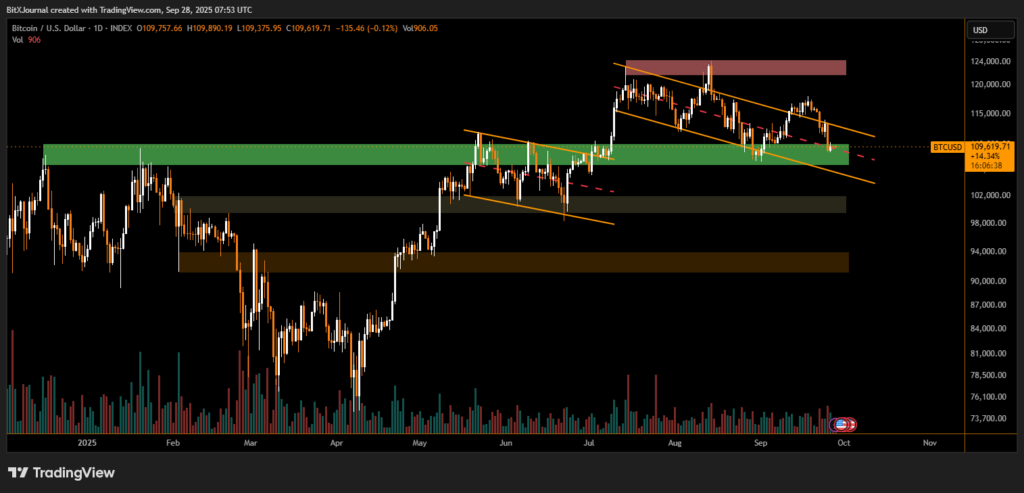
With Bitcoin trading around $109,400, experts believe the next stage of adoption will be shaped not only by institutional demand but also by nation-states competing for strategic reserves. Whether the U.S. leads or gets overtaken by emerging markets, the “suddenly” phase of adoption may be closer than expected.
Beyond the U.S., Mow highlighted Latin America as a key region likely to spearhead broader government adoption. This aligns with research from major financial institutions predicting that central banks, sovereign wealth funds, and government treasuries will increasingly look to secure Bitcoin positions.
Meanwhile, market participants note that Bitcoin’s expected bull cycle has been slower than anticipated. “We should have had a bull run already,” Mow said, though he suggested the move could extend into 2026.
Disclaimer
This content is for informational purposes only and does not constitute financial, investment, or legal advice. Cryptocurrency trading involves risk and may result in financial loss.