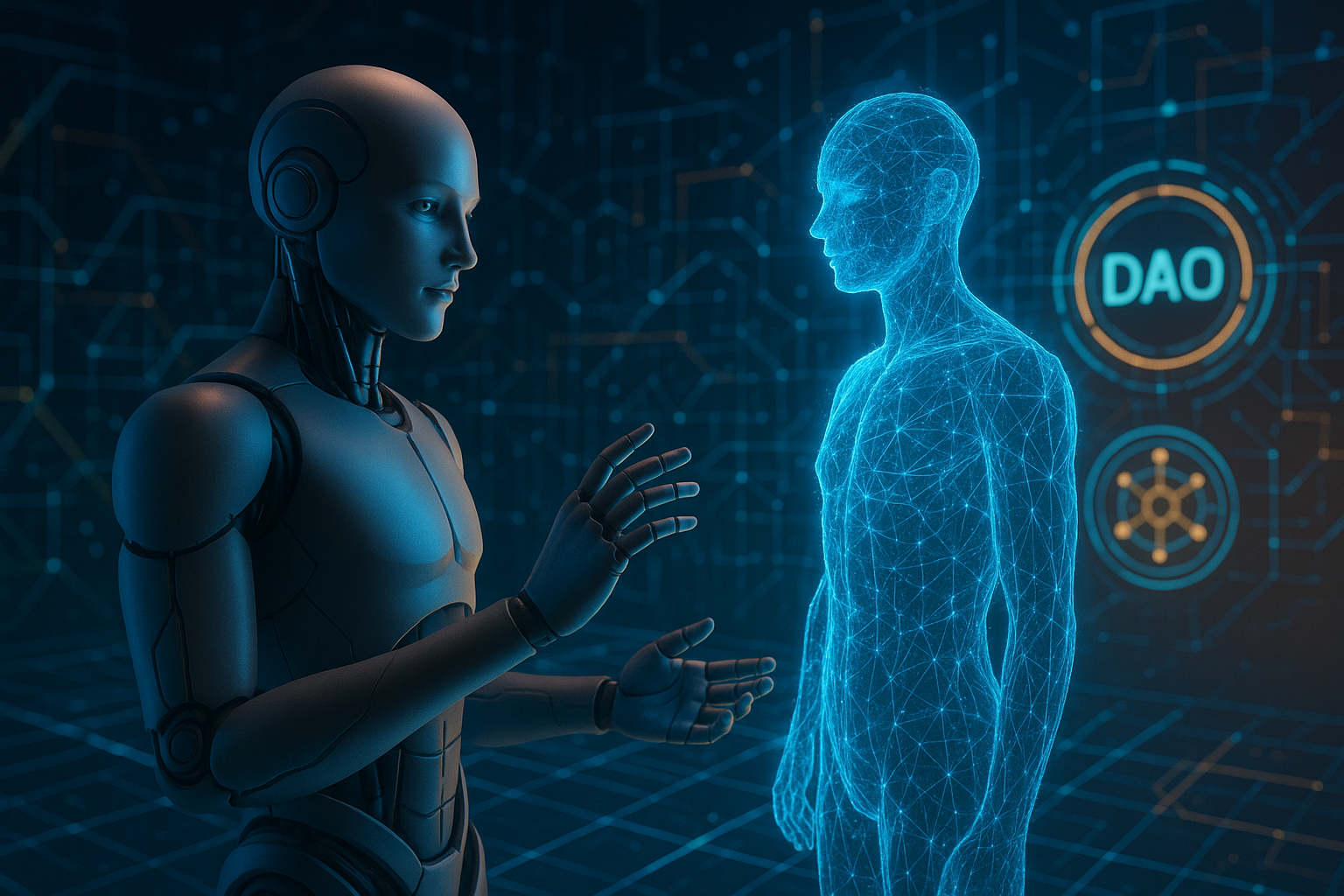
The Near Foundation is developing artificial intelligence-powered “digital twins” to revolutionize how decentralized autonomous organizations (DAOs) handle governance votes. This innovation aims to solve one of the biggest challenges in decentralized decision-making: low voter participation, which typically averages only 15–25%.
The Problem: Voter Apathy in DAOs
Most DAOs face low engagement, leading to risks like:
- Centralization of power in the hands of a few token holders.
- Ineffective decision-making, slowing down progress.
- Governance attacks, where bad actors exploit inactivity to pass harmful proposals.
Near believes that AI-driven voting delegates can boost participation while preserving decentralization.
How AI “Digital Twins” Will Work
According to Lane Rettig, AI and governance researcher at Near Foundation, the new model will create a personalized AI delegate that learns a user’s preferences through:
- Voting history
- User interviews
- Activity on platforms like Telegram and Discord
Over time, the delegate will act as a mathematical extension of the voter, making decisions instantly while staying aligned with individual values.
Importantly, Rettig stressed that humans remain in the loop. For high-impact proposals such as treasury allocations or protocol pivots, the final decision will still require human confirmation.
Phased Rollout of AI Governance
The AI system will be introduced gradually:
- Early Stage – Chatbot-like assistants providing advice and filling templates for voters.
- Group Delegates – AI models representing communities with similar preferences.
- Individual Delegates – Each DAO member gets their own AI twin for automated voting.
- Advanced Stage – Potential for AI delegate CEOs, coordinating entire DAOs.
This staged rollout ensures trust, transparency, and user control throughout the adoption process.
Security and Transparency Measures
To build confidence, Near Foundation is exploring verifiable training models. These will provide cryptographic proof of AI training inputs and cycles, ensuring that digital twins remain aligned with user values.
Still, risks exist — AI agents could misinterpret proposals, or malicious actors could attempt to influence their decision-making. Balancing automation with human oversight is key.
This initiative comes as AI agents in crypto surpass 10,000 in 2024 and are expected to exceed 1 million by 2025. Already, AI is being used in trading, application building, and protocol interaction. Near’s approach could make governance one of the most impactful applications of AI in Web3.
By merging decentralization with intelligent automation, the Near Foundation envisions a future where governance becomes faster, fairer, and more representative — potentially transforming how DAOs operate at scale.
Disclaimer
This content is for informational purposes only and does not constitute financial, investment, or legal advice. Cryptocurrency trading involves risk and may result in financial loss.