
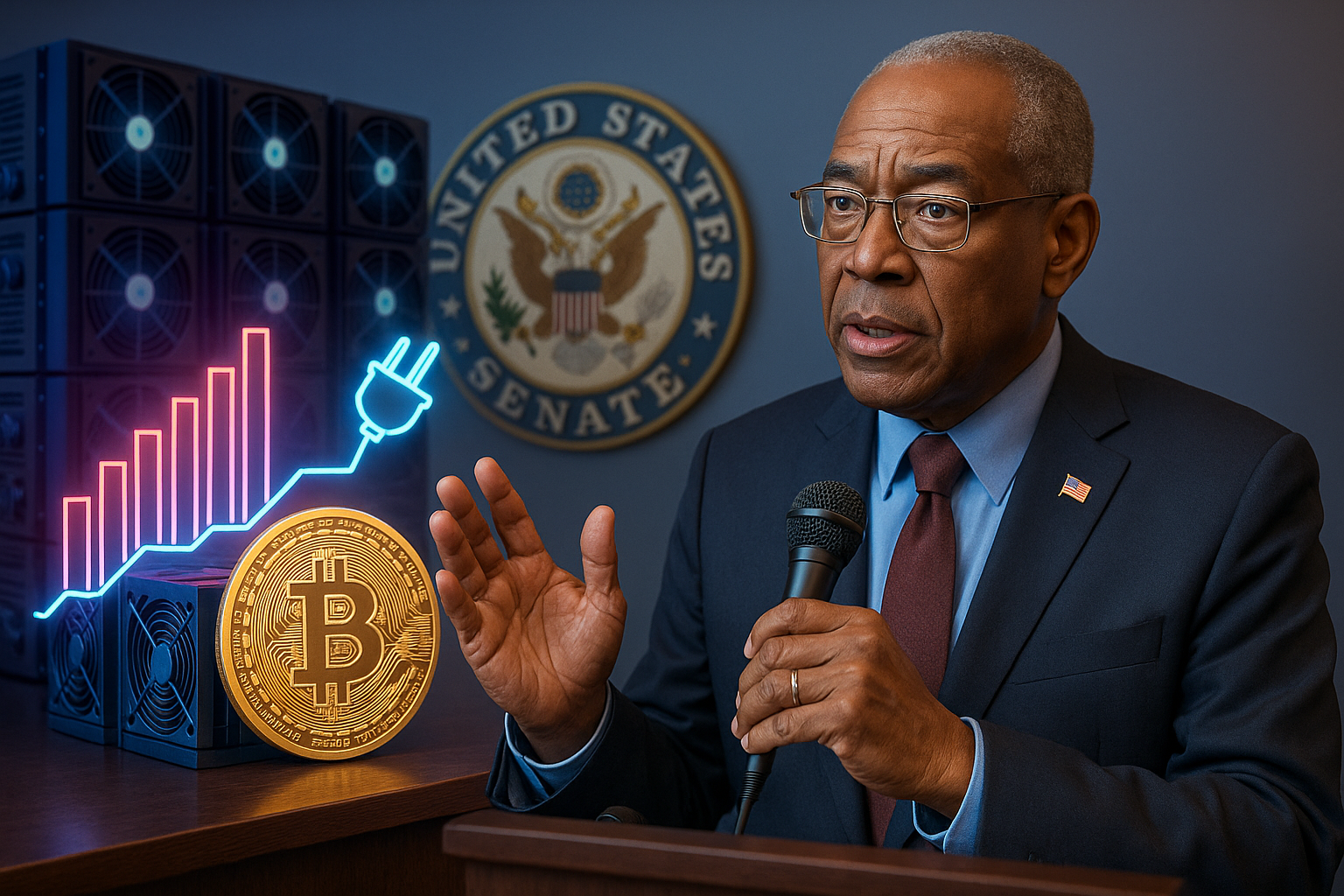
A New Legislative Push Against Energy-Intensive Mining

New York is once again tightening the screws on cryptocurrency mining. On Wednesday, State Senator Liz Krueger introduced a bill proposing a tiered excise tax on energy consumption by crypto miners. The proposal directly targets mining facilities that consume large amounts of electricity, one of the industry’s most critical cost drivers.

Details of the Proposed Mining Energy Tax

Under the bill, energy use by mining firms will be taxed in tiers, charged per kilowatt-hour (kWh) consumed:

  • ≤ 2.25 million kWh annuallyExempt from tax
  • 2.26M – 5M kWh2 cents per kWh
  • 5M – 10M kWh3 cents per kWh
  • 10M – 20M kWh4 cents per kWh
  • > 20M kWh5 cents per kWh

Importantly, the bill exempts miners using 100% renewable energy, continuing New York’s stance of encouraging clean energy mining while discouraging fossil fuel-based operations.

Mining, Taxes, Bitcoin Regulation, New York, Bitcoin Mining, New York State, Mining Pools, Home Mining
First page of the mining energy excise tax bill introduced by New York State Sen. Liz Krueger. : New York Senate

New York’s History of Mining Restrictions

This is not the state’s first move against high-energy crypto operations. In 2022, Governor Kathy Hochul signed a two-year moratorium on fossil fuel-powered mining operations, which expired in 2024. Clean-energy mining facilities were allowed to continue operations, signaling a policy preference for sustainable blockchain infrastructure.

Impact on Miners’ Profitability

Crypto mining is already a thin-margin industry, where energy costs determine survival. According to TheMinerMag, the median cost of mining one Bitcoin (BTC $120,228) surpassed $70,000 in Q2 2025, largely due to rising energy prices and increasing mining difficulty.

For context:

  • The average US industrial electricity cost is around $0.08 per kWh.
  • TeraWulf, a major miner in upstate New York, reported a $61.4 million loss in Q1 2025 after energy costs doubled relative to revenue.

Adding a state-level excise tax could push smaller and mid-sized miners out of New York toward more cost-friendly regions.

Competitive Divide: Grid vs. Renewable Energy

The legislation could create a two-tier mining economy:

  • Large miners with access to land and infrastructure can build renewable-powered facilities and remain exempt.
  • Smaller miners or those relying on retail grid electricity will face significantly higher operating costs, possibly forcing shutdowns or relocations.

This dynamic may accelerate the industry shift toward renewables, but it also risks consolidating mining power into fewer, better-capitalized hands.

Mining, Taxes, Bitcoin Regulation, New York, Bitcoin Mining, New York State, Mining Pools, Home Mining

Broader Implications

New York’s move follows a global trend of governments scrutinizing crypto mining’s environmental footprint. From China’s outright bans to Abu Dhabi’s restrictions on farmland mining, regulators are increasingly linking crypto policy to energy and climate goals.

If passed, Senator Krueger’s bill would make New York one of the most expensive US states for grid-powered mining, while potentially strengthening its role as a hub for renewable-powered blockchain infrastructure.

Disclaimer

This content is for informational purposes only and does not constitute financial, investment, or legal advice. Cryptocurrency trading involves risk and may result in financial loss.

logo

blockto.io

info@blockto.io

Blockto.io Copyright © 2025, All rights reserved

News
Rates
Buy
More
We use cookies to personalize content and ads, provide social media features, and analyze our traffic. In accordance with GDPR/AVG and EU cookie regulations, data is processed only with your consent. We may share information about your use of our website with our social media, advertising, and analytics partners, and you can manage or withdraw your consent at any time. View more
Cookies settings
Accept
Privacy & Cookie policy
Privacy & Cookies policy
Cookie name Active

Privacy Policy

At BitxJournal.com, we respect your privacy and are committed to protecting your personal data. This Privacy Policy explains how we collect, process, store, and protect personal information in accordance with the General Data Protection Regulation (GDPR) and AVG (EU privacy legislation).

1. Data Controller

BitxJournal.com acts as the data controller for all personal data processed through this website.

2. Personal Data We Collect

We may collect and process the following categories of data:

Personal Data

  • Name and email address (when you subscribe to newsletters or contact us)

Technical & Usage Data

  • IP address, browser type, operating system

  • Device information

  • Pages visited, referral sources, and interaction data

This data is collected via cookies, log files, and analytics technologies.

3. Legal Basis for Processing

We process personal data only when a lawful basis exists, including:

  • Consent – when you explicitly agree (e.g., cookies, newsletter sign-up)

  • Legitimate interest – to operate, secure, and improve our website

  • Legal obligation – when required by applicable laws

You may withdraw your consent at any time.

4. Purpose of Data Processing

Your data is processed for the following purposes:

  • Operating and maintaining the website

  • Improving content, usability, and performance

  • Sending newsletters or updates (only with consent)

  • Analyzing traffic and user behavior

  • Responding to inquiries or support requests

5. Cookies & Consent Management

We use cookies and similar technologies in compliance with EU Cookie Law.

  • Non-essential cookies are placed only after explicit user consent

  • Users may accept, reject, or manage cookie preferences at any time

  • Consent can be withdrawn without affecting prior lawful processing

Detailed cookie information is available in our Cookie Settings panel.

6. Third-Party Data Processing

We may share limited data with trusted third-party service providers, including:

  • Analytics providers (e.g., Google Analytics)

  • Advertising partners (for personalized or non-personalized ads)

These third parties act as data processors and process data only under contractual obligations compliant with GDPR/AVG.

7. International Data Transfers

Where data is transferred outside the European Economic Area (EEA), we ensure appropriate safeguards are in place, such as Standard Contractual Clauses (SCCs) or equivalent legal mechanisms.

8. Data Retention

We retain personal data only for as long as necessary to fulfill the purposes outlined in this policy or as required by law.

9. Data Security

We implement appropriate technical and organizational security measures to protect personal data against unauthorized access, alteration, disclosure, or destruction.

10. Your GDPR Rights

Under GDPR/AVG, you have the right to:

  • Access your personal data

  • Rectify inaccurate or incomplete data

  • Request data erasure (“right to be forgotten”)

  • Restrict or object to processing

  • Data portability

  • Withdraw consent at any time

  • Lodge a complaint with a supervisory authority

11. Changes to This Privacy Policy

We reserve the right to update this Privacy Policy at any time. Any changes will be posted on this page with a revised effective date.

12. Contact Information

For privacy-related inquiries or GDPR requests, contact:

📧 Email: support@blockto.io
🌐 Website: https://blockto.io

Save settings
Cookies settings