


Photo: Illustrative
Bitcoin Drops Below $80K as US Retail Sales Meet Forecasts and Inflation Data Weighs on Markets
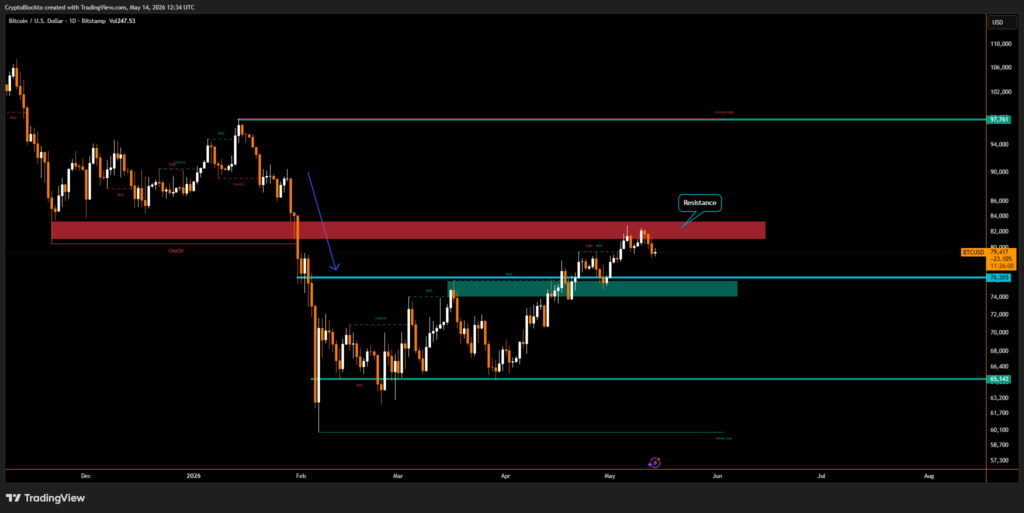
Bitcoin fell around 2% in the last 24 hours according to Blockto market data, trading near $79,400 as investors assessed fresh US economic data and shifting expectations around Federal Reserve interest rate cuts.

Bitcoin fell around 2% in the last 24 hours according to Blockto market data, trading near $79,400 as investors assessed fresh US economic data and shifting expectations around Federal Reserve interest rate cuts.
US retail sales data matched forecasts, showing retail sales rising 0.5% month over month in April, down from 1.7% previously. Core retail sales, which exclude automobiles, also increased 0.7%, meeting expectations but slowing sharply from the previous 1.9%.
The figures followed hotter-than-expected inflation data earlier in the week. On May 13, the CPI came in at 3.8%, marking the strongest reading in nearly three years. A day later, PPI data showed a 1.4% monthly increase, above the 0.7% forecast.
Federal Reserve Rate Cut Expectations Shift
Consumer spending makes up more than two thirds of the US economy, making retail sales a closely watched signal for economic strength and inflation pressure.
While slowing retail growth suggests demand may be cooling, stronger inflation readings have complicated expectations for the Federal Reserve’s next move. Markets are now increasingly pricing in a delayed rate cut decision, reducing optimism for near-term monetary easing and pressuring risk assets such as Bitcoin.
Live market reaction
Disclaimer
This content is for informational purposes only and does not constitute financial, investment, or legal advice. Cryptocurrency trading involves risk and may result in financial loss.
Start trading
with BloFin today
Up to $500 sign-up bonus and zero-fee trading on your first 30 days.
Buy crypto nowⓘ You will be redirected to BloFin
About the author
8+ years covering crypto markets, macro, and geopolitics. Previously at Decrypt and CoinDesk. Focused on the intersection of digital assets and traditional finance.

 Tristan R. ·
.jpeg&w=32&q=75) Laurisa ·
Laurisa · 