

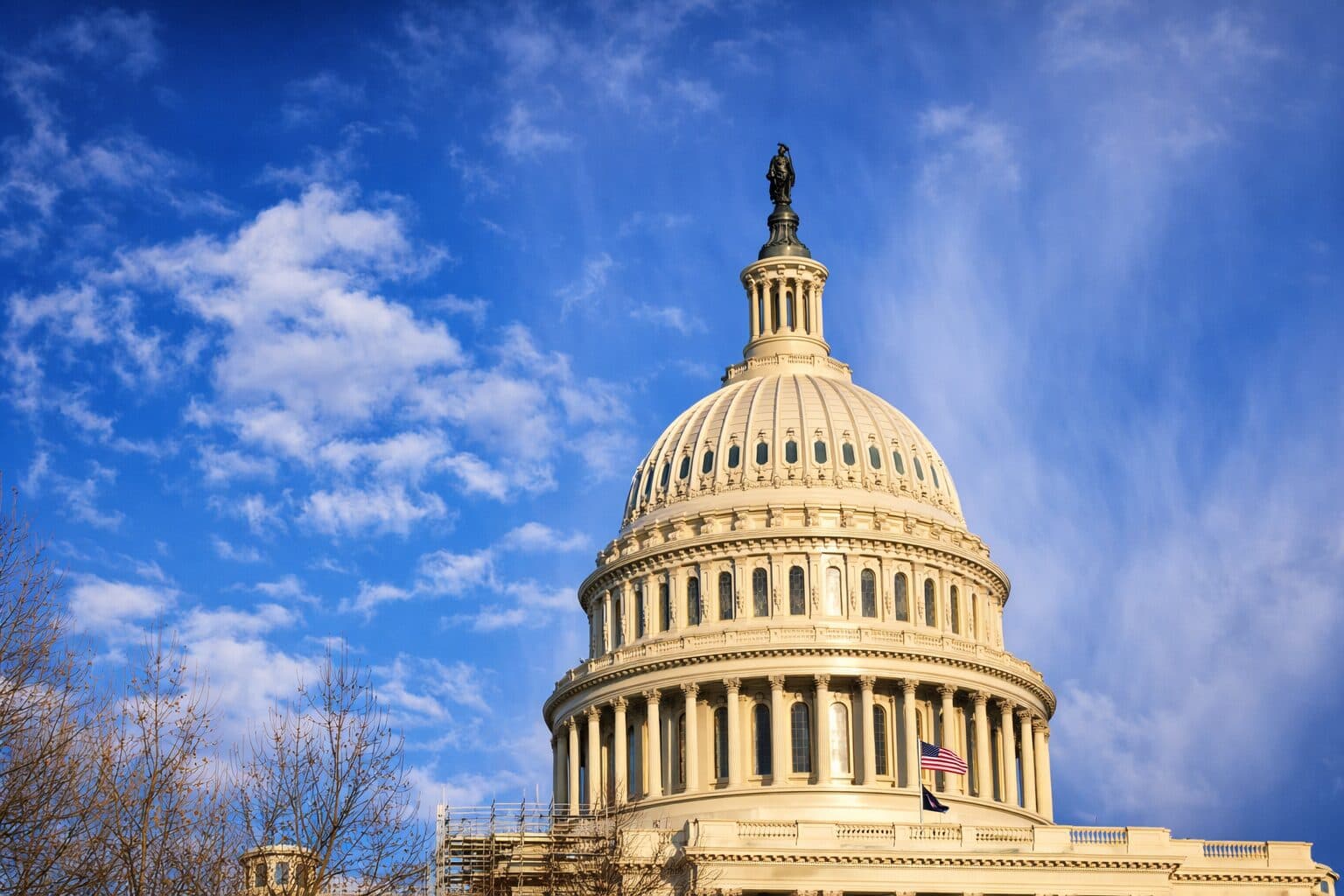
Photo: Illustrative
Clarity Act Stablecoin Yield Proposal Delayed as Ban on Idle Rewards Remains
The anticipated release of updated stablecoin yield provisions in the Clarity Act has been delayed until at least next week, according to lawmakers involved in the drafting process. U.S. Senator Thom Tillis said the updated language would not be published this week as he seeks clarity on the timing of the upcoming Banking Committee markup before making the draft public.
.jpeg)
Lawmakers Postpone Release of Updated Stablecoin Yield Language
The anticipated release of updated stablecoin yield provisions in the Clarity Act has been delayed until at least next week, according to lawmakers involved in the drafting process. U.S. Senator Thom Tillis said the updated language would not be published this week as he seeks clarity on the timing of the upcoming Banking Committee markup before making the draft public.
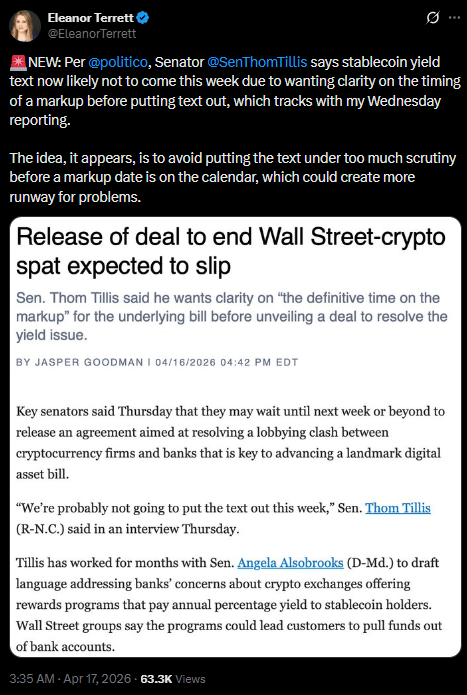
Sources familiar with the discussions indicated that legislative teams continue to meet with bank trade associations and cryptocurrency companies to refine the text. The current draft reportedly maintains earlier language that bans rewards on idle stablecoin balances while allowing yield tied to transactional activity. According to insiders, making major changes to the draft at this stage could be difficult.
Senator Tillis has been working alongside Angela Alsobrooks to address long-standing regulatory uncertainty over whether crypto companies should be permitted to pay interest on inactive stablecoin holdings.
Dispute Over Stablecoin Rewards Remains Key Legislative Challenge
The debate over stablecoin rewards has become the most contentious issue within the Clarity Act, a major legislative effort aimed at establishing comprehensive regulations for digital assets in the United States. The previously enacted GENIUS Act prohibits stablecoin issuers from paying interest directly to holders but does not restrict third-party platforms, including exchanges, from offering yield services.
Traditional U.S. banks have warned that allowing interest on stablecoin balances could divert large volumes of deposits away from the banking system, potentially disrupting financial stability. Meanwhile, crypto firms such as Coinbase argue that banning such rewards could slow innovation and reduce competitive opportunities, noting that banks themselves could benefit from participating in the evolving digital asset ecosystem.
Since early this year, the White House has hosted several closed-door meetings aimed at resolving the dispute, though no final agreement has yet been reached between the competing industry groups.
Disclaimer
This content is for informational purposes only and does not constitute financial, investment, or legal advice. Cryptocurrency trading involves risk and may result in financial loss.
Live market reaction
Disclaimer
This content is for informational purposes only and does not constitute financial, investment, or legal advice. Cryptocurrency trading involves risk and may result in financial loss.
Start trading
with BloFin today
Up to $500 sign-up bonus and zero-fee trading on your first 30 days.
Buy crypto nowⓘ You will be redirected to BloFin
About the author
Emerging voice in crypto journalism with a background in fintech and digital economics. Covers DeFi, NFTs, and the evolving regulatory landscape.

.jpeg&w=32&q=75) Laurisa ·
Laurisa · 

 Tristan R. ·