

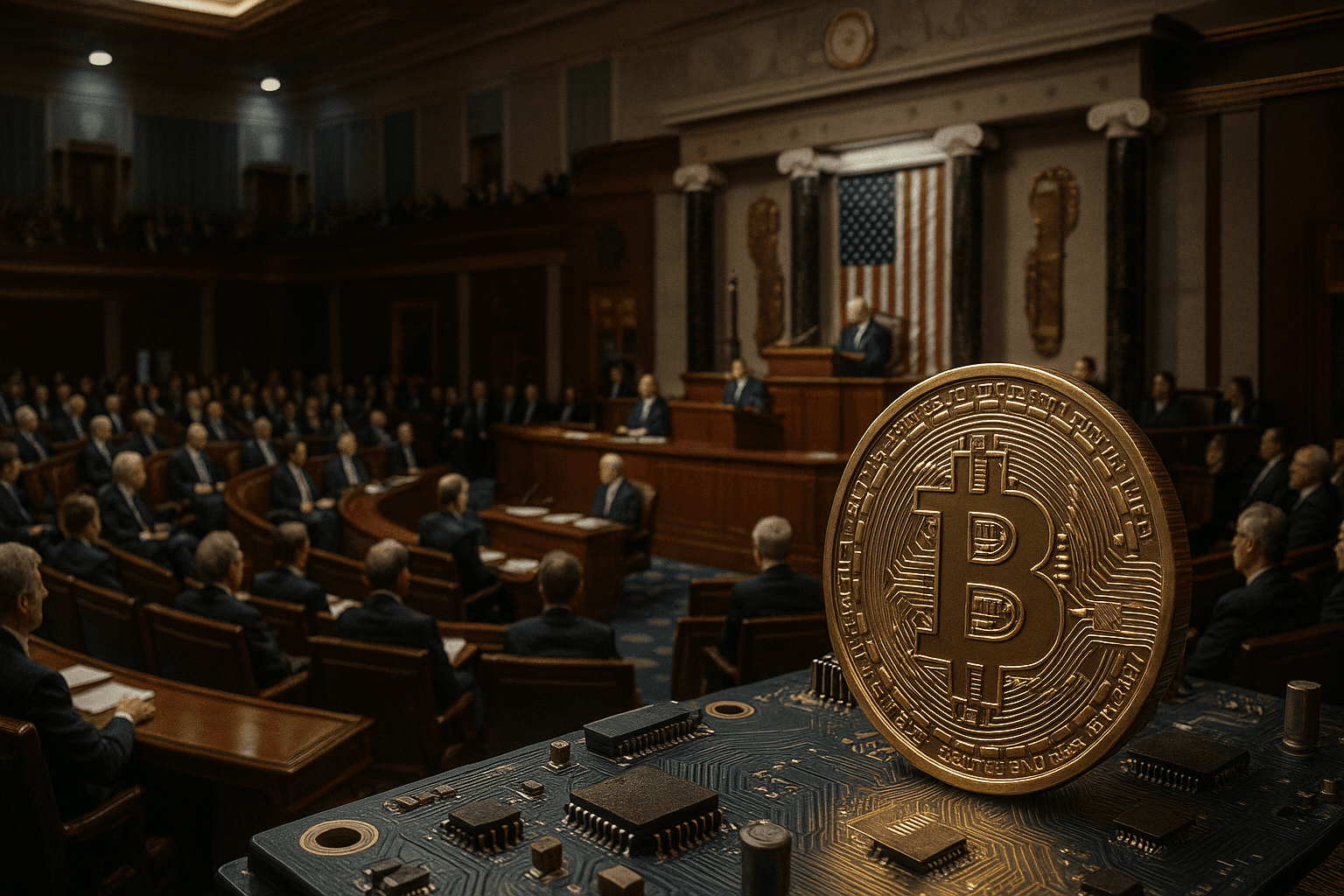
Photo: Illustrative
Crypto Week in Congress: Can Lawmakers Future-Proof the U.S. Financial System?
As Crypto Week unfolds in Washington, Congress faces a defining moment—one that echoes the sweeping financial reforms of the 1930s. With the rise of digital assets and shifting global dynamics, the opportunity to modernize America's financial infrastructure has never been more urgent.
.jpeg)
As Crypto Week unfolds in Washington, Congress faces a defining moment—one that echoes the sweeping financial reforms of the 1930s. With the rise of digital assets and shifting global dynamics, the opportunity to modernize America’s financial infrastructure has never been more urgent.
A New Digital Foundation: Beyond Outdated Regulations
In 1934, the U.S. established regulatory bodies like the Securities and Exchange Commission (SEC) in response to structural failures of the early 20th century. Now, nearly a century later, the emergence of blockchain, stablecoins, and decentralized platforms has pushed the financial system into unfamiliar territory.
Congress is now weighing two critical proposals: the GENIUS Act for stablecoin regulation and broader market structure reform.
These aren’t minor updates—they represent the foundation for a 21st-century financial framework that can keep pace with how money and markets now operate globally.
Stablecoins: America’s Competitive Advantage
The $240 billion stablecoin market, projected to hit $3.7 trillion by 2030, has become a cornerstone of digital finance, yet it operates largely without formal regulation. Most major stablecoins voluntarily peg to the U.S. dollar, enhancing its reach and usability globally.
This positions stablecoins as a strategic tool to extend American financial influence, particularly as rivals like China advance alternatives such as the digital yuan.
The GENIUS Act introduces reserve requirements, audits, and consumer protections—creating a safer, more transparent environment for dollar-backed digital assets.
Modern Market Structure: Tailored for Crypto Innovation
Digital asset platforms integrate trading, custody, and settlement—functions that traditional finance keeps separate. Yet current U.S. regulations attempt to fit these innovations into outdated legal categories, slowing progress and sending businesses abroad.
Comprehensive market structure reform would create purpose-built frameworks that align with how modern crypto platforms actually operate.
Without such updates, the U.S. risks pushing innovation to countries with clearer rules—such as those under Europe’s MiCA, the U.K.’s stablecoin framework, and Asia’s proactive policies.
Aligning Policy, Technology, and Strategy
The integration of stablecoin legislation with market structure reform is essential. One without the other creates gaps that leave innovation vulnerable. Together, they can restore America’s leadership in global finance.
There’s growing political will to act. The Senate’s 68–30 vote on the GENIUS Act, combined with bipartisan support and President Trump’s pledge to sign legislation before August recess, shows rare alignment between economic strategy and political momentum.
The Road Ahead: Leadership or Lost Ground?
While there is momentum, challenges remain. Congress must overcome partisan gridlock and demonstrate the capacity for careful, technical policymaking. Symbolic gestures won’t be enough. What’s needed is systemic reform that can endure for decades.
The choice is clear: either lead in shaping the next generation of global financial infrastructure or let others define it.
If passed and implemented correctly, this new regulatory framework could serve the U.S. as well in the digital era as the 1930s structure did in the analog one—preserving both innovation and American financial supremacy for generations to come.
Disclaimer
This content is for informational purposes only and does not constitute financial, investment, or legal advice. Cryptocurrency trading involves risk and may result in financial loss.
Live market reaction
Disclaimer
This content is for informational purposes only and does not constitute financial, investment, or legal advice. Cryptocurrency trading involves risk and may result in financial loss.
Start trading
with BloFin today
Up to $500 sign-up bonus and zero-fee trading on your first 30 days.
Buy crypto nowⓘ You will be redirected to BloFin
About the author
Emerging voice in crypto journalism with a background in fintech and digital economics. Covers DeFi, NFTs, and the evolving regulatory landscape.

.jpeg&w=32&q=75) Laurisa ·
Laurisa ·