


Photo: Illustrative
DeFi Remains Resilient Despite $292M Exploit and $13B TVL Decline Following KelpDAO Incident
The decentralized finance (Decentralized Finance) sector faced renewed pressure after a $292 million exploit involving KelpDAO, which contributed to an estimated $13 billion drop in total value locked (TVL). The breach was reportedly linked to infrastructure used in the LayerZero verification system rather than a direct smart contract flaw. Early findings suggested connections to the Lazarus Group, with the attack reportedly enabled by a single-verifier configuration that lacked recommended safeguards.
.jpeg)
The decentralized finance (Decentralized Finance) sector faced renewed pressure after a $292 million exploit involving KelpDAO, which contributed to an estimated $13 billion drop in total value locked (TVL). The breach was reportedly linked to infrastructure used in the LayerZero verification system rather than a direct smart contract flaw. Early findings suggested connections to the Lazarus Group, with the attack reportedly enabled by a single-verifier configuration that lacked recommended safeguards.
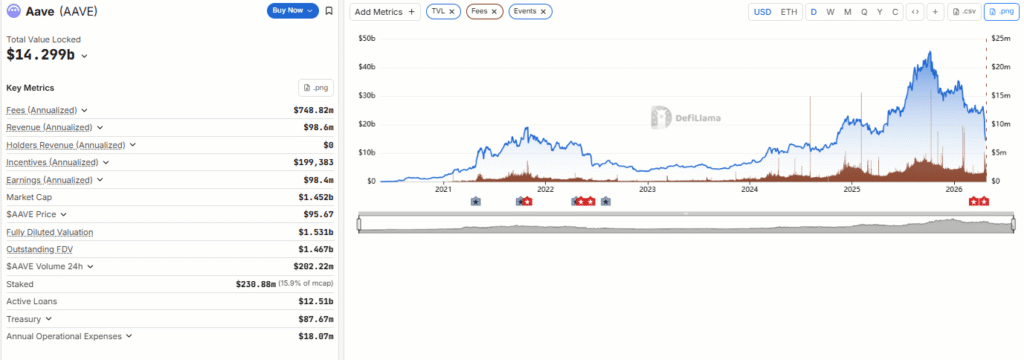
The exploit caused instability in rsETH, a liquid staking token, leading to fears of bad debt spreading into lending platforms such as Aave. Aave alone recorded $8.45 billion in outflows within 48 hours, contributing significantly to the wider TVL contraction across the sector.
Leveraged Positions Amplified the Scale of TVL Decline
Analysts noted that the $13 billion decline did not represent direct capital destruction. Much of the drop resulted from leveraged “looping” strategies, where users repeatedly deposited collateral, borrowed assets, and redeployed them to amplify returns. Data from DefiLlama showed reETH balances on Aave had surged to nearly 580,000 tokens, valued at about $1.3 billion, before the incident triggered forced unwinds.
Yield conditions had already weakened before the exploit. Aave offered approximately 2.61% annual returns on USD Coin deposits, lower than the 3.14% available on idle cash through Interactive Brokers, reducing the incentive to maintain risk exposure.
Capital Rotation Shows DeFi Ecosystem Still Active
Despite heavy withdrawals, evidence suggests capital is rotating rather than leaving entirely. Lending platform Spark saw TVL rise from $1.8 billion to $2.9 billion over the weekend after removing rsETH exposure earlier this year.
Industry voices stress that previous major incidents including losses tied to Ronin Network and Wormhole did not destroy the sector. DeFi’s ability to recover and adapt suggests the current event represents a repricing of risk rather than a structural collapse.
Disclaimer
This content is for informational purposes only and does not constitute financial, investment, or legal advice. Cryptocurrency trading involves risk and may result in financial loss.
Live market reaction
Disclaimer
This content is for informational purposes only and does not constitute financial, investment, or legal advice. Cryptocurrency trading involves risk and may result in financial loss.
Start trading
with BloFin today
Up to $500 sign-up bonus and zero-fee trading on your first 30 days.
Buy crypto nowⓘ You will be redirected to BloFin
About the author
Emerging voice in crypto journalism with a background in fintech and digital economics. Covers DeFi, NFTs, and the evolving regulatory landscape.

.jpeg&w=32&q=75) Laurisa ·
Laurisa · 
 Tristan R. ·