


Photo: Illustrative
ECB Signs Standards Agreements to Lower Digital Euro Integration Costs Across Europe
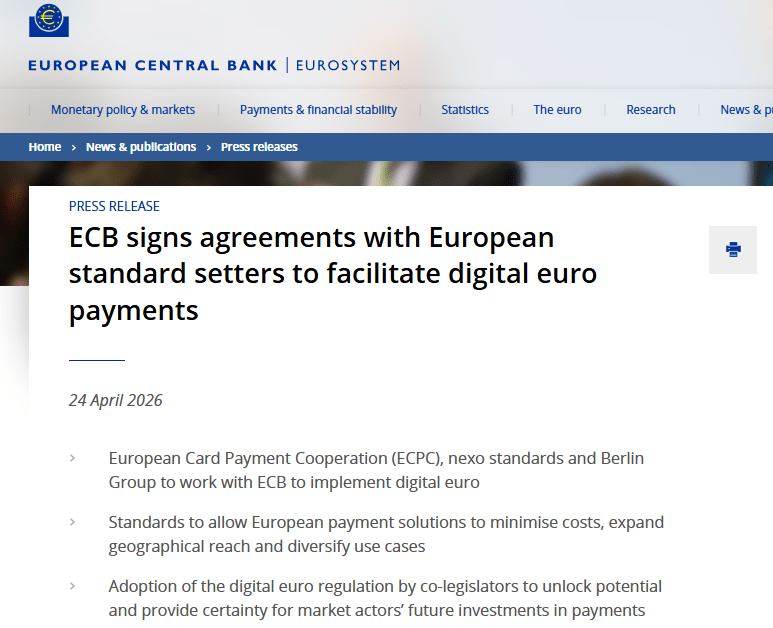
The European Central Bank (ECB) has signed agreements with three European standards bodies to reuse existing open payment frameworks for the planned digital euro. The goal is to reduce integration costs for banks, merchants, and payment service providers while preparing the technical foundation for a possible launch.

The European Central Bank (ECB) has signed agreements with three European standards bodies to reuse existing open payment frameworks for the planned digital euro. The goal is to reduce integration costs for banks, merchants, and payment service providers while preparing the technical foundation for a possible launch.
The agreements involve the European Card Payment Cooperation, Nexo standards, and the Berlin Group. These frameworks will support key payment functions including contactless tap-to-pay transactions, merchant-to-provider connections, and alias-based payments such as transfers using mobile phone numbers.
Cost Reduction Efforts Ahead of Digital Euro Rollout
The ECB stated that reusing established standards should help lower adoption costs and ensure a consistent user experience across the euro area. However, officials emphasized that this step does not guarantee a low-cost rollout. Previous estimates suggest that European banks could face implementation costs between €4 billion and €6 billion over four years.
Pilot Preparation and Market Coordination Underway
The move is part of broader preparation efforts ahead of a potential digital euro pilot expected in the second half of 2027. The ECB is also recruiting payment service providers and market participants for a 12-month testing phase. ECB board member Piero Cipollone previously indicated that key technical standards are expected to be announced by summer.
The initiative highlights the ECB’s focus on building standardized, interoperable infrastructure while addressing the significant cost and coordination challenges involved in introducing a central bank digital currency across Europe.
Disclaimer
This content is for informational purposes only and does not constitute financial, investment, or legal advice. Cryptocurrency trading involves risk and may result in financial loss.
Live market reaction
Disclaimer
This content is for informational purposes only and does not constitute financial, investment, or legal advice. Cryptocurrency trading involves risk and may result in financial loss.
Start trading
with BloFin today
Up to $500 sign-up bonus and zero-fee trading on your first 30 days.
Buy crypto nowⓘ You will be redirected to BloFin
About the author
8+ years covering crypto markets, macro, and geopolitics. Previously at Decrypt and CoinDesk. Focused on the intersection of digital assets and traditional finance.

 Tristan R. ·
.jpeg&w=32&q=75) Laurisa ·
Laurisa ·