

Photo: Illustrative
New US Bitcoin Reserve Bill Removes 1 Million BTC Target, Adds 20-Year Holding Rule
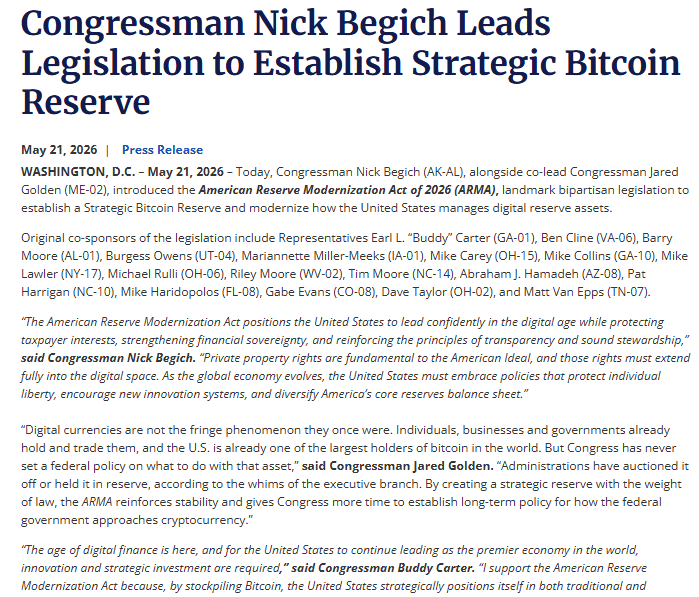
A new bipartisan bill introduced in the US House of Representatives could reshape how the government manages Bitcoin and other digital assets. Lawmakers Rep. Nick Begich of Alaska and Rep. Jared Golden of Maine introduced the American Reserve Modernization Act of 2026 (ARMA) to formally establish a Strategic Bitcoin Reserve and a separate Digital Asset Stockpile under the US Treasury.
.jpeg)
A new bipartisan bill introduced in the US House of Representatives could reshape how the government manages Bitcoin and other digital assets. Lawmakers Rep. Nick Begich of Alaska and Rep. Jared Golden of Maine introduced the American Reserve Modernization Act of 2026 (ARMA) to formally establish a Strategic Bitcoin Reserve and a separate Digital Asset Stockpile under the US Treasury.
The proposal builds on President Donald Trump’s 2025 executive order that aimed to create a national Bitcoin reserve using crypto already held by the federal government through criminal and civil asset seizures.
20-Year Lockup Period Becomes Key Part of Proposal
One major feature of the bill is a strict 20-year lockup period for Bitcoin placed in the reserve. Under ARMA, the government would not be allowed to sell, swap, auction or transfer reserve Bitcoin during that time.
After the 20 years end, the Treasury secretary could only recommend selling up to 10% of reserve assets within a two-year period.
Republican Congressman Mike Rulli of Ohio backed the approach, saying America should secure strategic digital assets instead of selling them.
No Mandatory 1 Million Bitcoin Purchase Plan
Unlike the earlier BITCOIN Act, which proposed buying 1 million BTC over five years, ARMA does not force the government to purchase a fixed amount of Bitcoin.
Instead, the Treasury and Commerce departments would study budget-neutral methods for growing reserves, including forfeiture proceedings, tariff revenue, gold certificate revaluations, converting non Bitcoin assets and partnerships with states.
Transparency and Proof-of-Reserve Requirements
The bill also focuses heavily on transparency. Federal agencies would have 60 days to report all digital assets under government control. ARMA would require quarterly public proof-of-reserve disclosures, independent audits and congressional oversight of government crypto holdings.
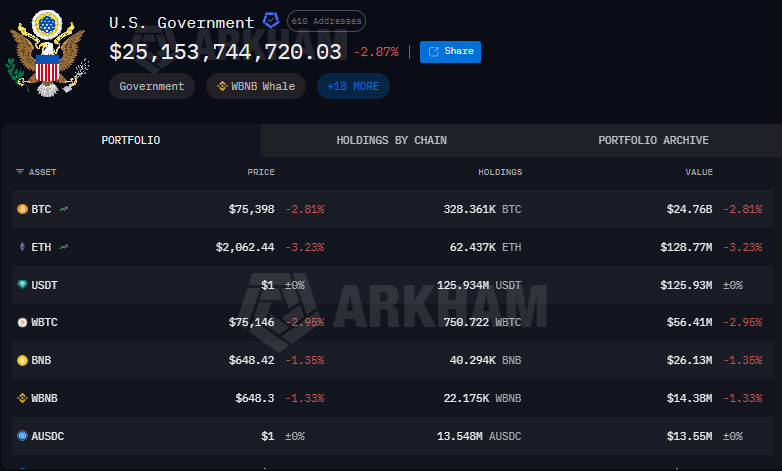
Unofficial blockchain data estimates the US government currently holds around $26 billion in crypto assets accoding to Unofficial data from Arkham Intelligence , mainly Bitcoin, Ether and USDT.
Live market reaction
Disclaimer
This content is for informational purposes only and does not constitute financial, investment, or legal advice. Cryptocurrency trading involves risk and may result in financial loss.
Start trading
with BloFin today
Up to $500 sign-up bonus and zero-fee trading on your first 30 days.
Buy crypto nowⓘ You will be redirected to BloFin
About the author
Emerging voice in crypto journalism with a background in fintech and digital economics. Covers DeFi, NFTs, and the evolving regulatory landscape.

 Tristan R. ·