





Photo: Illustrative
Stablecoin Regulation Uncertainty May Put Banks at Competitive Disadvantage
Ongoing uncertainty around stablecoin regulation could place traditional financial institutions at a disadvantage compared with crypto-native firms. According to Colin Butler, banks have already invested heavily in digital asset infrastructure but remain hesitant to deploy it fully while policymakers debate how stablecoins should be classified.

Ongoing uncertainty around stablecoin regulation could place traditional financial institutions at a disadvantage compared with crypto-native firms. According to Colin Butler, banks have already invested heavily in digital asset infrastructure but remain hesitant to deploy it fully while policymakers debate how stablecoins should be classified.
Legal teams at many financial institutions are reportedly advising caution until regulators clarify whether stablecoins will be treated as deposits, securities or a new form of payment instrument. Several large banks have already developed key infrastructure components, including blockchain payment networks, digital asset custody services and tokenized deposit experiments.
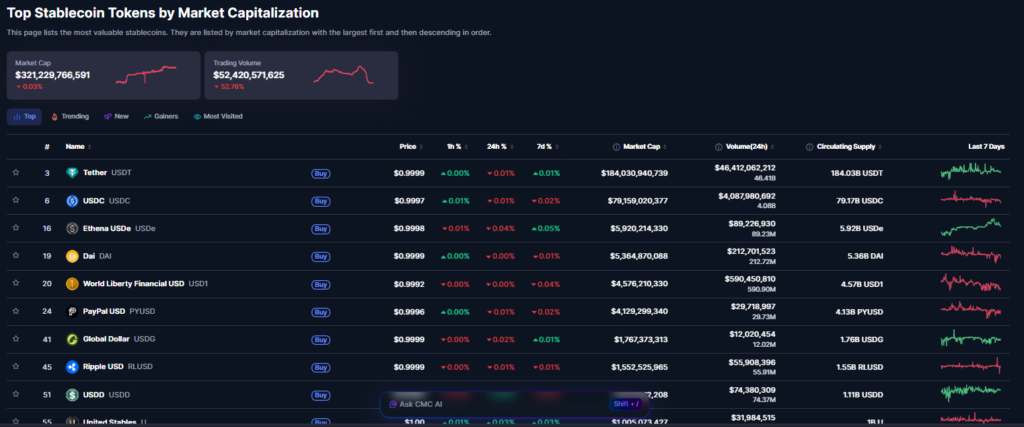
Yield Differences Could Pressure Traditional Bank Deposits
The growing gap between returns offered by stablecoin platforms and traditional savings accounts is also drawing attention. Butler noted that some crypto exchanges provide yields between 4% and 5% on stablecoin balances, while typical savings accounts offer less than 0.5%.
Analysts say such differences could gradually encourage deposit migration if digital dollar products become widely accepted as everyday financial tools rather than trading instruments.
Restrictions on Stablecoin Yield Could Push Activity Offshore
Some experts warn that strict limits on stablecoin yields could produce unintended consequences. Alternative products such as USDe demonstrate how digital assets can generate returns through derivatives markets rather than traditional reserves.
If regulations tighten too aggressively, capital may shift toward offshore or synthetic structures where oversight is weaker, potentially increasing systemic risk rather than reducing it.
Disclaimer
This content is for informational purposes only and does not constitute financial, investment, or legal advice. Cryptocurrency trading involves risk and may result in financial loss.
Live market reaction
Disclaimer
This content is for informational purposes only and does not constitute financial, investment, or legal advice. Cryptocurrency trading involves risk and may result in financial loss.
Start trading
with BloFin today
Up to $500 sign-up bonus and zero-fee trading on your first 30 days.
Buy crypto nowⓘ You will be redirected to BloFin
About the author
8+ years covering crypto markets, macro, and geopolitics. Previously at Decrypt and CoinDesk. Focused on the intersection of digital assets and traditional finance.

BitMine Expands Ethereum Holdings With $238M Purchase, Nears 5% Supply Target
.jpeg&w=32&q=75) Laurisa ·
Laurisa · 
Bitcoin Price Outlook: Why BTC Could Move Toward $95K After $80K Recovery
 Tristan R. ·
Trump-Linked World Liberty Files Defamation Case Against Justin Sun Over WLFI Token Dispute
Laurisa ·