

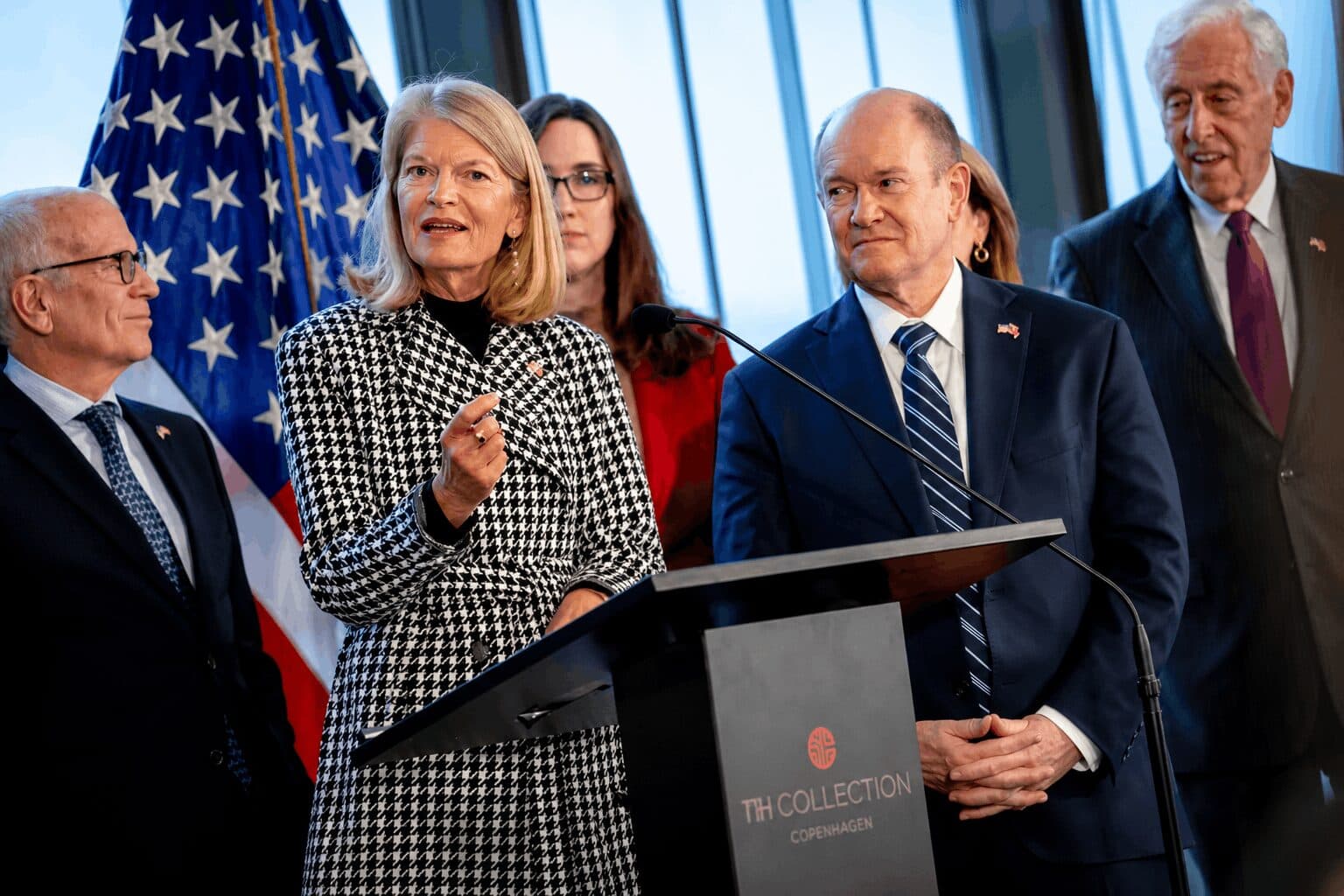
Photo: Illustrative
US Lawmakers Push PARITY Act to Review Crypto Tax Exemption Rules
US lawmakers have introduced a new bipartisan bill that directs the Internal Revenue Service (IRS) and Treasury Department to examine possible tax relief for small crypto transactions. The proposal, known as the PARITY Act (Digital Asset Protection, Accountability, Regulation, Innovation, Taxation and Yields Act), aims to address growing concerns that current tax rules are not suited to digital assets.

US lawmakers have introduced a new bipartisan bill that directs the Internal Revenue Service (IRS) and Treasury Department to examine possible tax relief for small crypto transactions. The proposal, known as the PARITY Act (Digital Asset Protection, Accountability, Regulation, Innovation, Taxation and Yields Act), aims to address growing concerns that current tax rules are not suited to digital assets.
Representative Max Miller, a Republican who helped introduce the bill, said the US tax system has not kept pace with the rapid growth of crypto and modern financial technology. Lawmakers argue that clearer rules are needed as crypto adoption expands across retail and institutional users.

IRS Asked to Study De Minimis Crypto Tax Exemption
Instead of immediately creating a tax exemption, the PARITY Act instructs the US Treasury, which oversees the IRS, to study whether a “de minimis” exemption for small crypto transactions is possible under existing authority. The Treasury would also be required to issue interim guidance within 180 days on what level of tax relief could be offered without new legislation.
The bill also requires analysis of taxpayer burden, including reporting requirements for small transactions. Data cited by industry players shows millions of IRS tax forms are generated for crypto activity, with a large share linked to transactions under $50.
Stablecoins, Compliance Rules and Market Safeguards
The legislation also includes provisions treating regulated stablecoins more like cash for tax purposes, meaning gains or losses would generally not apply unless significant value changes occur. It further includes a “safe harbor” framework for brokered crypto trading and suggests applying wash sale rules to digital assets.
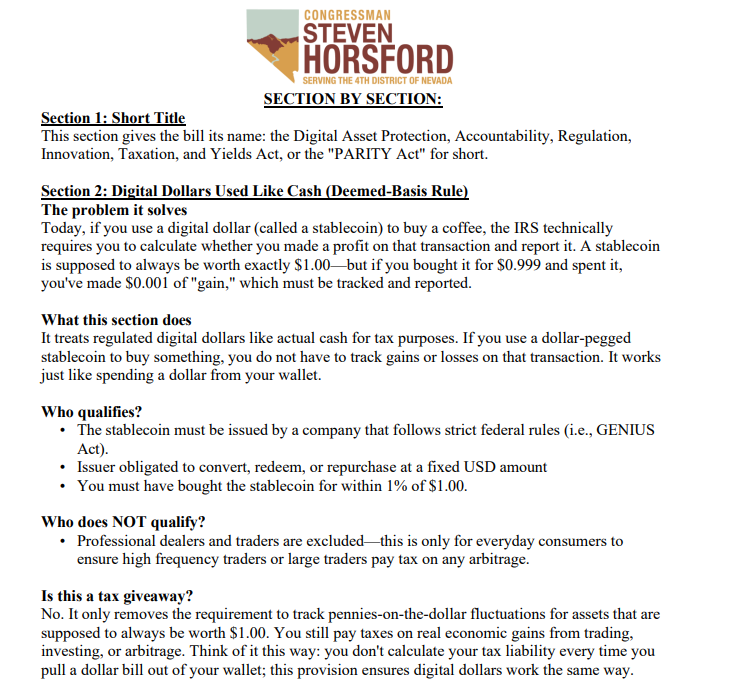
Lawmakers from both parties, including Steven Horsford, Suzan DelBene, and Mike Carey, support the bill. Officials say it could advance before the current Congress ends in January, ahead of the next US election cycle.
Live market reaction
Disclaimer
This content is for informational purposes only and does not constitute financial, investment, or legal advice. Cryptocurrency trading involves risk and may result in financial loss.
Start trading
with BloFin today
Up to $500 sign-up bonus and zero-fee trading on your first 30 days.
Buy crypto nowⓘ You will be redirected to BloFin
About the author
Covers Bitcoin, on-chain data and market structure. Breaks down what the charts and wallet flows are actually saying, without the hype.

.jpeg&w=32&q=75) Laurisa ·
Laurisa · 
 Tristan R. ·