





Photo: Illustrative
Vitalik Buterin Unveils Quantum Resistance Roadmap for Ethereum
Vitalik Buterin has outlined a comprehensive roadmap to strengthen Ethereum against future quantum computing threats, identifying four key areas of vulnerability: validator signatures, data storage, user accounts and zero-knowledge proofs.

Vitalik Buterin has outlined a comprehensive roadmap to strengthen Ethereum against future quantum computing threats, identifying four key areas of vulnerability: validator signatures, data storage, user accounts and zero-knowledge proofs.
As concerns grow that advanced quantum computers could eventually compromise traditional cryptographic systems, Buterin emphasized the need for long-term structural upgrades. One proposal involves replacing Ethereum’s current BLS consensus signatures with quantum-safe, hash-based alternatives. Selecting the appropriate hash function is critical, as it could define the network’s security foundation for decades.
Upgrading Signatures, Data Storage and Proof Systems
Ethereum’s existing data storage mechanism relies on KZG commitments. The proposed shift to STARK-based systems would introduce quantum-resistant verification, though it requires significant engineering work. User accounts, currently secured by ECDSA signatures, may also be upgraded to support flexible, lattice-based cryptography designed to withstand quantum attacks.
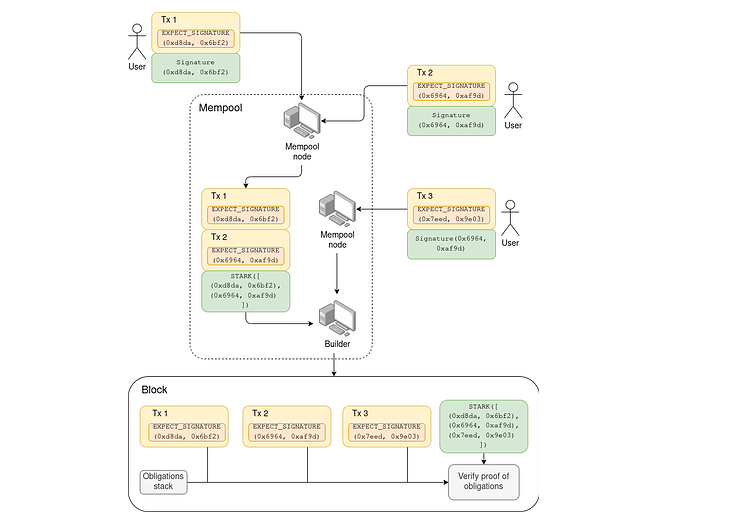
However, quantum-safe cryptography is computationally heavier and could increase transaction costs. To offset this, Buterin advocates protocol-level recursive signature and proof aggregation, allowing thousands of validations to be bundled into a single master proof.
While implementation will be complex, the roadmap signals Ethereum’s intent to future-proof its infrastructure before quantum computing becomes a practical threat.
Disclaimer
This content is for informational purposes only and does not constitute financial, investment, or legal advice. Cryptocurrency trading involves risk and may result in financial loss.
Live market reaction
Disclaimer
This content is for informational purposes only and does not constitute financial, investment, or legal advice. Cryptocurrency trading involves risk and may result in financial loss.
Start trading
with BloFin today
Up to $500 sign-up bonus and zero-fee trading on your first 30 days.
Buy crypto nowⓘ You will be redirected to BloFin
About the author
8+ years covering crypto markets, macro, and geopolitics. Previously at Decrypt and CoinDesk. Focused on the intersection of digital assets and traditional finance.

BitMine Expands Ethereum Holdings With $238M Purchase, Nears 5% Supply Target
.jpeg&w=32&q=75) Laurisa ·
Laurisa · 
Bitcoin Price Outlook: Why BTC Could Move Toward $95K After $80K Recovery
 Tristan R. ·
Trump-Linked World Liberty Files Defamation Case Against Justin Sun Over WLFI Token Dispute
Laurisa ·