

Major banks push for a European alternative in the stablecoin market
Nine leading European banks are joining forces to introduce a MiCA-compliant euro-denominated stablecoin, aiming to strengthen Europe’s role in digital payments and challenge the dominance of U.S.-backed stablecoins. The project is expected to go live in the second half of 2026.
Building a trusted European stablecoin
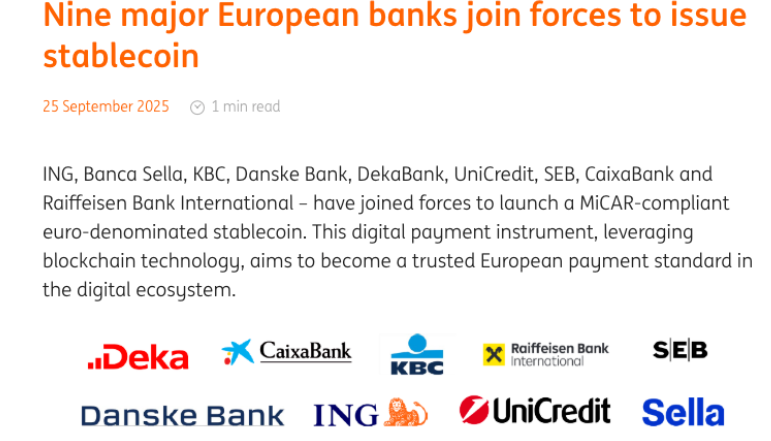
The participating banks include ING, Banca Sella, KBC, Danske Bank, DekaBank, UniCredit, SEB, CaixaBank and Raiffeisen Bank International. Together, they have formed a new company in the Netherlands, which plans to operate under the supervision of the Dutch Central Bank as an e-money institution.
According to the group, the initiative is designed to provide near-instant, low-cost payments with 24/7 availability, targeting improvements in cross-border settlements, supply chain management, and digital asset transactions.
“Digital payments are key for new euro-denominated payments and financial market infrastructure. They offer efficiency and transparency thanks to blockchain technology’s programmability features,” said Floris Lugt, digital assets lead at ING, who is jointly representing the project publicly.
Europe’s push for financial autonomy
The banks emphasized that the new stablecoin will deliver a genuine European alternative to U.S.-led stablecoins such as USDT and USDC. This move aligns with Europe’s strategic autonomy goals, ensuring that payment infrastructure remains rooted within the region.
The consortium noted that while the stablecoin will act as a common foundation, individual banks will still be able to develop their own services, such as digital wallets and custody solutions.
Regulatory clarity under MiCA
Operating under the Markets in Crypto-Assets (MiCA) framework, the euro stablecoin is expected to set a standard for regulated blockchain-based payment instruments across Europe. A CEO will be appointed in the coming months, pending regulatory approval, and the consortium remains open to additional banks joining the initiative.
“We believe this development requires an industry-wide approach, and it’s imperative that banks adopt the same standards,” added Lugt.
With strong regulatory backing and major banks on board, this project signals a pivotal step in creating a secure, regulated, and scalable digital payment infrastructure for Europe.
Disclaimer
This content is for informational purposes only and does not constitute financial, investment, or legal advice. Cryptocurrency trading involves risk and may result in financial loss.