

Tokenized private credit and stablecoins could redefine global capital markets by 2026
The distinction between decentralized finance and traditional finance may soon disappear as blockchain technology becomes the default infrastructure for global markets. According to industry leaders, onchain systems are evolving beyond niche use cases and positioning themselves as the settlement layer for everything from private credit to everyday payments.
The claim that “DeFi is dead” does not suggest a collapse of decentralized finance, but rather the end of treating it as a separate financial sector. The argument is that all capital markets activity will increasingly settle on public blockchains, making the labels DeFi and TradFi irrelevant. Just as e-commerce absorbed traditional retail without changing the underlying act of buying, onchain finance is expected to absorb legacy financial processes.
Private credit emerges as the growth engine
While much attention has focused on tokenized government bonds, tokenized private credit is expected to drive the next phase of onchain growth. Crypto native lending, asset-backed securities tied to digital assets, and securitized receivables from crypto-linked businesses are already gaining traction. These structures allow debt markets to operate with greater transparency, faster settlement, and global accessibility.
Stablecoins are projected to become a dominant force in payments, potentially processing up to $50 trillion in transaction volume in 2026. Their appeal lies in lower settlement costs, especially for small businesses that currently pay 2%–3% in card processing fees. Using stablecoins could materially improve merchant margins while offering near-instant settlement.
Stablecoin issuers also benefit from a negative cost of capital, earning yield on reserves while paying little or no interest to users, a model comparable to insurance float.
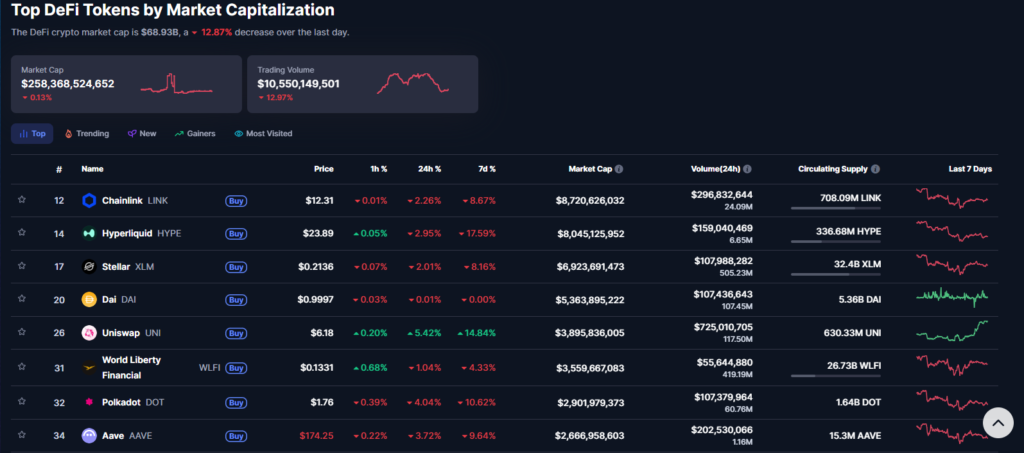
As stablecoin supply grows and more assets move onchain, the total value of decentralized financial markets could approach $1 trillion, up from tens of billions today. The shift suggests a future where blockchain quietly becomes the backbone of global finance, not a parallel system competing with it.
Disclaimer
This content is for informational purposes only and does not constitute financial, investment, or legal advice. Cryptocurrency trading involves risk and may result in financial loss.