
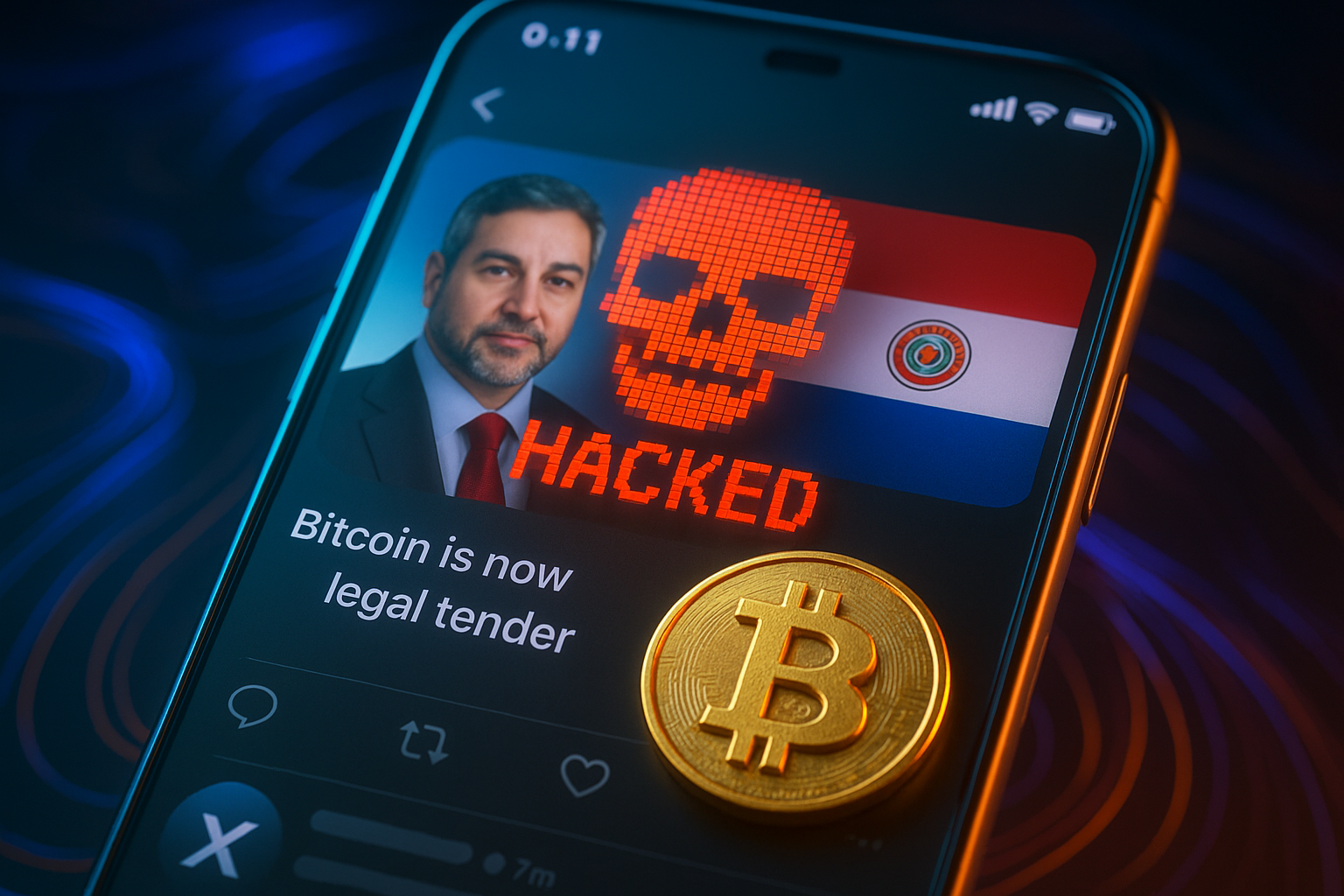
A surprising security breach involving the X account (formerly Twitter) of Paraguayan President Santiago Peña has sparked confusion in global crypto circles. On Monday, a post falsely announced that Bitcoin would become legal tender in the South American country—prompting immediate clarification from the government.
Fake Post Claims Bitcoin Legalization and Bond Issuance
The compromised post falsely claimed that Paraguay was adopting Bitcoin as legal tender, forming a national Bitcoin reserve, and issuing Bitcoin-backed bonds. It went as far as inviting global investors to contribute funds through a Bitcoin wallet address.
“Investors: your investment today will determine the scale of this rollout. Secure your stake in Bitcoin,” read the message—noticeably written in English, whereas President Peña’s legitimate posts are typically in Spanish.
This misleading announcement quickly gained traction, given Paraguay’s notable presence in the crypto mining industry.
Government Responds Quickly to Debunk the Hoax
Shortly after the misleading post went live, the official account of the Presidency of Paraguay stepped in to issue a strong denial.
“The information related to Bitcoin is false, and the President’s X account appears to have been accessed by unauthorized parties,” stated the government’s communication team.
The incident highlights the risk of misinformation spreading quickly via social media, especially when involving high-profile government figures and sensitive financial claims.
Paraguay’s Growing Bitcoin Mining Industry but No Legal Framework
Paraguay is already a major player in Bitcoin mining, thanks to its abundant and cheap hydroelectric power, which attracts large-scale operations such as those run by HIVE and other international firms. However, unlike El Salvador, Paraguay has not declared Bitcoin legal tender, nor has it established a comprehensive regulatory framework for crypto adoption.
Despite its mining activity, Paraguay remains cautious about integrating crypto at a national policy level.
This makes the hacked message particularly misleading, as it contradicts the country’s current legal and regulatory stance.
Conclusion: Reminder of Cybersecurity Risks in a Crypto-Driven World
The hacking of President Peña’s account serves as a critical reminder of the importance of cybersecurity, especially in a digital era where financial misinformation can spark international confusion.
As Paraguay continues to explore its role in the crypto space, clear communication and regulation will be key to avoiding such incidents in the future.