

Transnational crypto fraud combines human trafficking and money laundering, prompting urgent government action
The multibillion-dollar pig-butchering scam, once considered a consumer-fraud issue, has grown into a national security concern, according to Chainalysis. Experts warn that these scams, which exploit trust to funnel victims into fake cryptocurrency investments, are evolving into complex, transnational criminal operations.
How Pig-Butchering Works
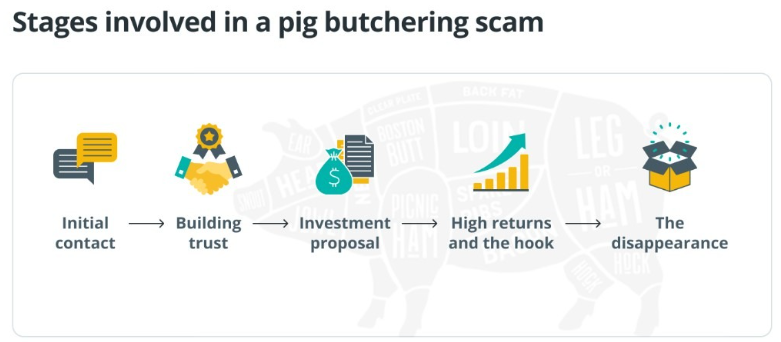
Pig-butchering is a long-term fraud strategy in which criminals build relationships—often romantic or friendly—with victims before persuading them to invest in fake cryptocurrency platforms. Once victims commit funds, the scammers drain their accounts, sometimes followed by additional attempts through fake recovery services.
“Once this happens to you, you are even more likely to get hit again,” said Erin West, former prosecutor and founder of Operation Shamrock.
Fraud rings, particularly across Southeast Asia, reportedly operate dormitory-style scam compounds, where trafficked workers contact unsuspecting individuals to foster trust before exploiting them financially.
Scale of the Threat
According to Chainalysis, pig-butchering scams rose nearly 40% in 2024, with overall crypto scam revenue exceeding $9.9 billion. The U.S. Department of Justice seized approximately $112 million in crypto linked to pig-butchering in 2023. Experts say the crime now blends human trafficking, crypto laundering, and cross-border money flows, making it far more complex than traditional fraud.
“The transparency of blockchain gives regulators and exchanges the opportunity to disrupt these scams at cash-out points,” said Andrew Fierman, head of national security intelligence at Chainalysis.
Government and Industry Response
Authorities are ramping up action. The DOJ recently formed a Scam Center Strike Force targeting Chinese-linked transnational criminal organizations behind crypto investment fraud. Regional law enforcement has collaborated with firms such as Tether, Binance, and OKX, freezing $47 million in pig-butchering funds in the Asia-Pacific region.
West emphasized:
“Use every tool in our arsenal—sanctions, indictments, diplomatic pressure—to fight transnational organized crime.”
Victims are typically targeted through manipulation of emotions, requests for money, or promises of risk-free investments with high returns. Red flags include rapid expressions of affection, refusal to share personal information, and pressure to invest in crypto platforms.
As these scams scale globally, awareness and vigilance remain critical in protecting users and national security.
Disclaimer
This content is for informational purposes only and does not constitute financial, investment, or legal advice. Cryptocurrency trading involves risk and may result in financial loss.