
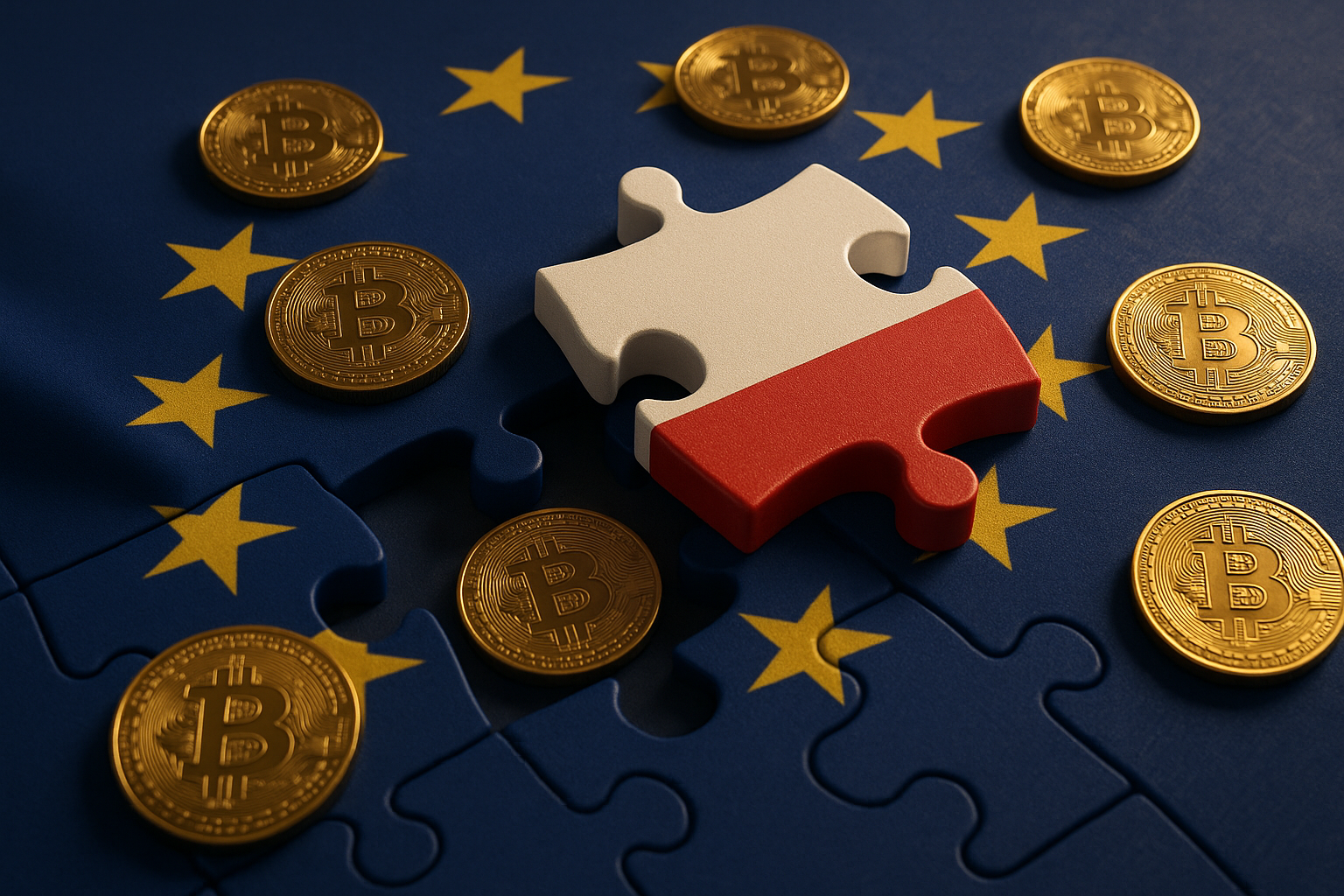
A failed parliamentary vote forces Poland to restart its digital-asset legislation, leaving the country isolated as the EU moves ahead with unified MiCA rules.
Poland has become the European Union’s sole MiCA non-compliant member state after lawmakers failed to overturn a presidential veto on the country’s flagship crypto regulatory bill. The setback sends the government back to square one and deepens the political rift over how Poland should regulate its rapidly growing digital-asset market.
Political Split Blocks Poland’s Crypto Framework
Poland’s Sejm fell 18 votes short of the three-fifths majority needed to override President Karol Nawrocki’s veto of the Crypto-Asset Market Act. The decision halts Prime Minister Donald Tusk’s attempt to align national rules with the EU’s Markets in Crypto-Assets (MiCA) regime, which has been fully operational since late 2024.
The veto reflects a broader clash between Nawrocki’s nationalist allies and Tusk’s pro-EU coalition. The president argued the bill was too complex and too burdensome for domestic crypto firms, warning it could drive innovation overseas. Tusk countered that strong oversight is essential for national security, claiming criminal networks and foreign intelligence entities exploit digital assets for covert financing.
Debate intensified after senior officials accused the government of framing the vote as a binary choice between supporting security or siding with illicit actors — a characterization some lawmakers rejected as misleading.
Industry Reactions and Market Impact
Poland’s crypto industry remains divided. Supporters viewed the bill as a necessary step toward regulatory clarity, while critics warned its strict provisions risked criminalizing fundamental blockchain development.
Despite the regulatory uncertainty, adoption continues to accelerate. Chainalysis data shows Poland ranked eighth in Europe for crypto value received between mid-2024 and mid-2025, with volumes rising more than 50% year over year. Statista estimates that 7.9 million residents — nearly one-fifth of the population — now use cryptocurrency.
EU Moves Forward as Poland Stalls
While Poland restarts its legislative process, other EU states including Germany, Malta, the Netherlands, and Lithuania — have begun issuing licenses under MiCA. Italy also reminded firms of its approaching compliance deadline as regulators tighten oversight.
The European Commission is exploring a centralized supervisory model for crypto exchanges that could eventually reduce the role of domestic frameworks, though any bloc-wide overhaul remains years away.
Disclaimer
This content is for informational purposes only and does not constitute financial, investment, or legal advice. Cryptocurrency trading involves risk and may result in financial loss.