

Veto centers on concerns over overregulation, innovation and website-blocking powers
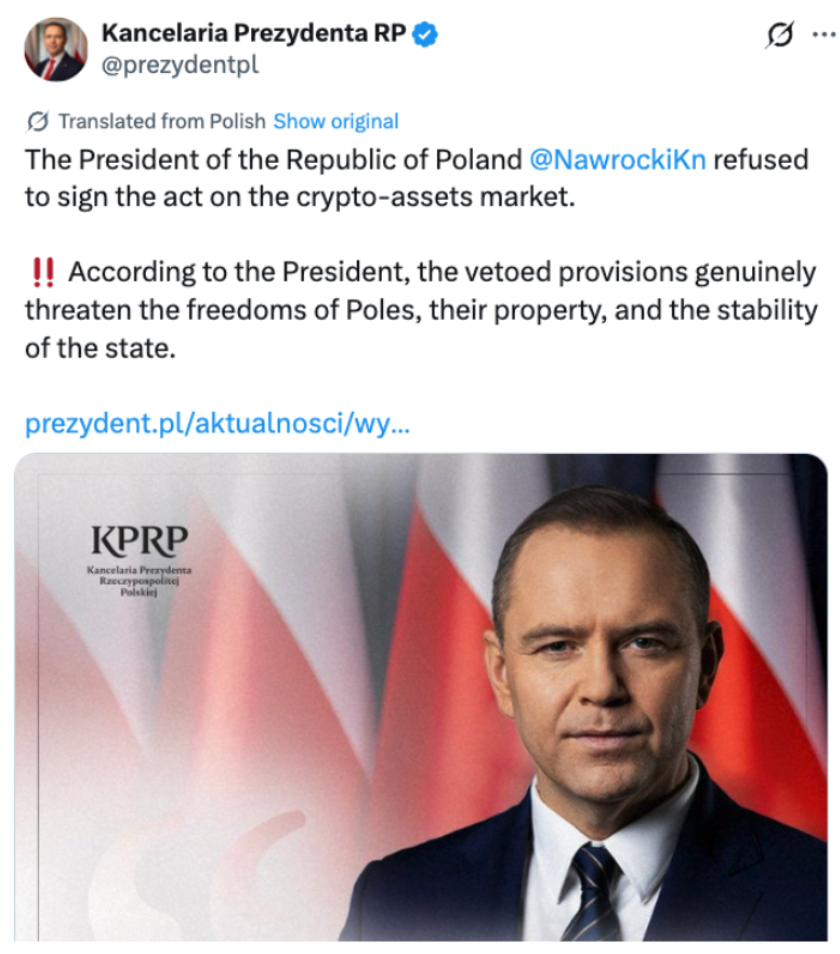
Poland’s President Karol Nawrocki has vetoed a sweeping cryptocurrency bill, setting off a sharp confrontation with government leaders who argue the legislation is essential for consumer protection. The decision has been welcomed by industry groups but condemned by senior officials who accuse the president of undermining regulatory stability.
President Warns of Regulatory Overreach
Nawrocki refused to sign the Crypto-Asset Market Act, saying its measures “pose a real threat to the freedoms and property of citizens.” The bill, introduced in June, would have imposed far-reaching controls on digital-asset firms, including a provision enabling authorities to block crypto-related domains with minimal oversight.
The president’s office argued that such blocking powers “invite misuse” and risk compromising due process. It further criticized the bill’s sprawling structure, noting that excessively complex rules could push companies to relocate to nearby jurisdictions with simpler regimes.
Warsaw described the veto as “a caution against layering heavy regulation on an industry still finding its footing,” adding that poorly designed rules often “hurt domestic innovators more than bad actors.”
Government Officials Slam the Veto
Finance Minister Andrzej Domański sharply criticized the move, claiming that the president had “chosen chaos” at a moment when retail investors already face significant risks. Deputy Prime Minister Radosław Sikorski echoed the warning, arguing the bill would have provided guardrails before “the next bubble bursts.”
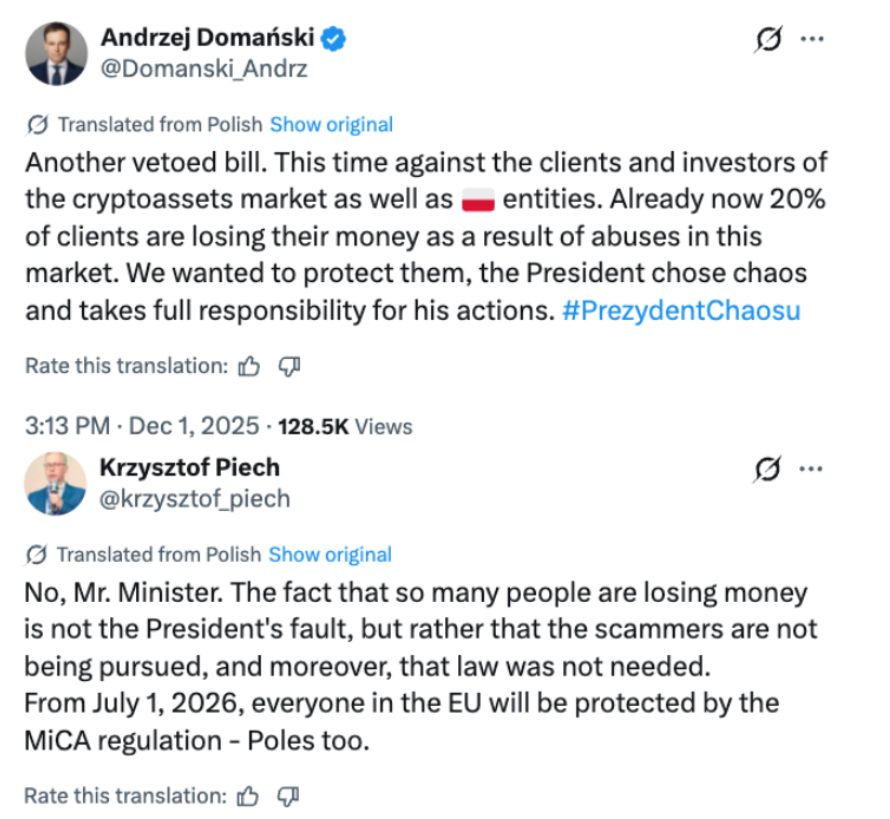
Nawrocki defended his stance, stressing that high supervisory fees and the bill’s structure would disproportionately disadvantage startups while favoring large foreign institutions. Crypto economists countered government criticism by noting that European-wide protections under MiCA will come into force in 2026, reducing the need for unilateral, overly restrictive national laws.
The veto forces lawmakers to revisit the legislation or attempt an override — a process likely to extend the political dispute while leaving Poland’s fast-growing digital-asset sector in regulatory limbo.
Disclaimer
This content is for informational purposes only and does not constitute financial, investment, or legal advice. Cryptocurrency trading involves risk and may result in financial loss.