

Polymarket has removed a prediction market tied to the fate of a missing US service member after public backlash, stating that the listing violated its “integrity standards.” The market had asked users whether US authorities would confirm the rescue of a pilot reportedly shot down over Iran, with more than 60% of participants betting that the rescue would not be confirmed before Saturday.
US Representative Seth Moulton strongly criticized the listing, calling it “disgusting” and raising concerns about people speculating on the safety of a potentially injured service member. He noted that those involved could be “a neighbor, a friend, a family member,” emphasizing the ethical concerns surrounding such predictions.
In response to the criticism, Polymarket said the market was removed immediately and acknowledged that it should not have been listed. The platform added that it is reviewing how the listing passed its internal safeguards but did not specify which rule had been violated.
Prediction Market Rules and Insider Trading Concerns Grow
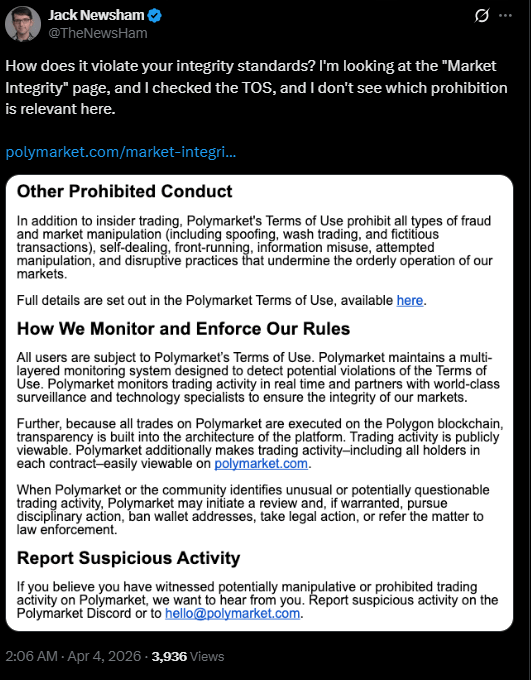
The removal has drawn scrutiny from users questioning how Polymarket applies its rules. Some users reviewed the platform’s Market Integrity guidelines and terms of service but said they could not identify the specific prohibition involved.
The controversy comes as prediction markets face growing concerns about insider trading. Recent reports indicated that a group of traders earned about $1 million by correctly betting on the timing of US strikes on Iran, placing trades shortly before the attacks.
Jack Newsham, a correspondent on Business Insider’s national desk, wrote on X;
At least 42 Democratic lawmakers have urged regulators, including the Commodity Futures Trading Commission and the Office of Government Ethics, to warn federal employees against using non-public information to trade on prediction markets.
Disclaimer
This content is for informational purposes only and does not constitute financial, investment, or legal advice. Cryptocurrency trading involves risk and may result in financial loss.