
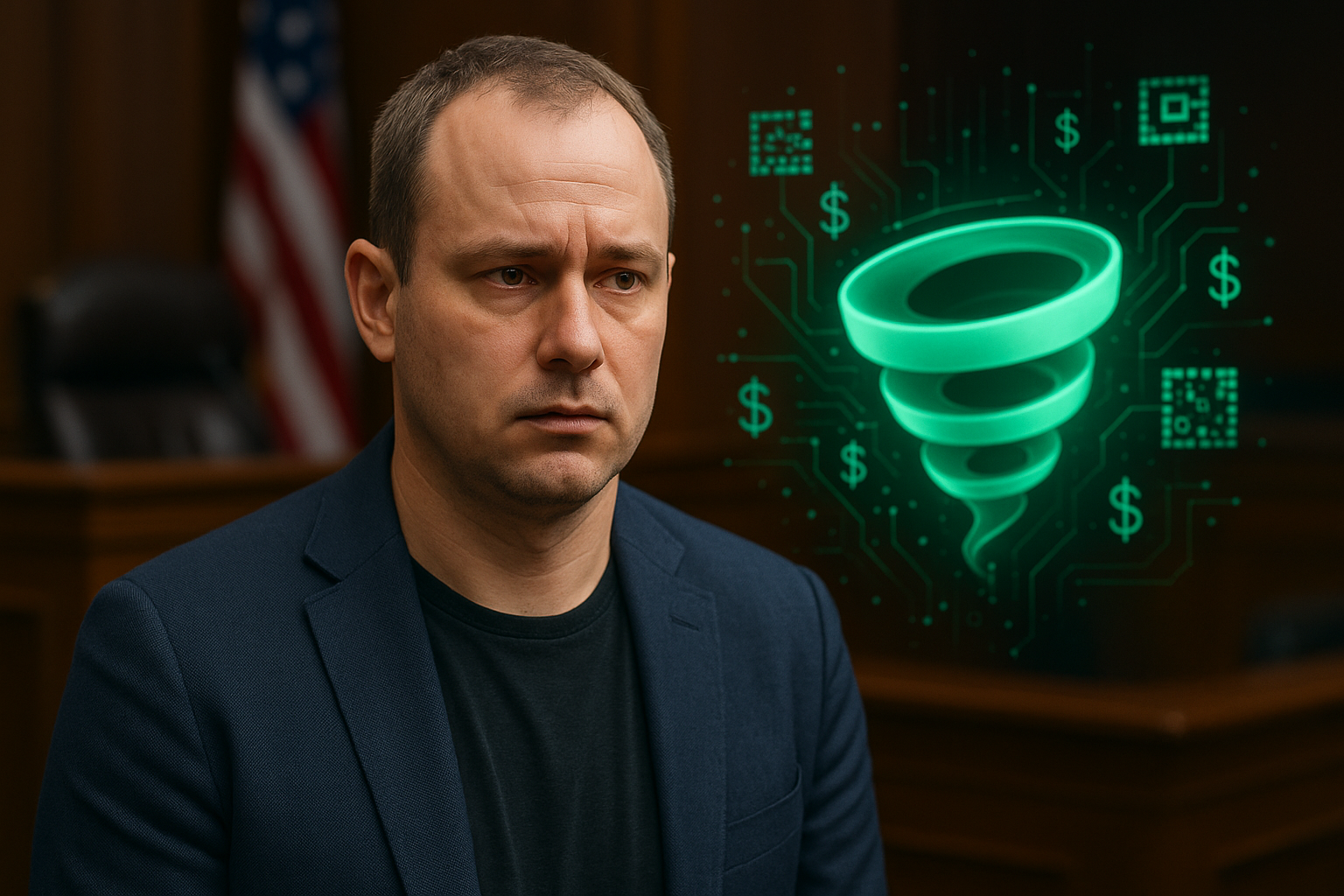
Concerns rise over legal ambiguity for open-source builders as Tornado Cash case sets a precedent
Roman Storm, co-developer of the Tornado Cash protocol, has reignited debate across the decentralized finance (DeFi) community by questioning whether open-source developers can ever be fully protected from retroactive prosecution by the U.S. Department of Justice (DOJ). His comments come amid growing legal uncertainty over how existing financial laws apply to decentralized systems.
In a recent post, Storm asked developers, “How can you be so sure you won’t be charged by the DOJ as a money service business for building a non-custodial protocol?” The question underscores a deepening concern that DeFi builders may face prosecution even when their software lacks custodial control over user funds.
According to Storm’s motion for acquittal filed on September 30, the DOJ could theoretically argue that any decentralized service should have been designed as a custodial one—a stance that critics say threatens innovation across the sector.
“Our company does not have any ability to affect any change, or take any action, with respect to the Tornado Cash protocol,” Storm noted in court filings, emphasizing that Tornado Cash operates as decentralized software without central control.
The developer’s August conviction on one of three counts—conspiracy to operate an unlicensed money transmission business—has already set what many experts call a “dangerous precedent” for open-source innovation. Legal analysts fear that this case could embolden prosecutors to target other developers under similar arguments.
“This verdict sends a chilling message to the open-source community,” said a blockchain policy researcher. “Developers shouldn’t have to guess whether writing neutral code could one day be deemed criminal.”
However, DOJ officials have recently attempted to calm those fears. Matthew Galeotti, acting assistant attorney general for the DOJ’s criminal division, stated in August that “merely writing code, without ill intent, is not a crime.” He added that the department “will not use indictments as a law-making tool” and should avoid leaving innovators uncertain about prosecution boundaries.
Disclaimer
This content is for informational purposes only and does not constitute financial, investment, or legal advice. Cryptocurrency trading involves risk and may result in financial loss.