

Why institutional banking adoption not hype or ETFs may redefine Bitcoin’s price trajectory
Bitcoin’s path toward new all-time highs is being reframed by a growing narrative centered on structural financial adoption, rather than speculation or retail-driven momentum. According to Michael Saylor, the next phase of Bitcoin’s price growth will emerge quietly from within the global banking system, not from short-term market excitement.
For much of its existence, Bitcoin price discovery has been driven by traders, leverage, and cyclical sentiment. Even the rise of spot Bitcoin ETFs while expanding access, largely reinforced traditional market behavior. Saylor argues that this model is beginning to change as Bitcoin transitions into a balance-sheet asset for regulated financial institutions.
Banks increasingly view Bitcoin through the lens of utility and collateral value, not volatility. This marks a fundamental shift from speculative trading toward long-term capital deployment.
One of the clearest signals of this transition is the rise of Bitcoin-collateralized lending. As major banks begin lending against Bitcoin, the asset is effectively reclassified as credit-worthy collateral. This requires confidence in custody, liquidity, and durability of value.
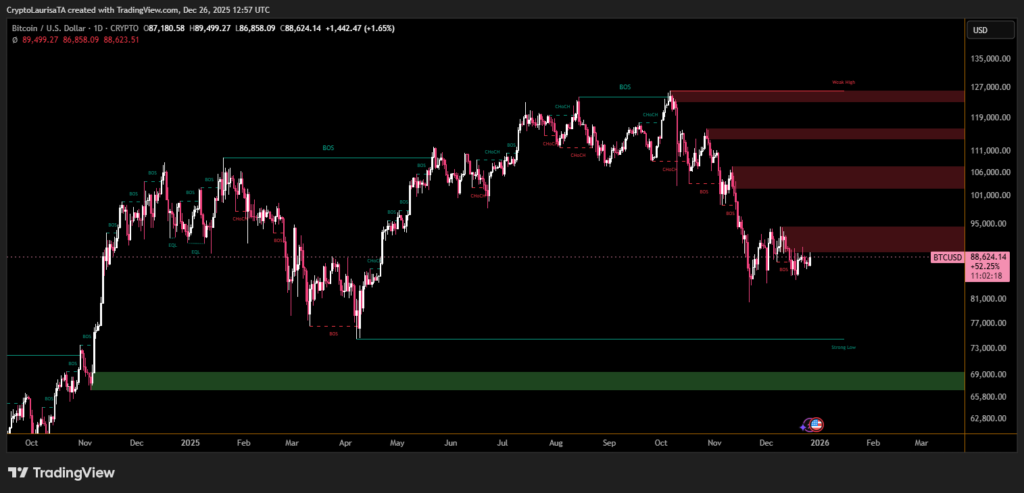
Once Bitcoin is embedded in lending frameworks treasury management, and institutional risk models, demand becomes strategic rather than reactive. This capital is deployed with multi-year horizons, steadily absorbing supply and reinforcing Bitcoin’s fixed-supply scarcity.
Looking ahead, expanding bank custody services and integration into wealth management platforms significantly increase Bitcoin’s addressable capital base. As volatility-driven trading fades in relative importance, institutional accumulation becomes the dominant force.
In this emerging environment, Bitcoin’s next all-time highs are unlikely to be fueled by hype. Instead, they may result from sustained institutional adoption, where price appreciation reflects long-term balance-sheet commitment rather than speculative cycles.
Disclaimer
This content is for informational purposes only and does not constitute financial, investment, or legal advice. Cryptocurrency trading involves risk and may result in financial loss.