

Rising legal pressure on privacy tools pushes regulators and crypto leaders to confront emerging tensions

The U.S. Securities and Exchange Commission’s Crypto Task Force will convene a dedicated roundtable on privacy and financial surveillance on Dec. 15, marking one of the agency’s most direct engagements with the topic as it gains renewed urgency across the digital asset sector.

Similar to prior SEC roundtables, the session will gather industry executives, legal specialists and agency officials to discuss areas of concern and potential pathways for collaboration. The event is not expected to produce formal policy proposals, but it signals increased regulatory attention to a debate that has intensified throughout 2024.
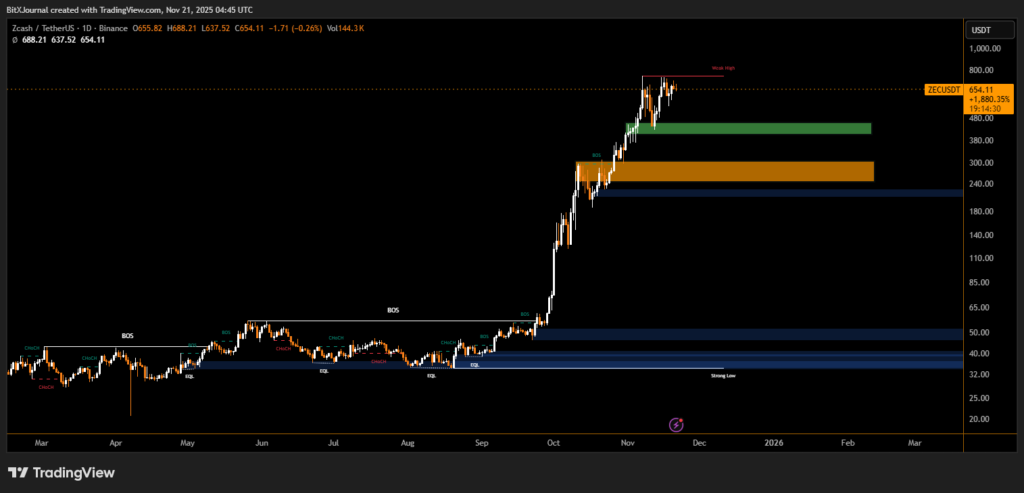
Privacy tokens like Zcash experienced a price surge beginning in October. 

Legal Cases Rekindle Debate Over Digital Privacy

Interest in privacy reached new heights following two high-profile developments: the partial guilty verdict in the Tornado Cash developer Roman Storm case, and the November sentencing of a Samourai Wallet developer. The momentum has also coincided with a sharp rally in privacy-focused tokens such as Zcash.

Authoritarians thrive when people have no privacy. When those in charge start being hostile to privacy protections, it is a major red flag,” said Naomi Brockwell, founder of the Ludlow Institute. Advocates argue that recent prosecutions threaten the open-source principles on which much of the crypto ecosystem was built.

Privacy has long been one of the core motivations behind cryptographic systems, dating back to the cypherpunk movement, which emphasized secure communication in adversarial environments.

Developers Face Increased Scrutiny

Legal experts have warned that the Tornado Cash and Samourai cases could set a troubling precedent, potentially exposing developers to criminal liability simply for creating privacy-preserving tools. Industry advocates say this chilling effect is already discouraging innovation.

Journalist and privacy advocate Lola Leetz criticized the government’s approach, arguing that blaming developers for misuse is comparable to accusing a carmaker of wrongdoing because criminals use their vehicles. “People should not be held accountable for what other people do with the tools they build,” she said.

Recent comments from the Department of Justice suggest a shift, however. In August, acting Assistant Attorney General Matthew Galeotti stated that “merely writing code, without ill intent, is not a crime,” adding that prosecutors should avoid using indictments to redefine the boundaries of acceptable innovation.

What the December Roundtable Signals

The SEC’s upcoming discussion arrives at a moment when privacy is both a technological priority and a regulatory flashpoint. The agency’s willingness to publicly engage the issue reflects growing recognition that privacy tools are integral to the future of digital finance, even as policymakers seek guardrails to prevent abuse.

Participants are expected to explore where constitutional rights, technological freedom and financial oversight intersect — a conversation that may shape how privacy standards evolve in 2025 and beyond.

Disclaimer

This content is for informational purposes only and does not constitute financial, investment, or legal advice. Cryptocurrency trading involves risk and may result in financial loss.

logo

blockto.io

info@blockto.io

Blockto.io Copyright © 2025, All rights reserved

News
Rates
Buy
More
We use cookies to personalize content and ads, provide social media features, and analyze our traffic. In accordance with GDPR/AVG and EU cookie regulations, data is processed only with your consent. We may share information about your use of our website with our social media, advertising, and analytics partners, and you can manage or withdraw your consent at any time. View more
Cookies settings
Accept
Privacy & Cookie policy
Privacy & Cookies policy
Cookie name Active

Privacy Policy

At BitxJournal.com, we respect your privacy and are committed to protecting your personal data. This Privacy Policy explains how we collect, process, store, and protect personal information in accordance with the General Data Protection Regulation (GDPR) and AVG (EU privacy legislation).

1. Data Controller

BitxJournal.com acts as the data controller for all personal data processed through this website.

2. Personal Data We Collect

We may collect and process the following categories of data:

Personal Data

  • Name and email address (when you subscribe to newsletters or contact us)

Technical & Usage Data

  • IP address, browser type, operating system

  • Device information

  • Pages visited, referral sources, and interaction data

This data is collected via cookies, log files, and analytics technologies.

3. Legal Basis for Processing

We process personal data only when a lawful basis exists, including:

  • Consent – when you explicitly agree (e.g., cookies, newsletter sign-up)

  • Legitimate interest – to operate, secure, and improve our website

  • Legal obligation – when required by applicable laws

You may withdraw your consent at any time.

4. Purpose of Data Processing

Your data is processed for the following purposes:

  • Operating and maintaining the website

  • Improving content, usability, and performance

  • Sending newsletters or updates (only with consent)

  • Analyzing traffic and user behavior

  • Responding to inquiries or support requests

5. Cookies & Consent Management

We use cookies and similar technologies in compliance with EU Cookie Law.

  • Non-essential cookies are placed only after explicit user consent

  • Users may accept, reject, or manage cookie preferences at any time

  • Consent can be withdrawn without affecting prior lawful processing

Detailed cookie information is available in our Cookie Settings panel.

6. Third-Party Data Processing

We may share limited data with trusted third-party service providers, including:

  • Analytics providers (e.g., Google Analytics)

  • Advertising partners (for personalized or non-personalized ads)

These third parties act as data processors and process data only under contractual obligations compliant with GDPR/AVG.

7. International Data Transfers

Where data is transferred outside the European Economic Area (EEA), we ensure appropriate safeguards are in place, such as Standard Contractual Clauses (SCCs) or equivalent legal mechanisms.

8. Data Retention

We retain personal data only for as long as necessary to fulfill the purposes outlined in this policy or as required by law.

9. Data Security

We implement appropriate technical and organizational security measures to protect personal data against unauthorized access, alteration, disclosure, or destruction.

10. Your GDPR Rights

Under GDPR/AVG, you have the right to:

  • Access your personal data

  • Rectify inaccurate or incomplete data

  • Request data erasure (“right to be forgotten”)

  • Restrict or object to processing

  • Data portability

  • Withdraw consent at any time

  • Lodge a complaint with a supervisory authority

11. Changes to This Privacy Policy

We reserve the right to update this Privacy Policy at any time. Any changes will be posted on this page with a revised effective date.

12. Contact Information

For privacy-related inquiries or GDPR requests, contact:

📧 Email: support@blockto.io
🌐 Website: https://blockto.io

Save settings
Cookies settings