
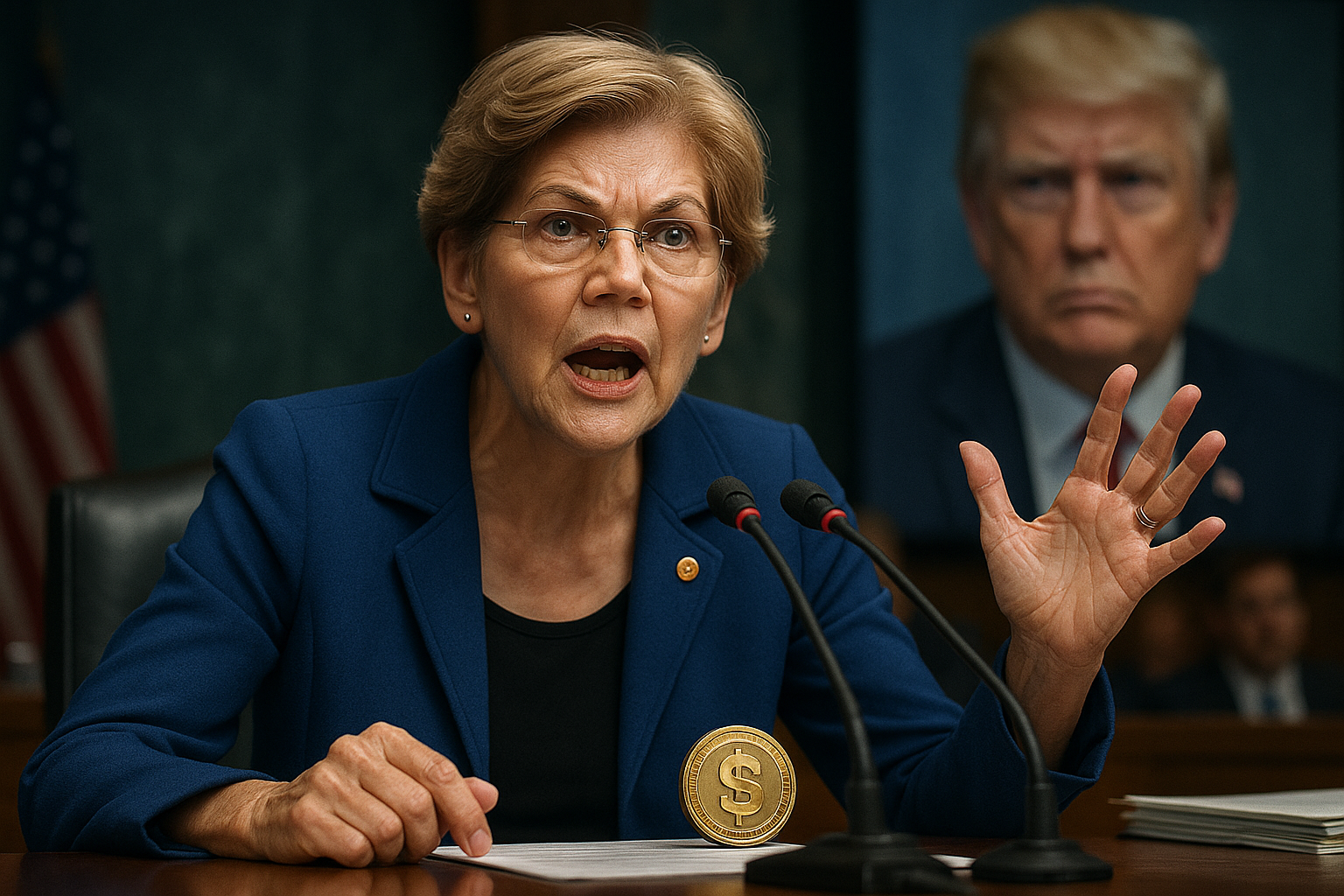
Massachusetts senator says the GENIUS Act leaves gaps that could expose consumers and the financial system to major threats
Senator Elizabeth Warren has sharply criticized the Guiding and Establishing Innovation for U.S. Stablecoins (GENIUS) Act, calling it a “light-touch regulatory framework for crypto banks” and warning that it fails to protect against conflicts of interest tied to President Donald Trump’s business connections in the crypto sector.
In a letter to Treasury Secretary Scott Bessent, Warren — the top Democrat on the Senate Banking Committee — urged the Treasury Department to take a tougher stance as it implements the law, which was signed by Trump in July 2025.
“It is critical that Treasury take steps to implement and enforce the law in a manner that limits severe risks to U.S. financial stability, consumers, taxpayers, and national security,” Warren wrote.
The GENIUS Act requires that stablecoins be fully backed by U.S. dollars or equivalent liquid assets, enforces annual audits for issuers with more than $50 billion in circulation, and sets foreign issuance standards. However, Warren and other policymakers argue that it leaves regulatory gaps that could endanger the broader financial system.
“Treasury has an opportunity to address some of these risks in bipartisan negotiations over broader crypto legislation now being considered in Congress,” Warren added.
Lawmakers are currently drafting a comprehensive crypto market structure bill, with separate Democratic and Republican meetings with crypto executives scheduled this week to refine key provisions.
Concerns Over Trump-Linked Stablecoin
A major flashpoint is the Trump family’s involvement in World Liberty Financial USD (WLFUSD) — a stablecoin that has grown into one of the largest globally, according to Bankrate. Democrats fear potential conflicts of interest if the administration has influence over a private digital currency venture.
“Given the importance of addressing this glaring problem, Treasury must propose steps to insulate rules from political influence and prevent corruption,” Warren stated.
Regulatory Gaps and Financial Stability Risks
Warren’s criticism aligns with remarks from Federal Reserve Governor Michael Barr, who recently warned that the GENIUS Act fails to close critical oversight gaps, calling for coordination between federal and state regulators to strengthen consumer protections.
She also cited Paxos’ accidental minting of $3 trillion in PYUSD tokens, labeling it a warning sign for operational vulnerabilities in the sector.
“This incident demonstrates the serious risks that operational failures can pose to issuers, market integrity, and potentially to financial stability,” she said.
Warren’s letter underscores growing political and regulatory divisions over how the U.S. should balance innovation and investor protection in the rapidly evolving stablecoin market. As Treasury finalizes the law’s implementation, it faces mounting pressure to ensure transparency, accountability, and safeguards against potential systemic shocks.
Disclaimer
This content is for informational purposes only and does not constitute financial, investment, or legal advice. Cryptocurrency trading involves risk and may result in financial loss.