
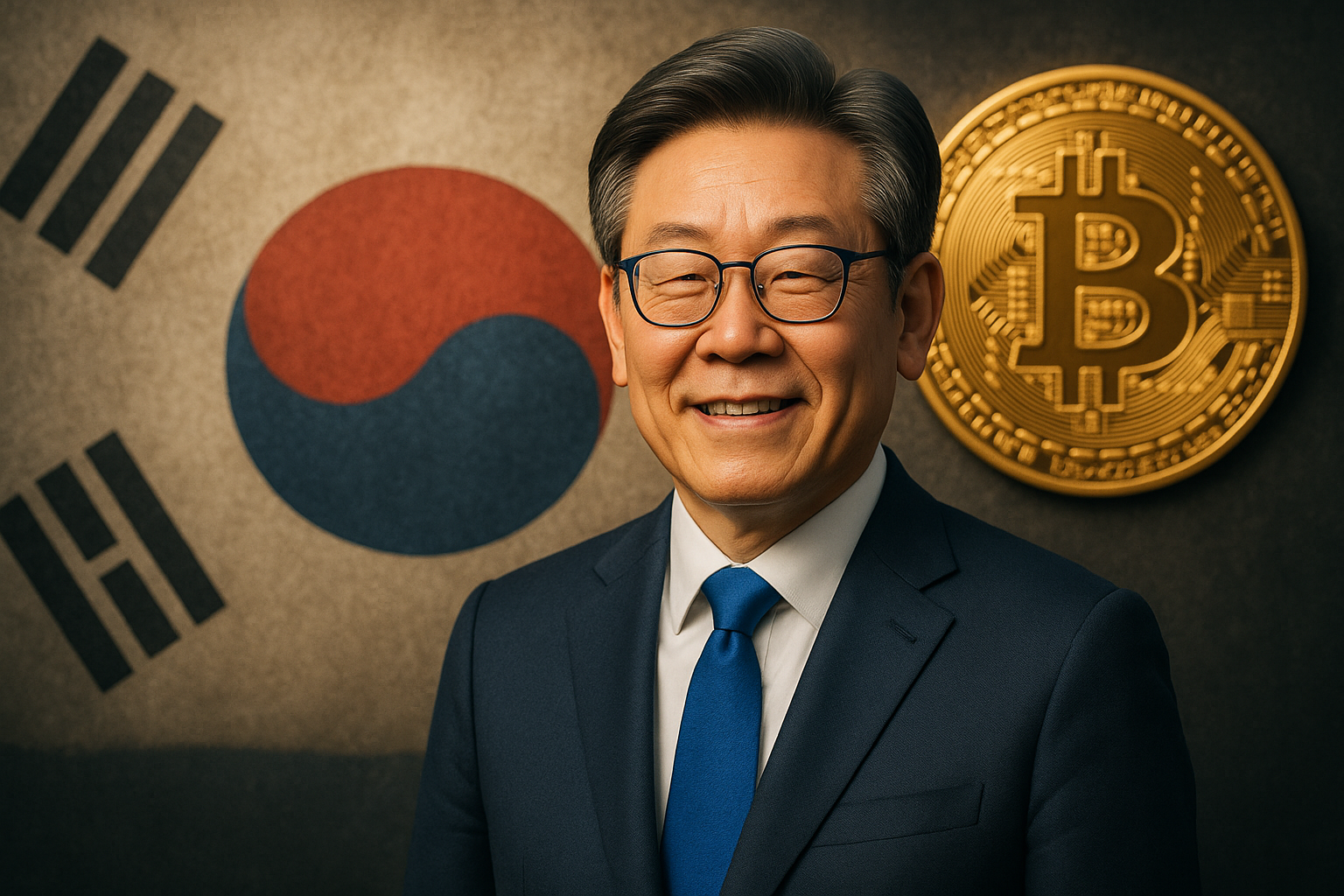
South Korea has elected Lee Jae-myung as its new president in a historic win for the Democratic Party of Korea, signaling a major shift in the nation’s stance toward the cryptocurrency industry.
Lee Jae-myung Wins With Crypto-Focused Agenda
Lee defeated Conservative Party candidate Kim Moon-soo by nearly three million votes, securing 49.4% of the 17 million total votes, according to data from South Korea’s National Election Commission. His victory followed a campaign that targeted the country’s growing population of 15 million crypto investors, with bold promises to support and expand the digital asset sector.
Key Crypto Promises: ETFs and Institutional Access
During the campaign, Lee pledged to legalize spot cryptocurrency exchange-traded funds (ETFs) and to allow institutional investors, including South Korea’s National Pension Fund, to invest in cryptocurrencies and related products. These policies aim to promote safer and more regulated investment avenues for both retail and institutional participants.
Lee also discussed supporting the creation of a won-based stablecoin market, emphasizing that it would “prevent national wealth from leaking overseas.” These remarks were made during a live policy discussion with digital creators, signaling his willingness to engage directly with the public on emerging technologies.
New Regulations Strengthen South Korea’s Crypto Framework
South Korea has already taken significant steps toward digital asset regulation. In 2023, the National Assembly passed the Virtual Asset User Protection Act, which:
- Defined digital assets and set penalties for unfair practices
- Gave regulatory power to the Financial Services Commission (FSC)
- Established oversight for exchanges and crypto service providers
The FSC has also started allowing non-profits and exchanges to operate under clear crypto rules, creating more legitimacy for the sector.
South Korea Joins Regional Crypto Momentum
South Korea’s progressive shift reflects a broader trend across Asia. Countries like Pakistan and regions like Hong Kong are increasing their efforts to regulate and adopt cryptocurrencies as the market cap has surged to $3.4 trillion globally.
With Lee Jae-myung’s win, South Korea is now positioned to become a leader in Asia’s rapidly evolving crypto landscape.
As global interest in crypto rises, Lee’s administration may pave the way for a more open and secure digital asset ecosystem in South Korea, balancing innovation with investor protection.