

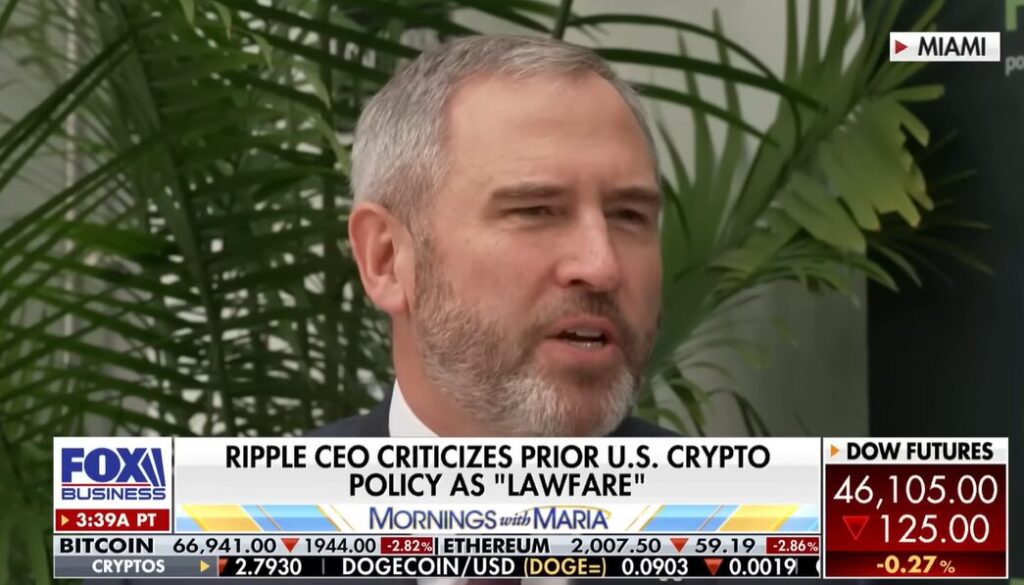
Stablecoins are increasingly being viewed as a turning point for corporate adoption of blockchain payments, as companies explore faster and more efficient financial tools. Ripple CEO Brad Garlinghouse said stablecoins could represent crypto’s “ChatGPT moment” for businesses, noting that corporate boards and executives across Fortune 500 and Fortune 2000 firms are actively questioning how treasury teams plan to use these digital assets.
He emphasized that providing treasurers and chief financial officers with stablecoin payment options could unlock broader access to blockchain-based services. The growing attention reflects how businesses are searching for alternatives to traditional cross-border payment systems.
Stablecoin Trading Volume and Growth Forecasts
Stablecoin activity has expanded rapidly, with trading volume exceeding $33 trillion in 2025. Nearly 90% of this volume came from major stablecoins such as USDT and USDC, which continue to dominate the market.
Industry projections suggest further acceleration. Bloomberg Intelligence estimated that stablecoin flows could reach $56.6 trillion by 2030, supported by an expected 80% compound annual growth rate, indicating strong long-term demand.
Ripple strengthened its position by launching its RLUSD stablecoin in December 2024, which has grown into the 10th-largest stablecoin with a market capitalization of about $1.4 billion. The company also acquired Hidden Road for $1.25 billion and GTreasury for $1 billion to enhance its institutional payment infrastructure.
Garlinghouse added that proposed market structure legislation, including the CLARITY Act, could accelerate adoption by providing clearer regulatory guidelines for the crypto sector.
Disclaimer
This content is for informational purposes only and does not constitute financial, investment, or legal advice. Cryptocurrency trading involves risk and may result in financial loss.