
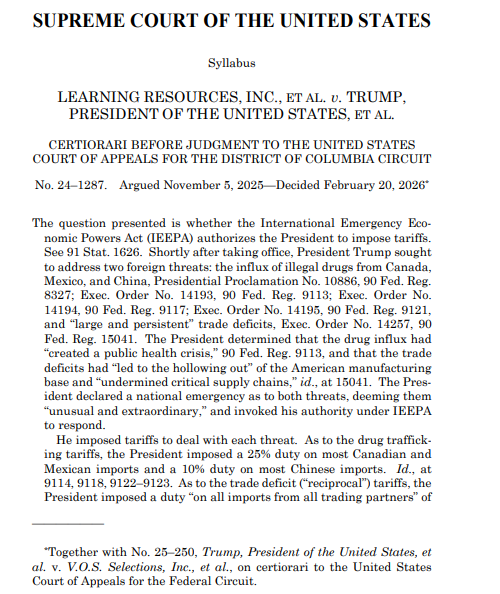
The Supreme Court of the United States has struck down most of former President Donald Trump’s tariffs imposed under the International Emergency Economic Powers Act (IEEPA), ruling that the executive branch lacks authority to levy broad tariffs during peacetime under the statute. In a 6–3 decision, the court said IEEPA does not authorize the president to impose tariffs and noted that no previous administration had used the law in this manner in its five-decade history.
SCOTUS Rules IEEPA Does Not Authorize Tariffs
The majority opinion emphasized the absence of historical precedent and rejected arguments that trade imbalances and drug trafficking constituted a qualifying national emergency for sweeping tariff actions. The ruling limits the executive’s ability to bypass Congress on trade policy using emergency powers.
Trump Signals Alternative Tariff Plans
Following the decision, Trump criticized the ruling and said his administration would explore “other alternatives” to reinstate tariffs. He has repeatedly argued that tariff revenue could help reduce the $38 trillion US national debt and potentially offset income taxes for households earning under $200,000 annually.
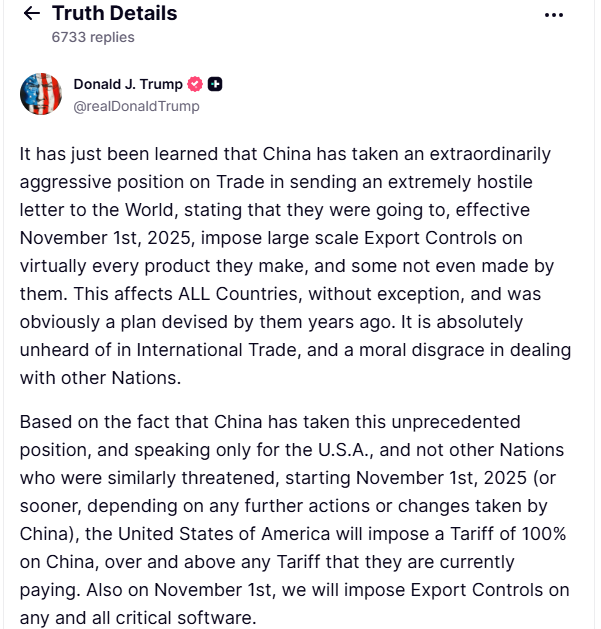
Previous tariff announcements triggered volatility across financial markets. In October 2025, after a proposed 100% tariff on China, Bitcoin fell sharply from above $122,000 to near $107,000 in a single day. While leverage and broader macroeconomic concerns played roles, traders widely cited tariff policy as the catalyst. Markets remain sensitive as policymakers consider next steps.
Disclaimer
This content is for informational purposes only and does not constitute financial, investment, or legal advice. Cryptocurrency trading involves risk and may result in financial loss.