
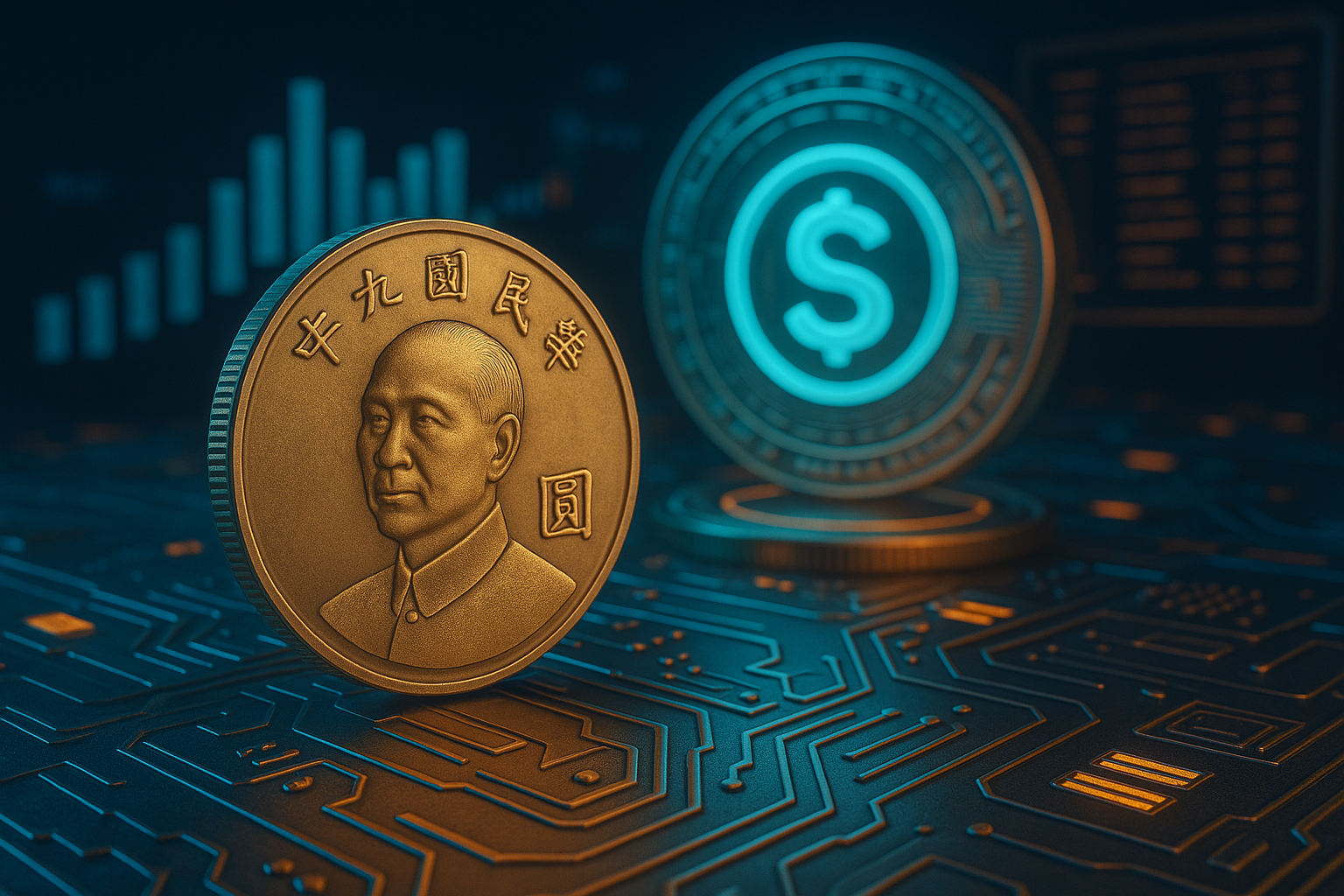
Regulators weigh U.S. dollar vs Taiwan dollar backing as new framework approaches final approval
Taiwan is moving closer to introducing its first fully regulated stablecoin, with government officials signaling a potential launch in the second half of 2026. The initiative represents a major step in the island’s digital asset strategy, but a key decision—which currency the token will be pegged to—remains unresolved.
Taiwan Moves Toward Formal Stablecoin Framework
According to statements delivered to lawmakers, the Financial Supervisory Commission (FSC) has advanced the draft Virtual Assets Service Act through initial cabinet review, with expectations that the legislation could clear a third reading in the next legislative session. After passage, regulators plan to finalize stablecoin-specific rules within six months, setting the stage for the first issuance in late 2026.
Financial Institutions Set to Lead Issuance
While the proposed framework does not limit issuers exclusively to banks, the FSC and the central bank have agreed that domestic financial institutions will guide the initial phase. Experts say this approach aims to introduce innovation while maintaining strict consumer safeguards.
The unresolved challenge is whether the stablecoin will be tied to the U.S. dollar or the Taiwan dollar (TWD). A TWD-pegged token would interact directly with the island’s heavily controlled currency environment, raising complex questions around offshore use and capital flows.
Taiwan strictly prohibits its currency from circulating offshore, and the central bank routinely enforces these limits. As one economist observed, “a TWD-backed stablecoin would pressure long-standing currency controls, while a USD-backed version would avoid those systemic risks.”
Cross-Border Implications at the Center of Debate
Stablecoins naturally enable faster international settlement. Regulators acknowledge that this capability could challenge decades of efforts to prevent unofficial offshore pricing of the Taiwan dollar.
For now, authorities are drafting rules focused on high-quality reserves and robust domestic supervision, but the selected peg will determine whether Taiwan’s first stablecoin evolves into a low-risk digital payments tool or a test of the island’s currency framework.
The final decision is expected to shape not only the stablecoin’s design but also Taiwan’s broader role in the global digital asset economy.
Disclaimer
This content is for informational purposes only and does not constitute financial, investment, or legal advice. Cryptocurrency trading involves risk and may result in financial loss.