
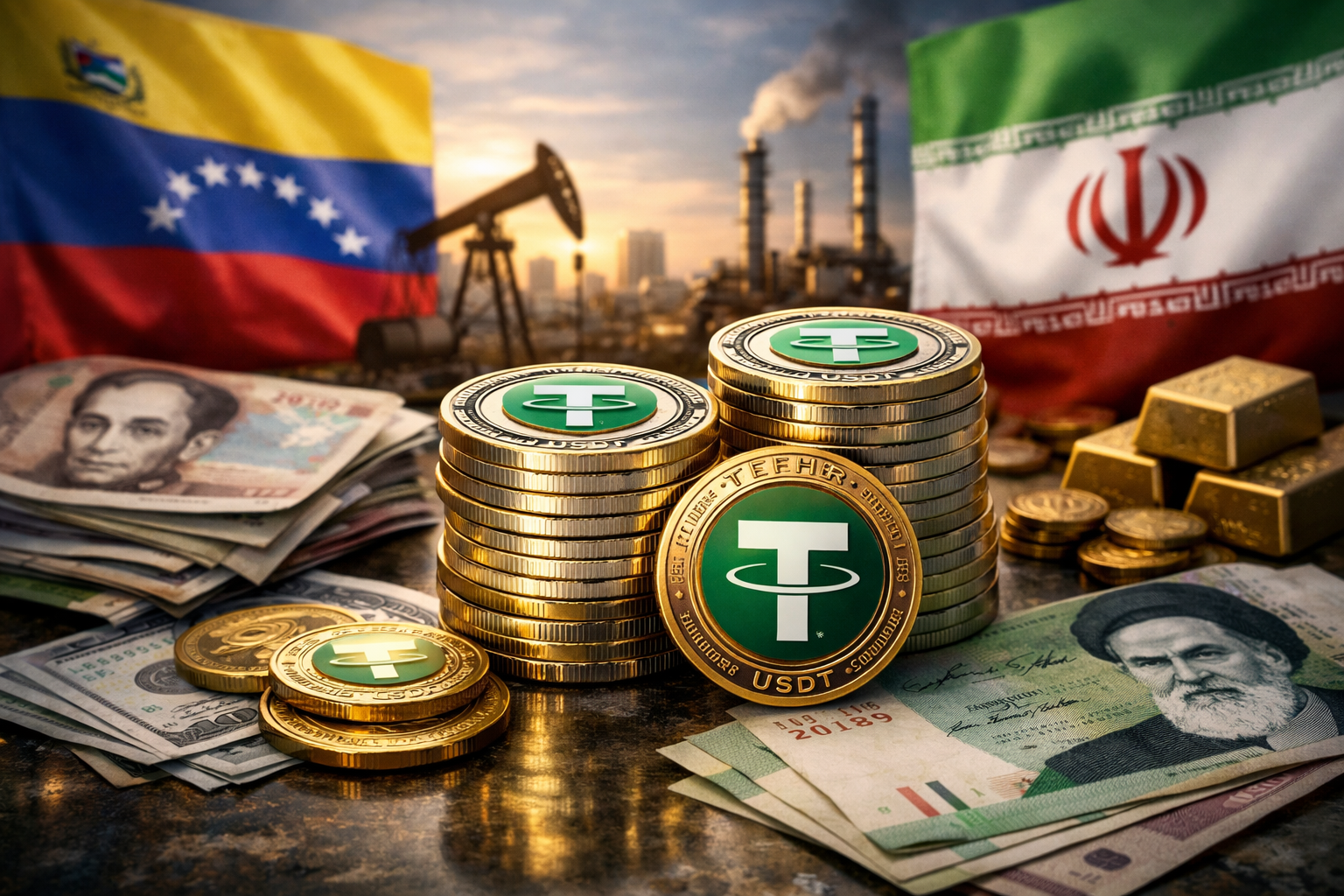
Stablecoins provide citizen lifelines while enabling sanctioned entities to bypass restrictions
Stablecoins like Tether (USDT) have emerged as both essential financial tools for ordinary citizens and potential enablers of sanctioned activities in countries facing economic crises. Recent events in Venezuela and Iran illustrate the dual nature of stablecoins, offering protection against hyperinflation while simultaneously being exploited for sanctions evasion.
Venezuela: Citizen Protection and Corporate Use
In Venezuela, the bolivar’s decade-long decline has driven widespread adoption of USDT. Citizens rely on stablecoins for daily transactions, from paying service providers to avoiding unreliable bank systems. Even without regulated exchanges, Venezuelans prefer crypto wallets and USDT for everyday payments. The state-run oil company, Petroleos de Venezuela, reportedly processes up to 80% of oil revenue in Tether, circumventing sanctions imposed since 2020.
Iran: Stablecoins Amid Unrest and Sanctions
In Iran, citizens use USDT to hedge against the collapsing rial amid widespread protests and economic instability. Government-imposed limits on stablecoin holdings and purchases aim to regulate domestic use. However, sanctioned entities, including the Islamic Revolutionary Guard Corps (IRGC), have allegedly moved over $1 billion in stablecoins via front companies since 2023. Key figures, such as Babak Zanjani, have reportedly facilitated this movement, creating a sanctions-evasion network.
Tether’s Compliance Efforts
Tether has responded by cooperating with US authorities to blacklist wallets associated with sanctioned entities, attempting to balance compliance with supporting citizens who rely on stablecoins for financial stability.
The cases of Venezuela and Iran underscore the complex duality of stablecoins: while providing critical financial access for citizens in economic turmoil, they can also be leveraged by sanctioned actors, highlighting the ongoing tension between innovation, compliance, and global regulation.
Disclaimer
This content is for informational purposes only and does not constitute financial, investment, or legal advice. Cryptocurrency trading involves risk and may result in financial loss.