
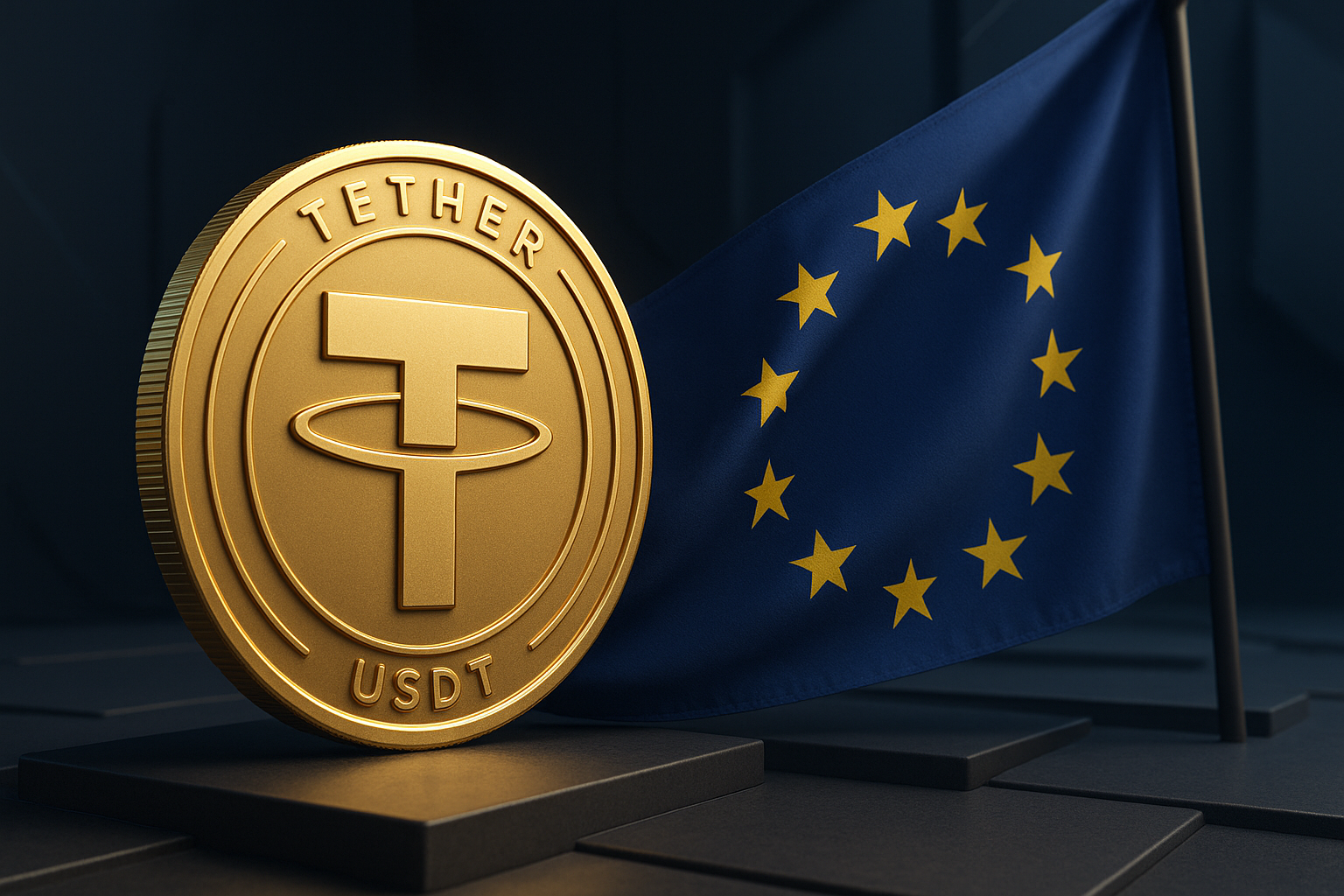
Tether, the company behind the world’s largest stablecoin USDT, has publicly stated it will not comply with certain regulations under the European Union’s Markets in Crypto-Assets (MiCA) framework. This decision has sparked intense debate in the crypto community, with questions about regulatory overreach, privacy concerns, and financial freedom.


What is MiCA?

MiCA (Markets in Crypto-Assets) is a new regulatory framework designed by the EU to govern digital assets. It aims to create a clear, unified rulebook for cryptocurrencies and stablecoins across all member states.

Under MiCA:

  • Issuers of stablecoins must maintain strict reserves and transparency
  • Firms must submit detailed disclosures
  • Stablecoin providers need to be licensed and regulated in the EU

The regulation officially goes into effect in 2024, but preparations are already underway.


Why Tether is Saying “No” to MiCA

Tether has raised serious concerns about MiCA’s approach, especially regarding its reporting requirements and transparency rules.

“MiCA’s rules are not aligned with the principles of financial privacy and free markets,” a Tether spokesperson said.

Here’s why Tether is pushing back:

  • Overly strict reporting requirements could violate user privacy
  • Mandatory EU licensing could limit Tether’s ability to operate globally
  • Concerns over MiCA favoring euro-based stablecoins like Circle’s EUROC

Tether argues that MiCA, in its current form, might disrupt the balance between regulation and innovation.


What This Means for USDT Users in Europe

Tether’s refusal to comply means USDT may face restrictions or even a ban in the European market once MiCA is fully enforced.

Crypto exchanges operating in the EU could be forced to delist USDT, or risk penalties.
This may cause market liquidity issues, especially since USDT is the most traded stablecoin globally.

Investors and platforms may begin shifting toward MiCA-compliant alternatives like USDC or EUROC.


The Bigger Picture: Innovation vs. Regulation

This battle between Tether and EU regulators underscores a wider clash in the crypto world:

  • Can regulators create rules without stifling innovation?
  • Should financial privacy be sacrificed for compliance?
  • Is the EU trying to favor local players over global competition?

Conclusion

Tether’s rejection of MiCA signals a potential standoff between crypto giants and regulators.
As rules tighten, crypto companies must choose between compliance and core values like decentralization and privacy.

One thing is clear: MiCA could reshape the future of stablecoins in Europe—and beyond.

logo

blockto.io

info@blockto.io

Blockto.io Copyright © 2025, All rights reserved

News
Rates
Buy
More
We use cookies to personalize content and ads, provide social media features, and analyze our traffic. In accordance with GDPR/AVG and EU cookie regulations, data is processed only with your consent. We may share information about your use of our website with our social media, advertising, and analytics partners, and you can manage or withdraw your consent at any time. View more
Cookies settings
Accept
Privacy & Cookie policy
Privacy & Cookies policy
Cookie name Active

Privacy Policy

At BitxJournal.com, we respect your privacy and are committed to protecting your personal data. This Privacy Policy explains how we collect, process, store, and protect personal information in accordance with the General Data Protection Regulation (GDPR) and AVG (EU privacy legislation).

1. Data Controller

BitxJournal.com acts as the data controller for all personal data processed through this website.

2. Personal Data We Collect

We may collect and process the following categories of data:

Personal Data

  • Name and email address (when you subscribe to newsletters or contact us)

Technical & Usage Data

  • IP address, browser type, operating system

  • Device information

  • Pages visited, referral sources, and interaction data

This data is collected via cookies, log files, and analytics technologies.

3. Legal Basis for Processing

We process personal data only when a lawful basis exists, including:

  • Consent – when you explicitly agree (e.g., cookies, newsletter sign-up)

  • Legitimate interest – to operate, secure, and improve our website

  • Legal obligation – when required by applicable laws

You may withdraw your consent at any time.

4. Purpose of Data Processing

Your data is processed for the following purposes:

  • Operating and maintaining the website

  • Improving content, usability, and performance

  • Sending newsletters or updates (only with consent)

  • Analyzing traffic and user behavior

  • Responding to inquiries or support requests

5. Cookies & Consent Management

We use cookies and similar technologies in compliance with EU Cookie Law.

  • Non-essential cookies are placed only after explicit user consent

  • Users may accept, reject, or manage cookie preferences at any time

  • Consent can be withdrawn without affecting prior lawful processing

Detailed cookie information is available in our Cookie Settings panel.

6. Third-Party Data Processing

We may share limited data with trusted third-party service providers, including:

  • Analytics providers (e.g., Google Analytics)

  • Advertising partners (for personalized or non-personalized ads)

These third parties act as data processors and process data only under contractual obligations compliant with GDPR/AVG.

7. International Data Transfers

Where data is transferred outside the European Economic Area (EEA), we ensure appropriate safeguards are in place, such as Standard Contractual Clauses (SCCs) or equivalent legal mechanisms.

8. Data Retention

We retain personal data only for as long as necessary to fulfill the purposes outlined in this policy or as required by law.

9. Data Security

We implement appropriate technical and organizational security measures to protect personal data against unauthorized access, alteration, disclosure, or destruction.

10. Your GDPR Rights

Under GDPR/AVG, you have the right to:

  • Access your personal data

  • Rectify inaccurate or incomplete data

  • Request data erasure (“right to be forgotten”)

  • Restrict or object to processing

  • Data portability

  • Withdraw consent at any time

  • Lodge a complaint with a supervisory authority

11. Changes to This Privacy Policy

We reserve the right to update this Privacy Policy at any time. Any changes will be posted on this page with a revised effective date.

12. Contact Information

For privacy-related inquiries or GDPR requests, contact:

📧 Email: support@blockto.io
🌐 Website: https://blockto.io

Save settings
Cookies settings