
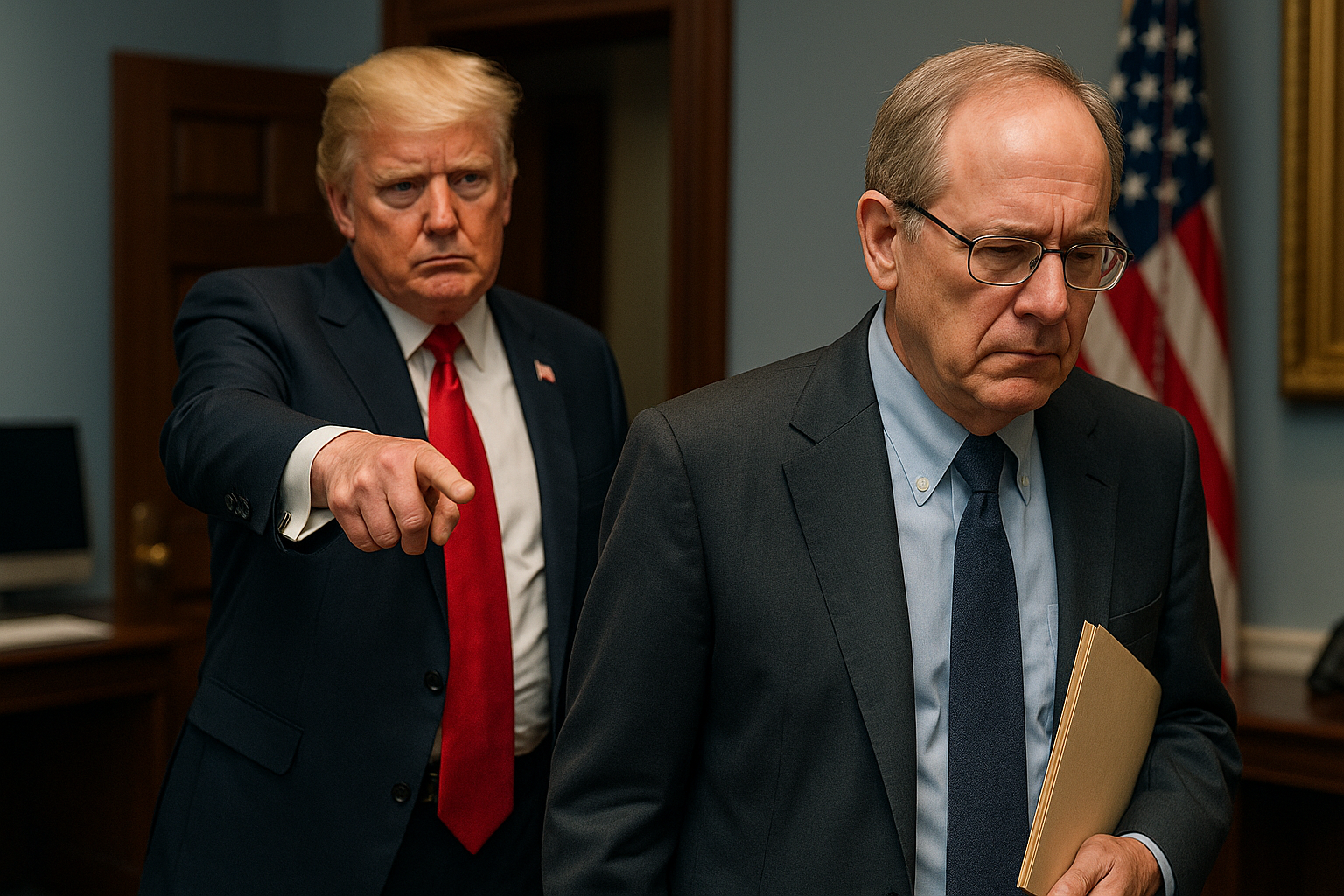
Experts question reliability of government statistics as new nominee suggests major reporting changes
The recent removal of Bureau of Labor Statistics (BLS) Commissioner Erika McEntarfer by President Donald Trump has ignited a heated debate over whether the economic indicators that guide markets, policymakers, and businesses can truly be trusted. The decision, followed by the nomination of economist EJ Antoni, comes at a time when revisions in key data have raised concerns about the integrity of official reports.
Growing doubts over economic accuracy
The BLS plays a central role in shaping perceptions of the U.S. economy, producing critical metrics such as the monthly employment report and the Consumer Price Index (CPI). Critics argue that both have failed to capture real-world conditions, with CPI frequently accused of understating inflation pressures faced by American households.
Ray Dalio, a prominent investor, openly supported the decision, stating that the agency’s process is “obsolete and error-prone.” He pointed to the sharp downward revisions in May and June’s employment figures — included with the July release — as proof that the current system lacks reliability. “Private estimates are far better,” Dalio said, noting he uses them to track and forecast economic trends.
Proposed shift to quarterly reporting
Trump’s nominee, EJ Antoni, has been equally critical, describing the agency’s data as “unreliable” and suggesting suspending monthly employment releases in favor of quarterly updates until major reforms are implemented. Supporters believe this could reduce volatility and improve accuracy, while opponents warn it may limit timely insights for businesses and investors.
Broader implications for markets and policy
The shake-up raises important questions about how economic data is collected, verified, and communicated. Inaccurate or delayed reporting could influence interest rate decisions, investment flows, and public trust in economic governance. As sovereign wealth funds, corporations, and pension managers increasingly rely on economic indicators for strategy, confidence in data quality is more vital than ever.
The changes at the BLS mark a pivotal moment for U.S. economic transparency, with potential ripple effects across markets and policy-making in the months ahead.
Disclaimer
This content is for informational purposes only and does not constitute financial, investment, or legal advice. Cryptocurrency trading involves risk and may result in financial loss.