
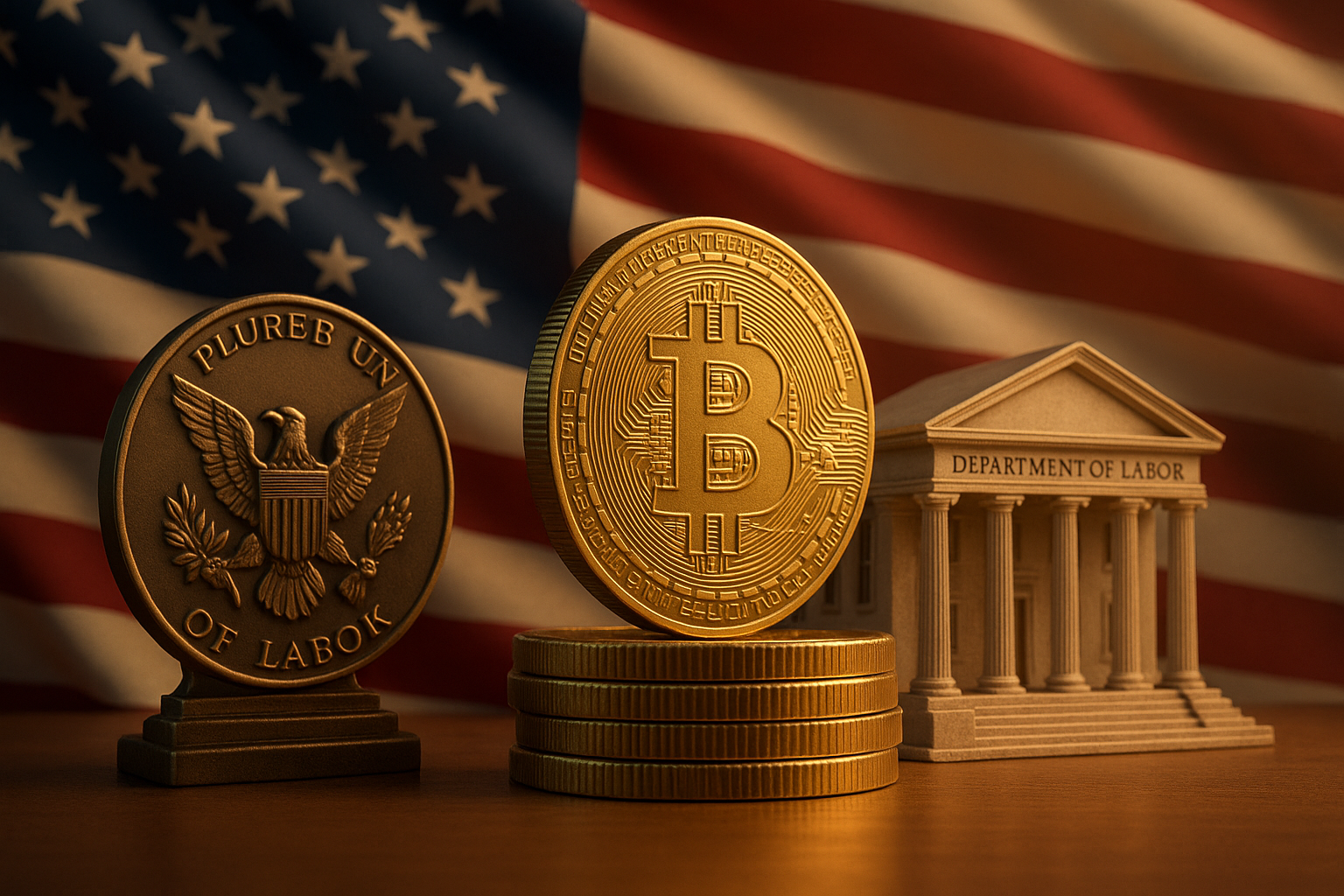
In a significant shift for the U.S. retirement investment landscape, the Department of Labor (DOL) has withdrawn its 2022 guidance cautioning against cryptocurrency investments in 401(k) retirement plans. The reversal aligns with the Trump administration’s pro-crypto agenda, reflecting a broader trend in U.S. policy toward digital assets.
DOL: No More Picking “Winners and Losers”
The new compliance directive, released on May 28, signals a return to neutrality in asset selection, stating that the DOL “has no business singling out assets for warnings or praise.”
“We’re rolling back this overreach and making it clear that investment decisions should be made by fiduciaries, not D.C. bureaucrats,” said Labor Secretary Lori Chavez-DeRemer.
Under President Joe Biden, the DOL previously warned that cryptocurrencies posed excessive risk for long-term retirement savings due to volatility, fraud potential, and theft.
2022 Warning Followed Major Crypto Collapses
The earlier guidance, issued in March 2022, came just months before high-profile crypto failures — including Celsius Network, Voyager Digital, and FTX — rocked the industry and wiped out billions in investor funds.
Bitcoin (BTC) dropped over 52% in the 12 months following the DOL’s caution.
However, those same investments are now up 156%, signaling strong recovery and long-term potential.
Legal Pushback and Political Influence
The reversal follows a lawsuit from 401(k) provider ForUsAll, which challenged the DOL’s authority in issuing the original guidance without proper rulemaking.
Political analysts point to Trump’s pro-crypto stance as a driving force. The president has:
- Called himself the “crypto president”
- Attended a private dinner with top memecoin investors
- Backed crypto-friendly appointees like Chavez-DeRemer, despite her 2023 election loss
Chavez-DeRemer received $1.5M from crypto super PAC Fairshake, linking her appointment directly to the industry’s influence.
What This Means for Retirement Investors
Fiduciaries now have more freedom to offer crypto assets in retirement plans without fear of federal reprimand. However, the responsibility for due diligence and risk management still lies with plan administrators.
As other federal agencies — including the SEC, CFTC, and FDIC — reevaluate their crypto stances, the U.S. appears poised for a policy transformation favoring digital assets.
🧠 Conclusion
The DOL’s reversal marks a pivotal moment in legitimizing crypto within traditional investment frameworks. As the political winds shift, retirement savers may soon see broader access to Bitcoin, Ethereum, and other digital assets in their portfolios.
This policy pivot could reshape how Americans save for retirement in the digital age.