
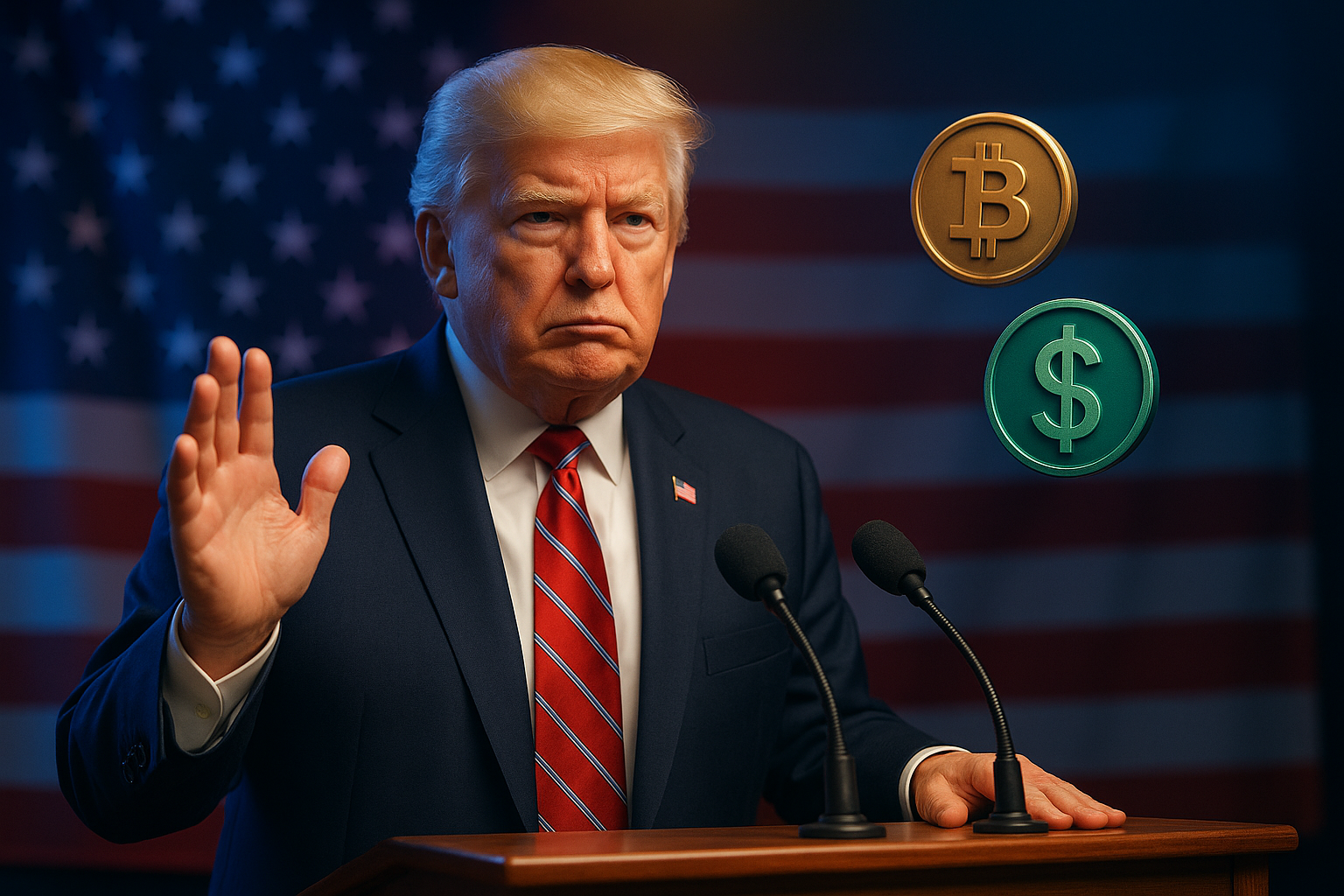
Representative Ro Khanna calls for tighter ethics rules amid growing concerns over political conflicts in digital assets
A senior U.S. lawmaker is moving to bar President Donald Trump, his family, and members of Congress from trading cryptocurrencies and stocks, citing serious conflicts of interest surrounding financial dealings within political circles.
Representative Ro Khanna, a Democrat from California’s 17th District and vice-chair of the Congressional Progressive Caucus, said in an MSNBC interview that he plans to introduce new legislation restricting elected officials from holding or trading digital assets. The proposed measure, he said, aims to restore public confidence in Washington’s transparency amid rising concerns over crypto-linked political influence.
Khanna accused President Trump of “blatant corruption” following reports that Binance co-founder Changpeng “CZ” Zhao had received a presidential pardon after his company allegedly supported a crypto venture connected to Trump’s son. “You’ve got a foreign billionaire who was basically engaged in money-laundering,” Khanna said, referring to CZ. “Then he petitions for a pardon from Donald Trump after basically funneling money to terrorists.”
Crypto, pardons, and political backlash
Khanna’s comments come after growing scrutiny of World Liberty Financial (WLFI) — a crypto project reportedly linked to Eric Trump. The California congressman claimed that WLFI had financial backing from Binance, which influenced the president’s pardon decision. “They’re making millions of dollars on this while Donald Trump is president,” he said.
Eric Trump, however, has denied any connection between his father and WLFI, insisting that the president “is not involved in our businesses in any way, shape, or form.”
CZ Zhao, who pled guilty to a single felony count of violating the U.S. Bank Secrecy Act, rejected the accusations from lawmakers, stating that critics like Senator Elizabeth Warren and others “can’t get their facts right.”
Khanna’s reform proposal raises eyebrows
While Khanna’s proposal seeks to prohibit crypto and stock trading by public officials, it has drawn attention to his own extensive trading history. Data from Quiver Quant shows Khanna has executed more than 35,000 trades since taking office in 2017, with a total volume exceeding $580 million, primarily in financial, technology, and healthcare sectors.
Still, Khanna insists that public accountability must come first, calling for “a ban on any elected official from having cryptocurrency and accepting foreign money.” His bill has not yet been formally introduced, but observers say it could reignite debate over ethics and market access for lawmakers.

The broader issue of stock and crypto trading by politicians remains one of the most contested topics in Washington. A bipartisan stock trading reform bill is also pending in Congress, signaling a wider effort to prevent lawmakers from leveraging inside information for personal gain.
As digital assets become more politically charged, Khanna’s proposal underscores the tension between regulation, ethics, and innovation — raising the question of whether Washington can separate governance from profit in the crypto era.
Disclaimer
This content is for informational purposes only and does not constitute financial, investment, or legal advice. Cryptocurrency trading involves risk and may result in financial loss.