
The native token of Uniswap, UNI, climbed roughly 14% over the past 24 hours as traders responded to a governance proposal that could significantly expand the protocol’s revenue capture model. The move outpaced gains in Bitcoin rose around 4–5%.
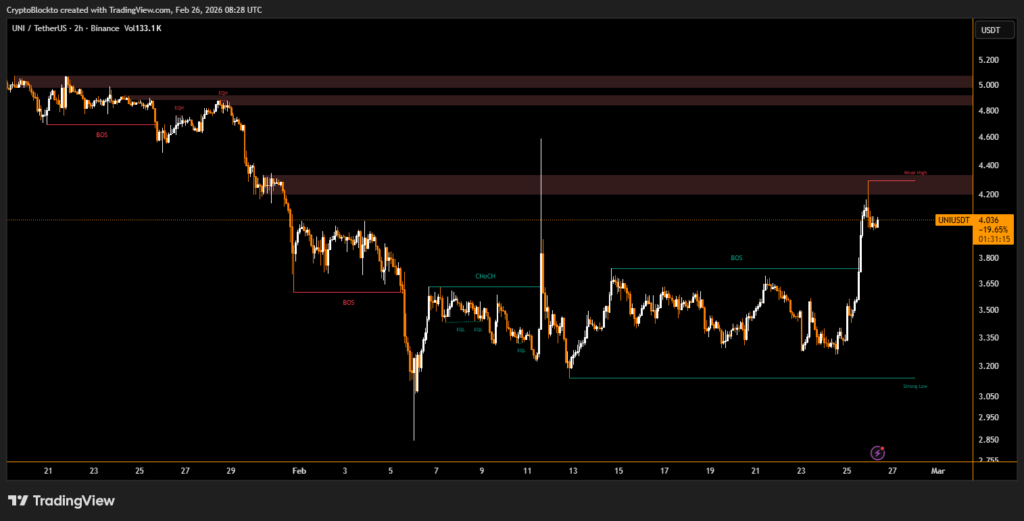
The proposal seeks to broaden the so-called “fee switch” mechanism across eight additional layer-2 networks while standardizing how protocol fees are applied to liquidity pools under the v3 framework.
Governance Proposal Could Add $27 Million in Annual Revenue
If approved, the changes could generate an estimated $27 million in additional annualized revenue, on top of the roughly $34 million currently being used for UNI token burns. Since the partial activation of the fee switch last year, more than $5.5 million worth of UNI has already been burned.
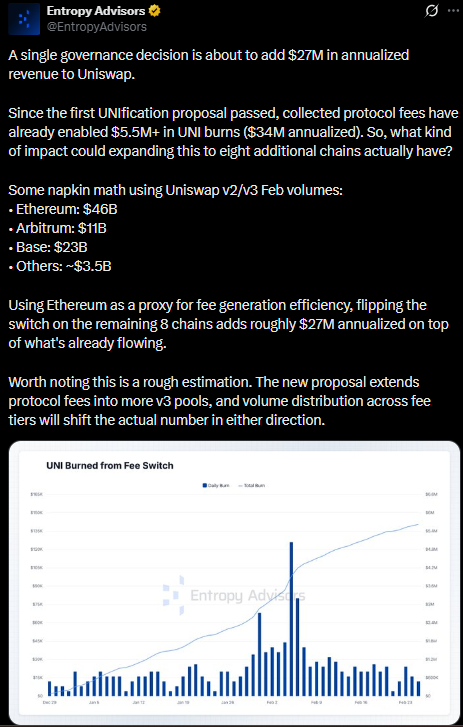
The update would introduce a v3OpenFeeAdapter system that automatically applies protocol fees across all liquidity pools based on fee tiers. Instead of activating fees pool by pool through separate governance votes, the mechanism would enable default fee collection for all new v3 pools, streamlining operations and broadening coverage to long-tail trading pairs.
Shift Toward Sustainable Token Economics
The fee switch redirects a portion of trading fees from liquidity providers to the protocol treasury, linking overall trading activity directly to UNI’s supply dynamics through buybacks and burns. In the first quarter of 2026, Uniswap reported approximately $3.12 million in gross profit marking a notable shift from previous periods when token holders saw minimal direct economic benefit.
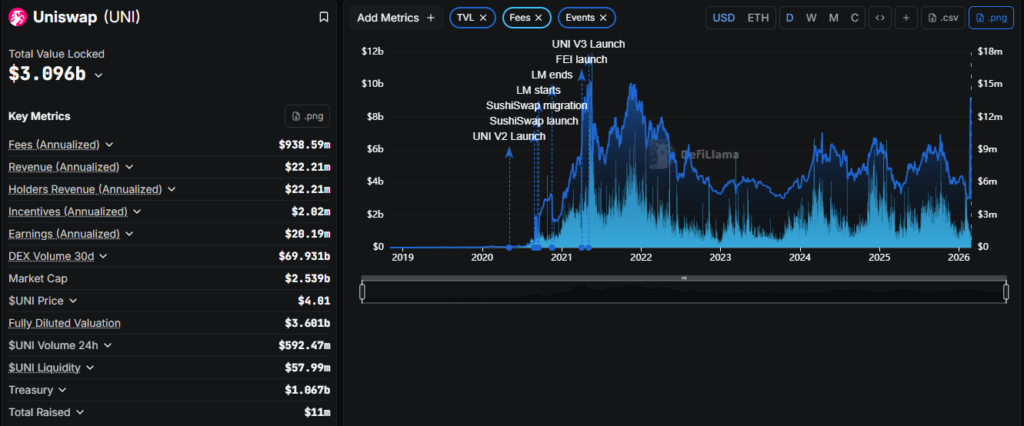
If the vote passes, Uniswap would further solidify its evolution into a cross-chain, revenue-generating protocol, though questions remain about whether higher fee capture could affect its competitiveness in liquidity-sensitive layer-2 markets.
Disclaimer
This content is for informational purposes only and does not constitute financial, investment, or legal advice. Cryptocurrency trading involves risk and may result in financial loss.