
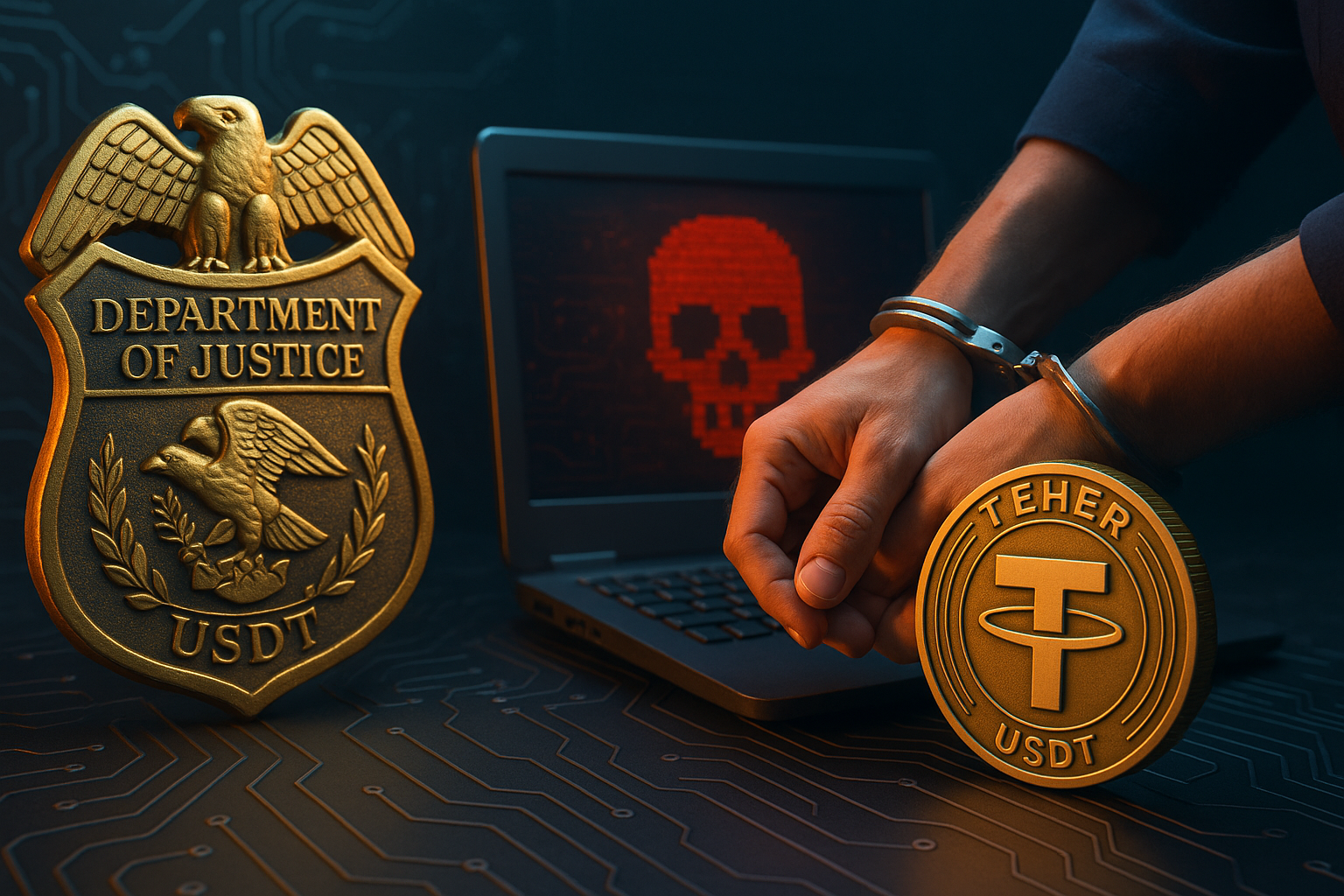
In a joint effort, the U.S. Department of Justice (DOJ) and Tether, the world’s largest stablecoin issuer, have successfully shut down a $3.3 million crypto fraud network. The crackdown is part of a growing trend of coordinated actions between federal authorities and major crypto firms to fight financial crimes.
The fraud ring reportedly targeted hundreds of victims across multiple jurisdictions using romance scams and investment schemes.
How the Crypto Scam Operated
The DOJ revealed that the fraudsters used “pig butchering” tactics, luring victims into fake romantic relationships and convincing them to invest in bogus crypto trading platforms.
Once victims deposited funds, the scammers moved the money through a complex web of wallets and platforms to obscure its origin.
The illicit gains—amounting to over $3.3 million in crypto—were primarily held in USDT (Tether), making Tether’s cooperation essential to the investigation.
Tether’s Role in Freezing the Assets
Tether worked directly with the DOJ and blockchain forensic experts to trace and freeze the USDT funds linked to the scam.
“We remain committed to preventing illicit use of our platform and working with law enforcement to protect users,” a Tether spokesperson stated.
Tether froze the fraudulent accounts, stopping the criminals from liquidating the stolen assets.
This is not the first time Tether has acted against criminal activity. The company has frozen over $1 billion in suspicious assets in coordination with law enforcement since its founding.
US DOJ’s Statement on the Investigation
The DOJ praised the collaboration, highlighting it as a model for future public-private partnerships in financial crime prevention.
“This operation underscores the power of collaboration between federal agencies and responsible players in the crypto space,” said Assistant Attorney General Kenneth A. Polite.
He further emphasized the need for real-time compliance and monitoring systems in the crypto industry to prevent such scams from flourishing.
What It Means for Crypto Investors
This case is a major win for crypto regulation and consumer protection. It sends a clear message to fraudsters and investors alike:
Crypto is not a safe haven for illegal activities—cooperation between firms and regulators is growing stronger.
Investors are encouraged to verify platforms, avoid unsolicited crypto investment advice, and report suspicious behavior to the appropriate authorities.
Conclusion
The $3.3 million bust by the DOJ and Tether proves that the crypto industry is maturing, with major players stepping up to protect users and uphold compliance.
This development may also influence future regulation and further legitimize the role of stablecoins in financial systems.