
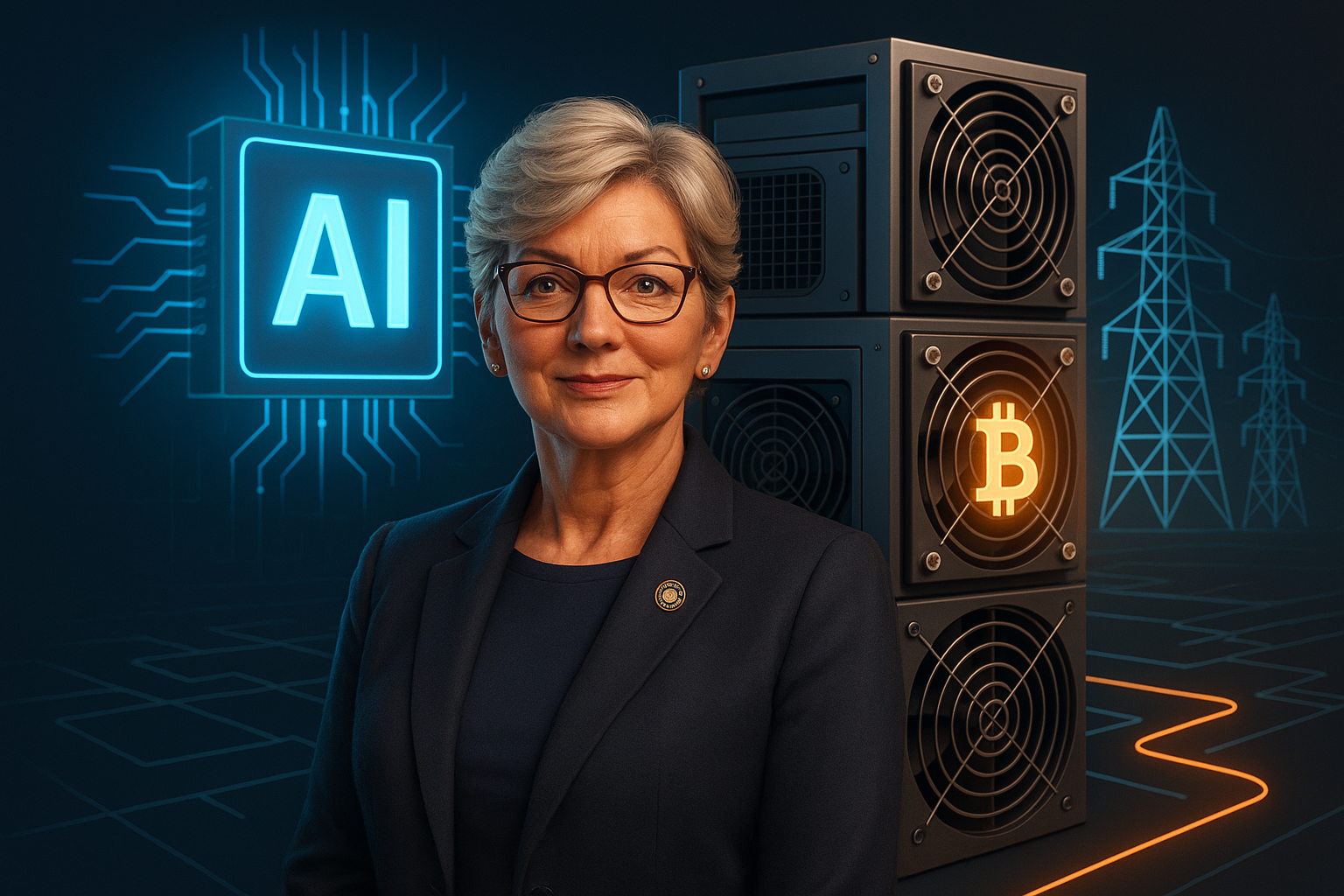
The Department of Energy wants the Federal Energy Regulatory Commission to accelerate and standardize power grid connections for high-demand users like data centers and crypto miners.
DOE Pushes for Expedited Power Connections
The US Department of Energy (DOE) is calling for faster, more direct grid access for large power consumers — particularly AI data centers and Bitcoin mining operations — amid a surge in nationwide electricity demand.
In a letter released Thursday, Energy Secretary Chris Wright urged the Federal Energy Regulatory Commission (FERC) to draft new rules that would allow these massive electricity users to connect directly to the high-voltage transmission grid, bypassing slower, local-level approval processes.
“United States electricity demand is expected to grow at an extraordinary pace,” Wright wrote, citing the rapid growth of data centers and industrial-scale crypto mining as key contributors.
The proposal seeks to give AI and crypto firms access to the same grid infrastructure used by major industrial facilities, which offers higher capacity and greater stability than local distribution networks.
Bitcoin Miners and AI Firms Stand to Gain
S. Matthew Schultz, CEO of CleanSpark, a leading Bitcoin mining company, said the DOE’s proposal represents a “major signal” that the government recognizes the role of flexible energy demand from miners and AI companies in strengthening grid resilience.
Bitcoin miners are known for consuming massive amounts of electricity to power their mining rigs, which secure the blockchain network by validating transactions. The more miners participate, the higher the network hashrate — a key measure of Bitcoin’s overall security and computing power.
60-Day Review Period Proposed
The DOE’s suggested framework includes expedited 60-day reviews for connection requests — a dramatic improvement compared to the years-long waiting periods currently common.
Applicants would need to meet certain requirements, such as covering the cost of any necessary grid upgrades, to qualify for the fast-track process.
The DOE has requested that FERC respond to the proposal by April 30, 2026, setting a clear timeline for potential regulatory action.
As both AI computing and Bitcoin mining scale rapidly, competition for cheap, sustainable energy sources has intensified. Analysts say that more efficient access to the grid could attract new institutional investments into these sectors — particularly if renewable power projects are integrated into the expansion.
With the energy demands of digital infrastructure expected to surge through the next decade, this proposal could mark a turning point in US energy policy, balancing innovation and sustainability in one of the world’s most power-hungry industries.
Disclaimer
This content is for informational purposes only and does not constitute financial, investment, or legal advice. Cryptocurrency trading involves risk and may result in financial loss.