
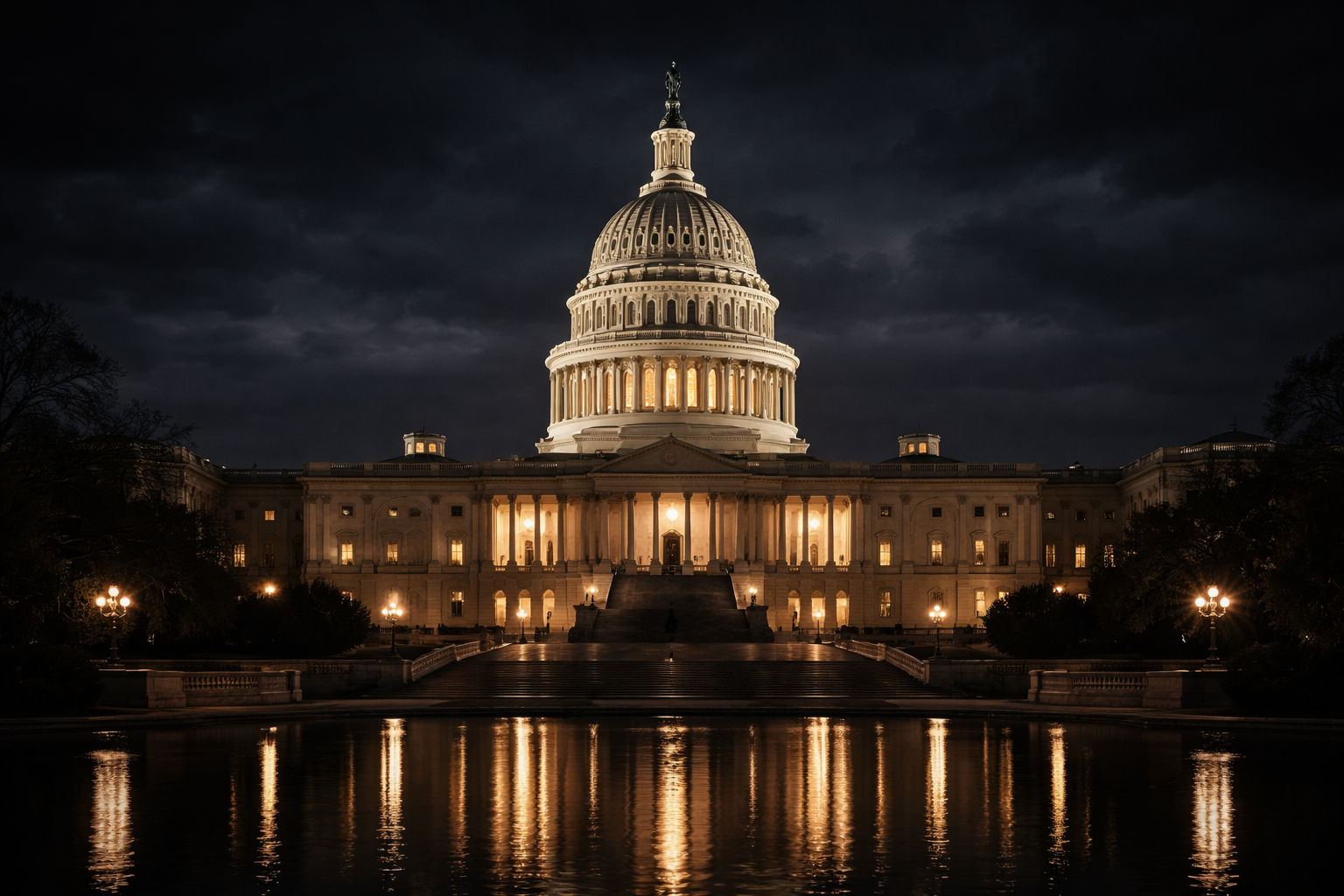
The US House of Representatives has approved legislation aimed at ending a four-day partial government shutdown, clearing the way for most federal agencies to resume normal operations. The bill passed Tuesday by a narrow 217–214 vote and follows earlier approval by the Senate.
The roughly $1.2 trillion funding package is designed to finance most government functions through Sept. 30. While the measure received some bipartisan backing, several Democratic lawmakers opposed it, citing concerns over immigration enforcement provisions included in the bill.
Trump Expected to Sign Funding Legislation
US President Donald Trump is expected to sign the bill, provided it remains unchanged from the version passed by the Senate. Once enacted, the legislation would formally reopen affected government departments and agencies.
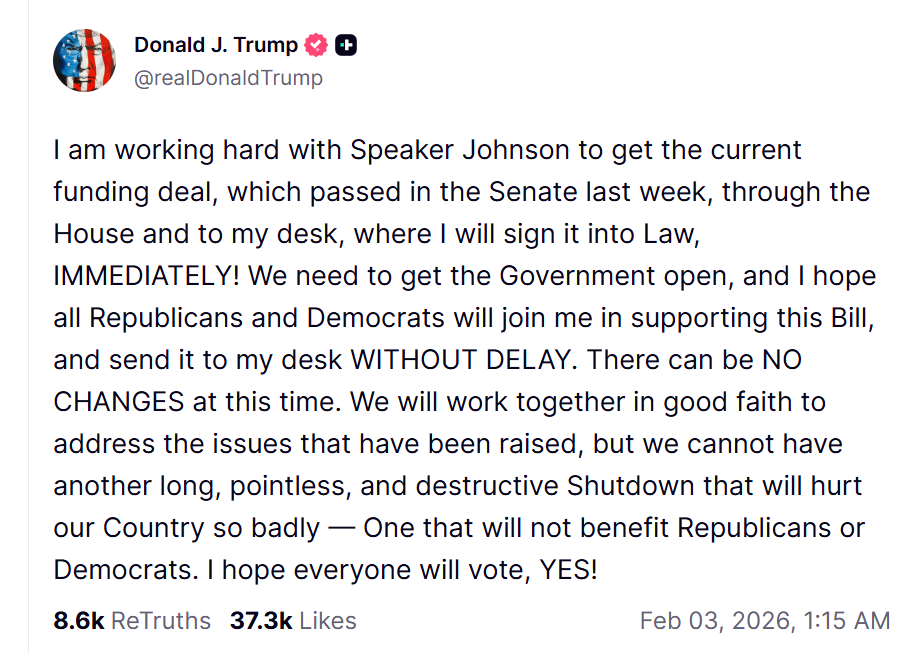
However, funding for the Department of Homeland Security is only secured for two weeks under the measure. Lawmakers are expected to return to negotiations to address unresolved issues related to Immigration and Customs Enforcement and the US Border Patrol.
Economic and Policy Implications
The brief shutdown caused limited disruption compared with the 43-day shutdown in 2025, which significantly delayed legislative work, including efforts tied to financial and digital asset regulation. Following news of the bill’s passage, Bitcoin prices rose by roughly 2%, reflecting improved market sentiment.
An end to the shutdown is also expected to allow for the release of the delayed January jobs report from the Bureau of Labor Statistics. The data is closely watched by markets and policymakers for signals on employment conditions and broader economic trends.
Meanwhile, discussions in the Senate continue around major market structure legislation, with negotiations ongoing despite delays in committee markups.
Disclaimer
This content is for informational purposes only and does not constitute financial, investment, or legal advice. Cryptocurrency trading involves risk and may result in financial loss.