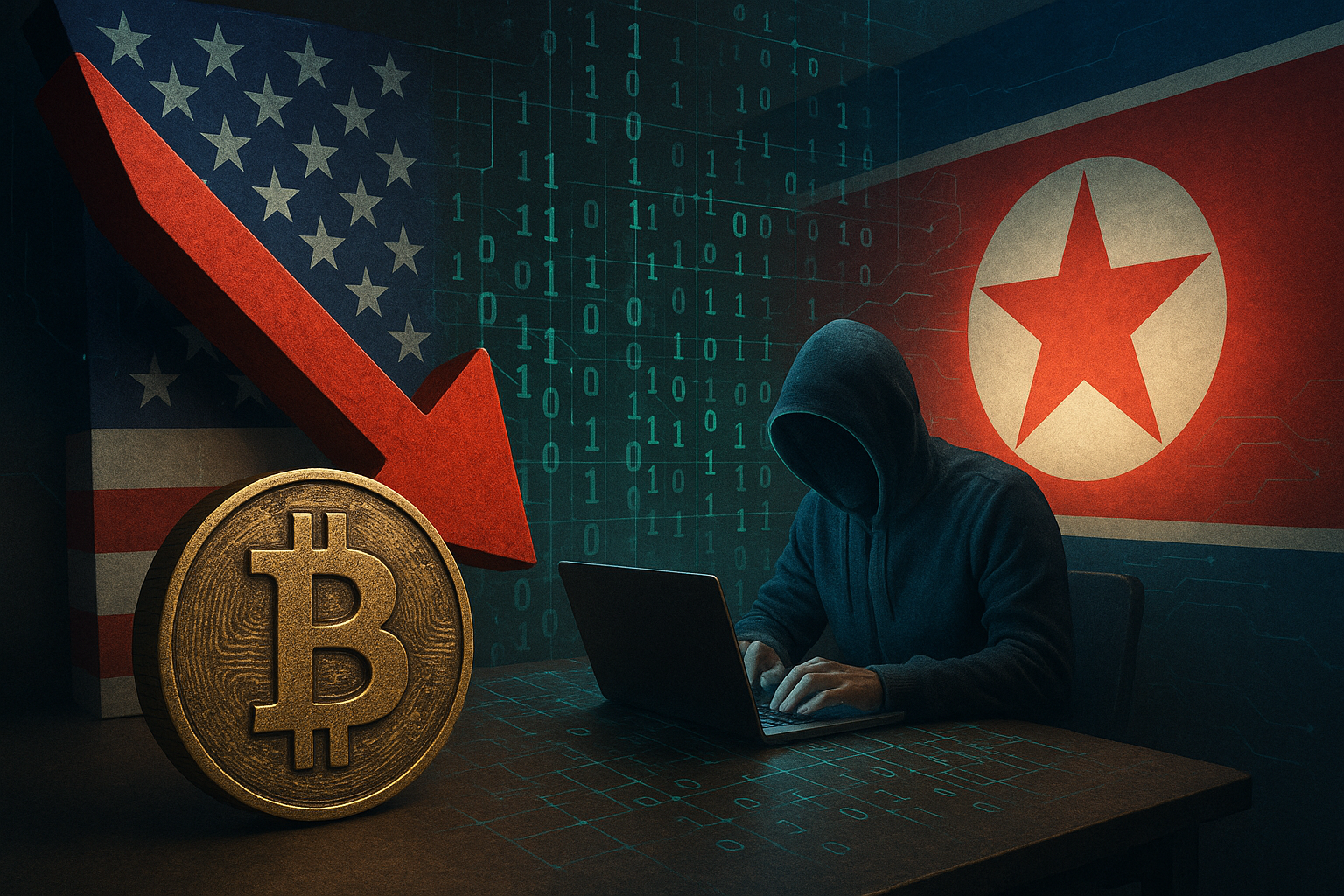
The United States Treasury has imposed sanctions on a North Korean-operated IT worker ring accused of infiltrating crypto and tech firms to fund the country’s ballistic missile program. The move underscores a growing threat in the digital asset space: state-sponsored cyber deception rather than traditional hacking.
Deceptive Infiltration Replaces Overt Hacks
Unlike the notorious high-profile hacks previously associated with North Korea’s Lazarus Group, new evidence suggests a tactical shift. According to blockchain analytics, North Korean-linked actors are increasingly relying on long-term deception—using fake identities and job applications to gain employment within legitimate tech and blockchain companies.
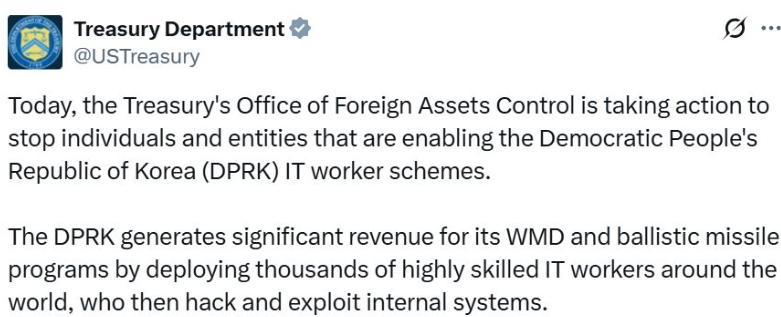
This deception-based revenue generation strategy is proving harder to detect and stop than conventional hacking. The Treasury’s Office of Foreign Assets Control (OFAC) identified two individuals and four entities as part of this network, all of whom are now subject to full US asset freezes and strict financial prohibitions.
How the Network Operated
One of the sanctioned individuals, Song Kum Hyok, is accused of stealing personal data from US citizens to fabricate identities, which were then passed on to foreign-based North Korean IT workers. These workers would use the false identities to secure remote jobs at US crypto and tech firms, exploiting internal systems from within.
The scheme also extended beyond North Korea. A Russian national, Gayk Asatryan, allegedly employed dozens of North Korean IT professionals through contracts signed with North Korean trading companies as early as 2024. His companies facilitated employment arrangements that helped North Korean operatives enter Western firms under false pretenses.
DPRK’s Global Workforce Targets Wealthy Nations
The US Treasury estimates that thousands of North Korean IT workers—most operating out of China and Russia—are targeting tech employers in wealthier countries. Their goal is not only to collect salaries under false identities but also to gain access to sensitive platforms and digital infrastructure.
These workers exploit popular hiring sites and industry-specific job boards, making detection difficult for HR departments and project leads—especially in the remote work era.
$1.6 Billion in Crypto Losses Tied to North Korea in 2025
According to blockchain intelligence estimates, North Korea-linked actors were behind $1.6 billion of the $2.1 billion stolen across 75 crypto attacks in 2025 alone. While exchange breaches are still a concern, the majority of current operations involve remote access fraud, fake contracts, and malware deployment by infiltrators.
In one case, US prosecutors recently charged four North Korean nationals with wire fraud and money laundering, after they were discovered working as remote developers for US and Serbian blockchain firms. Separately, the Department of Justice is seeking to seize $7.74 million in frozen crypto assets connected to similar infiltration schemes.
Sanctions and Legal Consequences
All entities and individuals named by OFAC are now under strict US sanctions. This includes asset freezes and prohibitions on all financial or business dealings with US persons or companies. Violators may face civil or criminal penalties under US law.
The latest crackdown reflects Washington’s intent to disrupt North Korea’s cyber financing operations, especially as they evolve beyond hacking into more subtle and persistent forms of cyber infiltration.
Final Thoughts
The shift from overt cyberattacks to deep-rooted digital infiltration by North Korea signals a new phase of cyberwarfare, where state actors leverage deception to fund geopolitical ambitions. As the US tightens sanctions and pursues legal action, crypto firms must enhance hiring and identity verification practices to guard against these sophisticated threats.
Disclaimer
This content is for informational purposes only and does not constitute financial, investment, or legal advice. Cryptocurrency trading involves risk and may result in financial loss.