
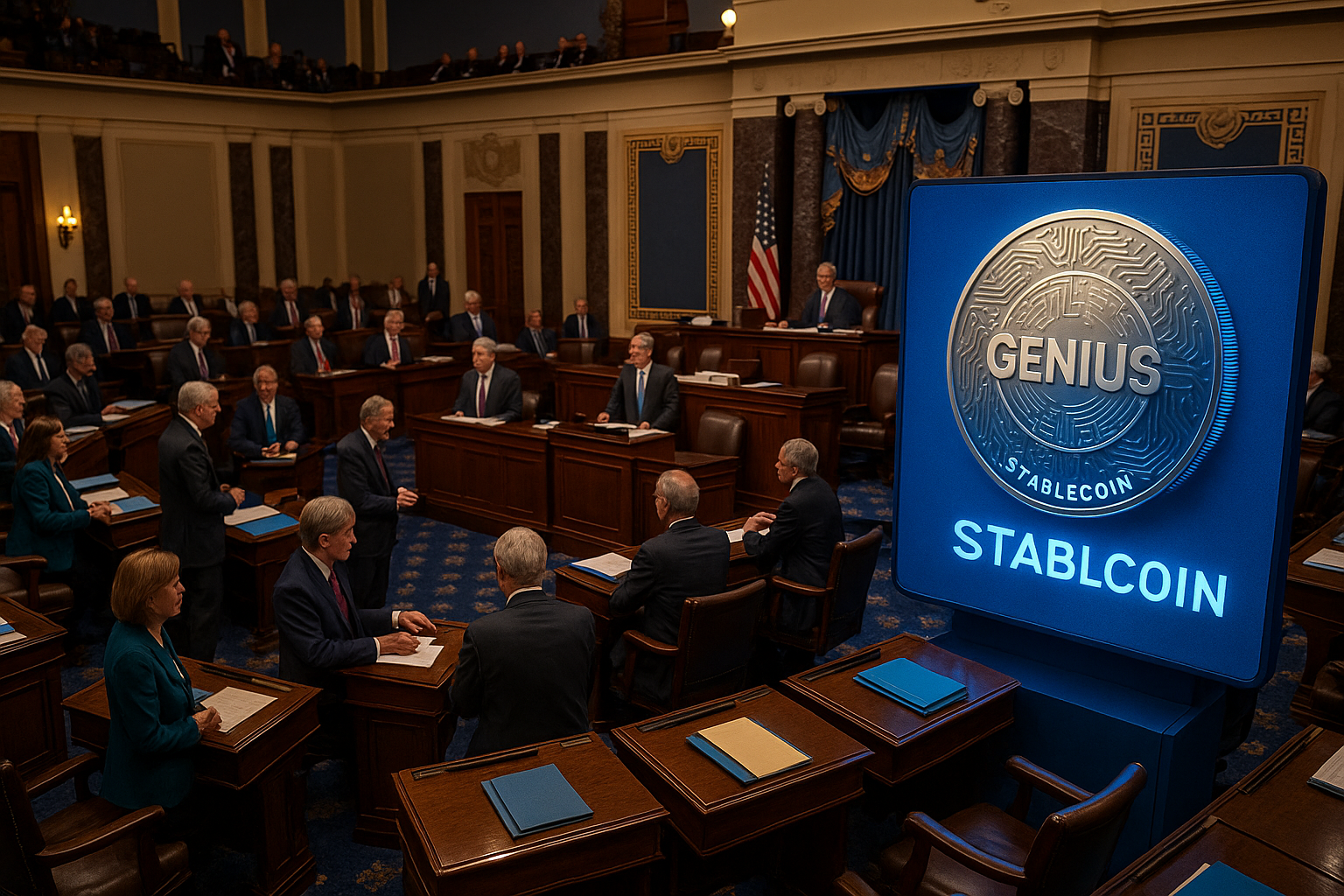
The United States Senate is gearing up for a pivotal vote on the GENIUS Act, a landmark legislative proposal aimed at regulating the issuance and operation of stablecoins. The vote is scheduled for Wednesday, following a cloture filing by Senate Majority Leader John Thune.
What Is the GENIUS Act?
The Guiding and Establishing National Innovation for U.S. Stablecoins (GENIUS) Act is designed to bring regulatory clarity and consumer protection to the rapidly expanding stablecoin market. If passed, the bill would introduce federal standards for stablecoin issuers, including:
- Full reserves backed by U.S. dollars or equivalent liquid assets
- Mandatory annual audits for issuers with a market cap above $50 billion
- Compliance requirements for foreign issuers, such as the ability to freeze or seize assets under lawful orders
This bill is being hailed as a “first-of-its-kind” regulatory framework that could shape the future of stablecoins in the U.S.
Procedural Momentum Builds in the Senate
On Monday, Senator Thune filed cloture on the GENIUS Act and its bipartisan amendment, signaling an intent to limit further debate and proceed with a vote.
Last month, the Senate voted 66-32 to invoke cloture, showing strong bipartisan support and setting the stage for potential swift passage.
In the upcoming vote, the bill will need at least 60 votes to advance.
Why This Vote Matters
This legislation is seen as a strategic move to protect the U.S. dollar’s global dominance by establishing a clear regulatory path for dollar-pegged digital assets.
Stablecoins, such as USDT and USDC, play a critical role in the digital asset economy, offering a bridge between crypto and fiat markets. Clear legal definitions and audit requirements are expected to increase market confidence and institutional adoption.
If passed, the GENIUS Act would become the first comprehensive crypto legislation in U.S. history, potentially influencing global regulatory trends.
Industry Reaction and Outlook
Crypto industry leaders have praised the bill’s progress. Analysts suggest the legislation could accelerate innovation while safeguarding investor interests.
“It looks like we will have our first full-fledged piece of crypto legislation passed in the U.S. by the summer,” one industry executive noted.
Conclusion:
The GENIUS Act vote marks a turning point for crypto regulation in the United States. As lawmakers head to the floor, the world will be watching how the U.S. shapes the future of digital finance.