
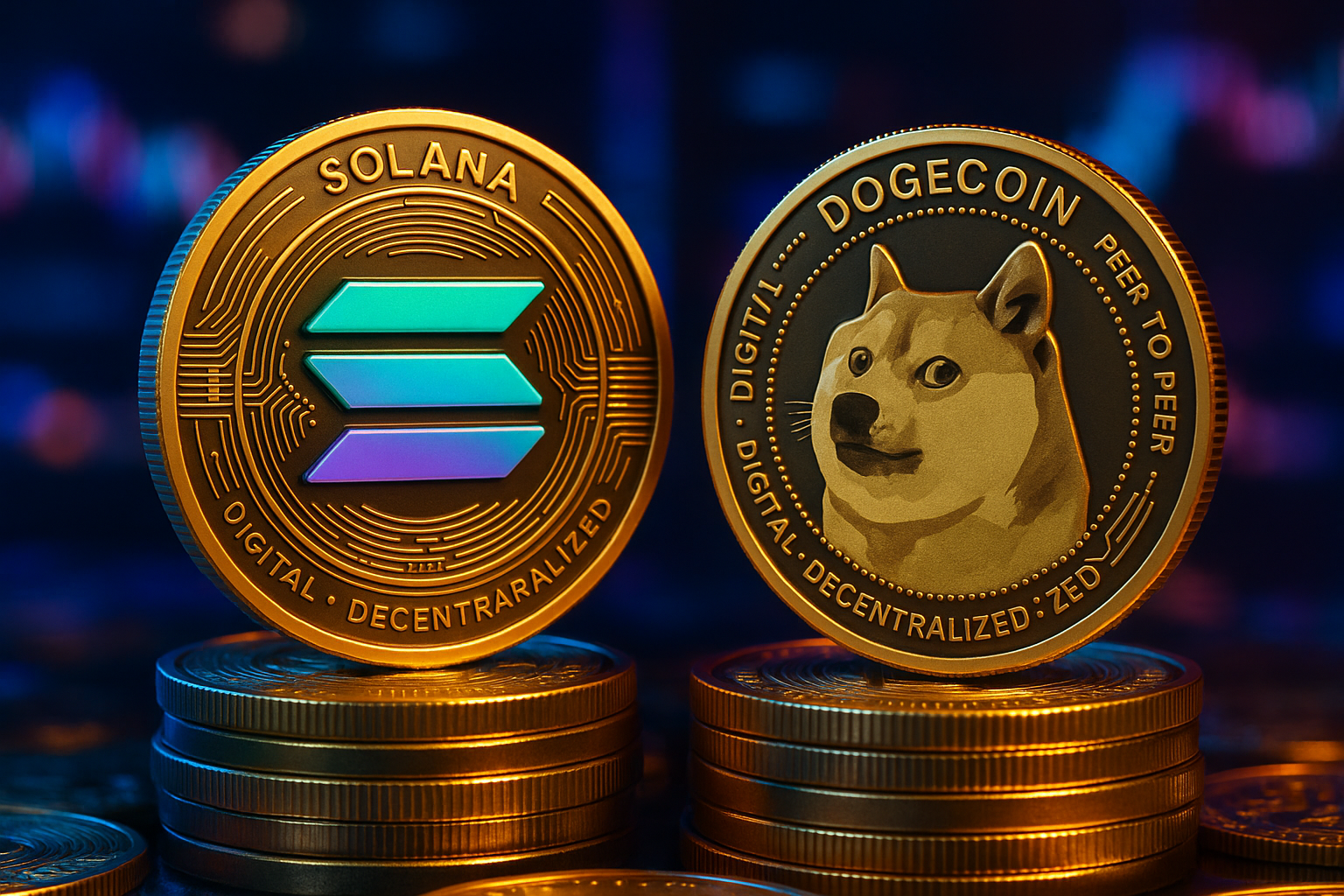
A wave of new crypto ETFs accelerates following relaxed SEC standards and rising market demand
The U.S. crypto ETF market entered a new phase this week as VanEck’s Solana ETF (VSOL) officially went live, marking the third Solana-based fund with staking rewards available to investors. The launch adds substantial competition to a sector that has already seen hundreds of millions in inflows since October.
The new ETF enters a field established by Bitwise and Grayscale, whose Solana funds jointly attracted more than $380 million shortly after debuting. In an aggressive push for market share, VanEck has waived its 0.3% management fee until February 17 or until the fund reaches $1 billion in assets.
“Fee-free windows are becoming an important tool as issuers race for early dominance,” an ETF market strategist said.
The ETF’s staking feature allows the underlying Solana (SOL) holdings to earn rewards directly on the blockchain. “Staking-enabled ETFs are redefining what investors expect from digital asset products,” another analyst explained.

Meanwhile, momentum continues to build across the broader ETF landscape. According to Bloomberg ETF analyst Eric Balchunas, the Fidelity Solana ETF (FSOL) is scheduled to launch on Tuesday, adding pressure to the existing three Solana-linked funds that currently carry 0.25% fees.
“This is easily the biggest traditional asset manager to enter this category, especially with BlackRock not participating,” Balchunas noted.
A second wave of attention is turning toward Dogecoin, as regulatory filings indicate that Grayscale’s Dogecoin ETF could launch as soon as Nov. 24. The product is a conversion of the existing Grayscale Dogecoin Trust and would trade on the New York Stock Exchange.
“It isn’t fully confirmed until the exchange posts notice, but based on the SEC’s guidance, the path appears open,” Balchunas said.
If approved, it would become the first U.S. DOGE ETF capable of directly holding the memecoin.
The move follows the earlier launch of a separate DOGE ETF in September, though that fund is restricted by the 1940 Act and can only invest indirectly through an offshore subsidiary.
The rapid rollout underscores a new phase in the digital asset market, where exchange-traded products tied to major altcoins are becoming mainstream investment vehicles.
Disclaimer
This content is for informational purposes only and does not constitute financial, investment, or legal advice. Cryptocurrency trading involves risk and may result in financial loss.